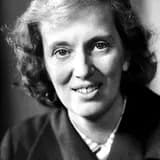
Hodgkin graduated from Oxford with first-class honours in chemistry, only the third woman to do so.
In the summer of 1928, Dorothy Crowfoot completed her undergraduate studies at Somerville College, Oxford, graduating with first-class honours in chemistry. She was only the third woman in the university's history to achieve this distinction in the subject, at a time when women faced significant institutional barriers to full participation in scientific education.
Although women had been permitted to sit examinations at Oxford since 1920, they were still frequently marginalized within the sciences, often excluded from certain laboratories, societies, and informal networks that were crucial for career advancement. Crowfoot's achievement demonstrated exceptional aptitude and determination, and it opened the door to her subsequent graduate research.
Her undergraduate thesis explored the crystal structure of thallium dialkyl halides, an early sign of her lifelong fascination with X-ray crystallography as a tool for revealing the hidden architecture of molecules. The distinction she earned helped her secure a place to continue postgraduate research, first at Oxford and then at Cambridge under the mentorship of the pioneering crystallographer J.D. Bernal.
This early academic triumph is historically significant as a marker of the gradual, hard-won inclusion of women in elite British scientific institutions, and it foreshadowed a career that would fundamentally reshape structural chemistry and biochemistry.