← All women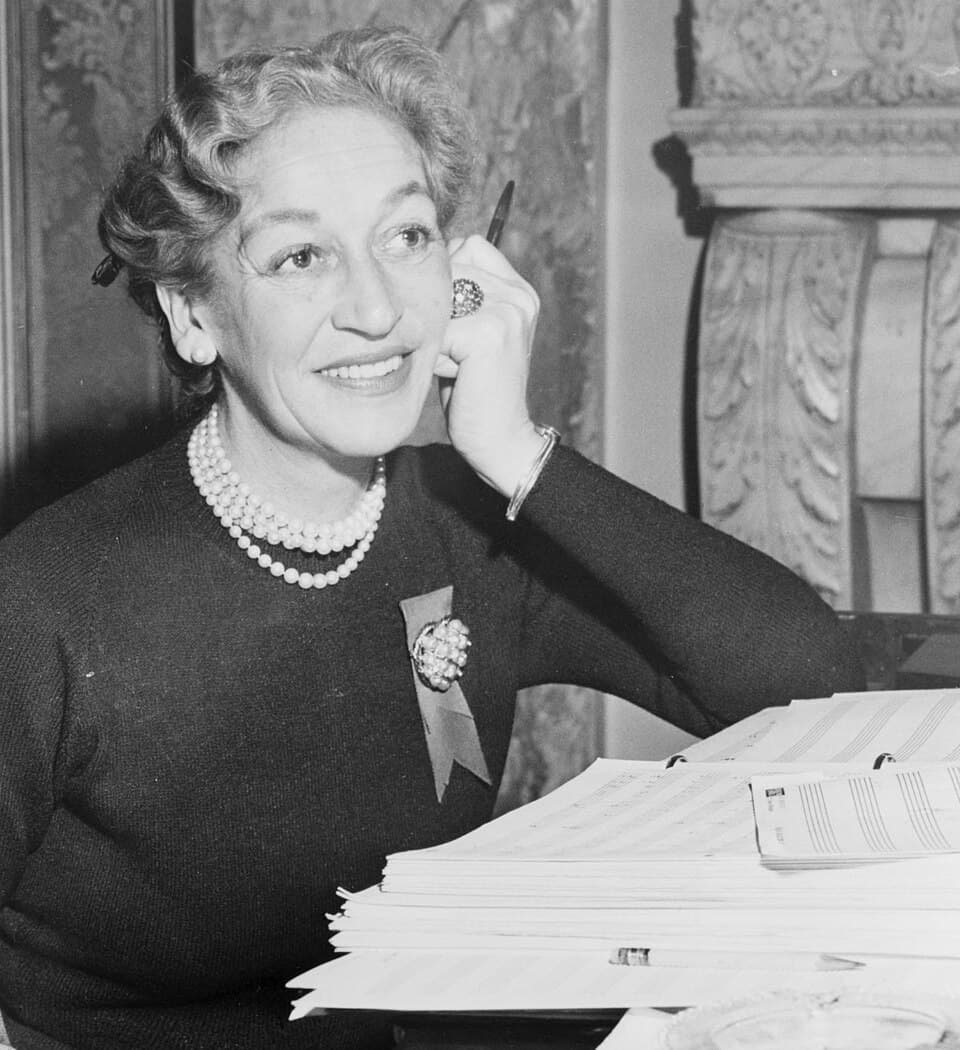
American · Arts · Literature
Dorothy Fields
July 15, 1904 – March 28, 1974
Early Life and Background
Dorothy Fields was born on July 15, 1904, in Allenhurst, New Jersey, into a creative and theatrical family. Her father, Lew M. Fields, was a renowned vaudevillian and Broadway producer, which perhaps set the stage for Dorothy’s eventual career. Despite the entertainment-heavy environment, she initially pursued education at the Benjamin Franklin School for Girls in New York City. Dorothy's brother, Herbert Fields, was also a well-known writer within the Broadway scene, contributing to her exposure to the arts early on.
Career Beginnings and Development
Fields began making her mark in the 1920s, a time when the industry was largely dominated by men. In 1928, she achieved her first success with the song "I Can't Give You Anything but Love," co-written with Jimmy McHugh. This song quickly became a jazz standard, catapulting Fields into the upper echelons of songwriters.
Major Works and Accomplishments
Throughout her career, Fields wrote lyrics for more than 400 songs, spanning Broadway, Hollywood, and popular music. In 1936, she won the Academy Award for Best Original Song for "The Way You Look Tonight," composed by Jerome Kern for the film "Swing Time," which was a notable achievement, as few women held such accolades at the time. Additionally, Fields played a key role in the creation of several Broadway classics, including "Annie Get Your Gun" and "Redhead." Her collaborations with composers like Kern, Cole Porter, and Cy Coleman produced timeless classics such as "A Fine Romance" and "On the Sunny Side of the Street."
Awards, Honors, and Recognition
Fields's enduring contribution to American music and theatre was recognized posthumously when she was inducted into the Songwriters Hall of Fame. Her work with Kern, in particular, paved the way for future generations of female lyricists.
Personal Life
Dorothy Fields married twice; her second husband was physician Eli Lahm, with whom she had a son, David. Fields balanced her personal life with her demanding career, continually finding inspiration in both family and her professional experiences.
Legacy and Historical Impact
Dorothy Fields's legacy is profound not only for her lyrical contributions but for breaking gender barriers in a male-dominated industry. Her success contributed to opening the doors for other women in songwriting and theatrical production. She remains a symbol of perseverance and exceptional talent in the arts.
Later Life and Death
Fields continued to write and inspire until her death on March 28, 1974, in New York City. Her work remains influential, revered for its craftsmanship and emotive power, ensuring her place in the pantheon of great American songwriters.
Dated achievements
1 indexed.
- Jul151904Arts
Birth of Dorothy Fields
Dorothy Fields was born on July 15, 1904, marking the start of a life pivotal to American lyricism.
View details Dorothy Fields was born