← All women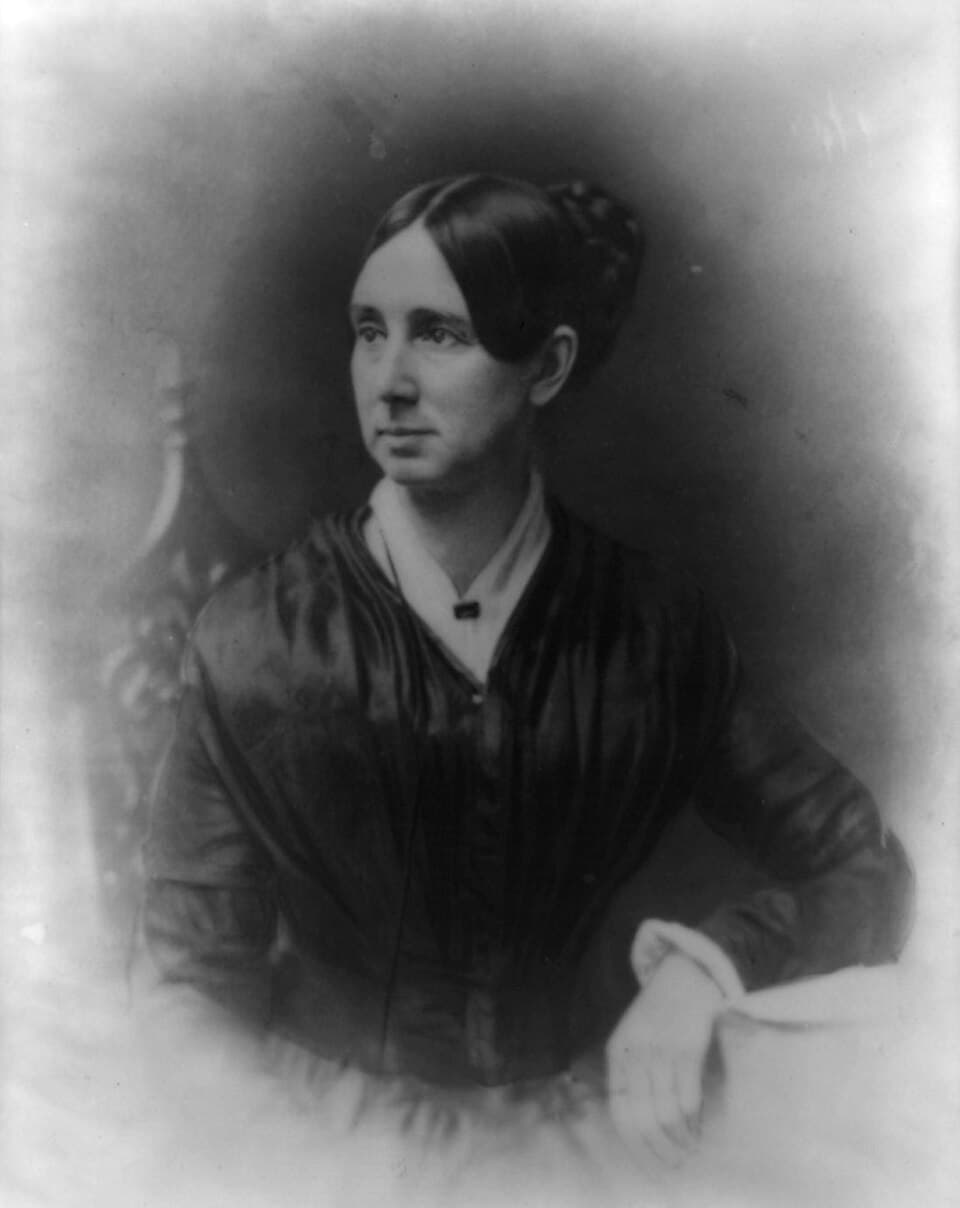
American · Medicine · Activism
Dorothea Dix
April 4, 1802 – July 17, 1887
Early Life and Background
Dorothea Lynde Dix was born on April 4, 1802, in Hampden in the District of Maine, then part of Massachusetts, to Joseph Dix, a travelling Methodist preacher, and Mary Bigelow.[3][10][8] Her family life was unstable. Joseph’s itinerant ministry and lack of steady income, combined with Mary’s reported ill health and emotional fragility, created a chaotic household in which the children’s basic needs were often neglected.[10][8] Dorothea was the eldest of three, and early on she assumed responsibilities for her younger brothers, an experience that likely reinforced her sense of duty to the vulnerable.
Sources describe Dix’s father as strict and sometimes abusive, distributing religious tracts that she helped stitch and bind, and her mother as withdrawn and unable to provide consistent care.[10][8] These conditions pushed Dix to seek refuge in self-directed study and orderly routines. Around age twelve, she left Hampden to live first with her paternal grandmother, Dorothea Lynde, in Boston, and later with other relatives in Worcester, Massachusetts.[8][12] Her grandmother’s household offered greater material security but was emotionally difficult; family accounts note that the elder Dorothea could be cold and critical, leading the younger girl to change the spelling of her name from Dorothy to Dorothea to assert independence.[8]
Dix attended private schools in Boston for a time, but much of her education was self-directed.[10] She read widely in moral philosophy, religion, natural science, and literature, developing a disciplined intellectual life that would underpin her later work. The combination of early hardship, exposure to religious and moral discourse, and experience of both charity and indifference within her extended family helped shape her lifelong conviction that institutions could and should protect those unable to protect themselves.
Career Beginnings: Teaching and Writing
By her early teens, Dix had begun to carve out a career as a teacher. At about fourteen she opened her first small school for young children, reflecting both her precocity and the limited professional avenues open to women in the early nineteenth century.[12][10] Over the next two decades she operated several schools in Boston and Worcester, teaching children from middle-class and poor families. Her pedagogy emphasized discipline, moral instruction, and a broad curriculum that included reading, writing, arithmetic, and elements of natural science.[14]
In the 1820s she also turned to writing, producing textbooks and moral tales for children. Her best-known early work, Conversations on Common Things, appeared in 1824 and sought to make basic scientific and geographic knowledge accessible through a dialogic format between mother and child.[2][10][14] The book became popular and stayed in print for decades, evidencing both her skill as an educator and the growing market for didactic literature aimed at young readers. She wrote additional religious and educational tracts, reinforcing her public identity as a serious, morally earnest teacher.
Dix’s commitment to teaching was intense, and she suffered repeated bouts of physical illness, often attributed by contemporaries to overwork and nervous exhaustion.[16] These episodes led her periodically to withdraw from classroom duties, travel, and seek rest. Yet even during periods away from teaching, she remained engaged in writing and in thinking about how structured guidance could improve children’s lives.
A pivotal experience in her early career was a trip to England in the late 1830s, undertaken partly for her health.[12][4] There she met progressive reformers associated with the British movement to improve the treatment of the poor and the mentally ill. In particular, she encountered ideas about "moral treatment"—a therapeutic approach emphasizing kindness, routine, and work in place of physical restraint and punishment. Exposure to these debates deepened her understanding of how institutional design could either degrade or uplift people considered mad or feeble-minded.
Turning Point: The Discovery of Conditions for the Mentally Ill
The decisive turning point in Dix’s life came in 1841, when she volunteered to teach a Sunday school class for women at the East Cambridge House of Correction in Massachusetts.[11][16][13] Expecting to minister to incarcerated women, she instead discovered that many people confined there were individuals with mental illness, kept in unheated cells without proper clothing or bedding, chained or locked in closets, and subjected to severe neglect and abuse.
Deeply shocked, Dix undertook an inquiry into conditions at the facility. She interviewed inmates, observed treatment, and gathered testimony from officials. She then compiled her findings into a formal memorial—a report addressed to the Massachusetts legislature—documenting the suffering of the "indigent insane" and arguing that their confinement in jails and almshouses was both morally wrong and socially detrimental.[13][1] Her memorial emphasized that these individuals were not criminals but sick people who could benefit from humane care.
This episode launched Dix as a full-time social reformer. Over the subsequent years she traveled extensively throughout Massachusetts and other states, visiting prisons, workhouses, and poorhouses, recording conditions, and pressuring lawmakers to allocate funds for purpose-built hospitals and asylums.[4][13][16] Unlike many reformers of her era, she often traveled alone, defying gender norms that discouraged women from independent public action. Her work required a combination of emotional resilience, organizational skill, and political savvy; she learned to cultivate relationships with governors, legislators, and philanthropists to build support for her proposals.
Major Reform Campaigns and Institutional Achievements
Dix’s campaign in Massachusetts quickly bore fruit, leading to improvements at the state’s existing hospital for the mentally ill and to greater public awareness of the issue.[1][4] Building on this success, she broadened her efforts to other states. By methodically documenting abuses and presenting detailed memorials, she persuaded numerous legislatures to fund new state hospitals or expand existing ones. Over the next several decades she was associated with the founding or enlargement of more than thirty institutions in the United States and abroad.[4][13]
Among her notable achievements was her role in the establishment of the New Jersey State Lunatic Asylum at Trenton, chartered in the mid-1840s.[12][3][13] Her memorial to the New Jersey legislature drew on first-hand visits to local jails and poorhouses, where she cataloged people with mental illness held in cages, closets, or pens. Legislators responded by authorizing a state hospital designed according to emerging principles of moral treatment. Dix later considered Trenton one of her most important successes and would make it her home in old age.[13]
In the 1840s and 1850s, she extended her advocacy across the eastern United States and into Canada, petitioning for hospitals in states including North Carolina, Pennsylvania, and Illinois. In North Carolina, for example, her work contributed to the founding of an institution for the mentally ill that opened in the mid-1850s.[3][14] She paid careful attention to architectural plans, grounds, and staffing, believing that environment played a crucial role in recovery. Her reputation as an expert on asylum design led officials to consult her on details ranging from building layout to ventilation.
Dix’s most ambitious legislative project was a proposed federal land-grant bill for the benefit of the "indigent insane." In the late 1840s, she urged Congress to set aside millions of acres of public land, the proceeds of which would be used to fund state hospitals.[2][14] The bill passed both houses of Congress, reflecting the strength of her lobbying, but in 1854 President Franklin Pierce vetoed it, arguing that the federal government should not assume responsibility for social welfare. The veto was a major setback and highlighted the limits of individual reformers in the face of constitutional and ideological barriers. Nevertheless, the campaign itself advanced public debate about national responsibility for mental health care.
Undeterred, Dix continued her work at the state level. She played a role in the founding of St. Elizabeths Hospital in Washington, D.C., a federal institution for the mentally ill authorized in the mid-1850s.[2][3] Her influence was also felt abroad; she traveled to Europe, including Britain and continental countries, where she inspected facilities and advocated for reforms, contributing to international conversations about humane treatment.[4]
Civil War Service: Superintendent of Army Nurses
When the American Civil War broke out in 1861, Dix was fifty-nine years old and already widely known as a humanitarian reformer.[3][15][16] She offered her services to the Union government, arguing that her experience organizing institutions could be applied to wartime medical care. On June 16, 1861, she was appointed Superintendent of Army Nurses for the Union Army, becoming the central authority for recruiting and supervising female nurses in federal military hospitals.[15][1]
In this role, Dix established stringent criteria for nurses. She insisted on mature women—typically over thirty—of "plain" dress and proven moral character, hoping to ensure discipline and avoid accusations that hospitals were sites of impropriety.[1][16] She prioritized loyalty, sobriety, and a willingness to endure hardship over formal training, which was not yet standardized. Her policies sometimes put her at odds with younger women and with emerging volunteer organizations such as the United States Sanitary Commission.
Dix’s administration of nurses was characterized by a commanding, often authoritarian style. Some army surgeons and officials found her difficult to work with, and conflicts over authority and procedure arose. Certain sources state that she was eventually sidelined or relieved of direct control over nursing assignments, as other organizations increasingly took on recruitment and supply responsibilities.[16] Nonetheless, her tenure helped create a more systematic framework for the participation of women in battlefield nursing and demonstrated that a woman could occupy a significant executive position within the military apparatus.
Throughout the war, she also advocated for even-handed care of wounded soldiers, pressing hospitals to treat Union and Confederate casualties alike.[15] This stance reflected her broader humanitarian ethic, which placed suffering above political allegiance. After the war, she resigned her post and resumed her focus on mental health reform.
Later Reform Work, Recognition, and Personal Life
Following the Civil War, Dix returned to her campaigns for the mentally ill, though age and declining health slowed her pace. She continued visiting institutions, corresponded with officials, and offered advice on hospital administration.[15][4] Her name by this time carried considerable weight; legislators and physicians often acknowledged her role in shaping policy and practice.
Dix never married and had no children.[10] Her personal relationships centered on family, a circle of reform-minded friends, and professional contacts. She maintained close ties with certain allies in government and medicine who supported her projects, and she corresponded widely. Her private life was marked by austerity; she lived simply, devoted most of her resources to travel and advocacy, and exhibited a strong sense of religious and moral duty. Biographers note that she could be reserved or distant in social settings, yet capable of intense compassion toward those she sought to help.[10][4]
Formal honors for Dix during her lifetime were limited, in part because she operated outside academic and professional structures. However, she was widely recognized in the press and by public officials. Governors and legislators publicly credited her with prompting the construction of hospitals; hospital buildings and wards were sometimes named in her honor. Internationally, she was received by European reformers and officials as a respected expert on institutional care.[4][14]
Legacy and Historical Impact
Dorothea Dix’s historical significance lies primarily in her transformation of public attitudes and policies regarding people with mental illness. Before her campaigns, many such individuals were confined in jails, poorhouses, or private homes, often chained, beaten, or left naked in cold cells.[4][13] The prevailing assumption held that they were incurable and that society’s chief duty was containment rather than treatment. Dix’s memorials shattered this complacency by documenting cruelty in vivid detail and insisting that humane, orderly, and well-funded institutions could alleviate suffering.
Her work helped produce what scholars describe as the first generation of American mental asylums—facilities explicitly designed for therapeutic care.[2][4] In these institutions, she promoted the principles of "moral treatment": cleanliness, regular meals, meaningful work, recreation, and respectful interaction between staff and patients. Although later developments in psychiatry and deinstitutionalization would complicate judgments about the asylum model, in Dix’s era these changes represented a dramatic improvement over previous patterns of neglect.
As a woman operating in the male-dominated spheres of politics and medicine, Dix also expanded the possibilities for female public leadership. She did not hold elected office, but her lobbying shaped legislation in multiple states and at the federal level.[4][13] Her appointment as Superintendent of Army Nurses during the Civil War demonstrated that women could manage large-scale bureaucratic responsibilities. In this sense, she stands alongside contemporaries such as Clara Barton as a crucial figure in the history of nursing and humanitarian work, though her primary identity was as a reformer rather than a practicing nurse.[16]
Modern historians credit Dix with playing an instrumental role in the founding or expansion of more than thirty hospitals for the mentally ill.[4][13] These include institutions across the United States and, through her influence abroad, facilities in Europe and Japan. Her legacy persists in the ongoing struggle to balance institutional care with community-based services, to protect the rights of psychiatric patients, and to fund mental health adequately. She is frequently cited in discussions of mental health advocacy, social work, and the role of women in nineteenth-century reform movements.[1][14]
Dix also impacted the profession of nursing. Her Civil War work, though contested, contributed to the recognition of nursing as a vital component of military medicine and to broader acceptance of women’s participation in public health efforts.[1][15] Later developments—such as the formalization of nurse training schools and the creation of military nursing corps—can be partly traced to the openings created by early figures like Dix.
Later Life and Death
In her later years, Dorothea Dix increasingly withdrew from active travel but remained intellectually engaged. She spent much of her final decade at the New Jersey State Lunatic Asylum in Trenton, living as a guest in a small apartment within the hospital she had helped bring into existence.[13][3] The arrangement symbolized the intertwining of her life with the institutions she had championed: the asylum served as both her home and a testament to her impact.
Dix died there on July 17, 1887, at the age of eighty-five.[3][15][1] At the time of her death, contemporaries estimated that she had influenced the founding, design, or expansion of more than thirty hospitals for people with mental illness.[4][13] Obituaries and memorial articles lauded her tireless devotion, often emphasizing the contrast between her modest personal habits and the grand scale of her achievements.
She was buried in Mount Auburn Cemetery in Cambridge, Massachusetts, a rural cemetery known for its association with prominent New England figures.[1][7][15] Her grave marker acknowledges her role as a reformer and humanitarian. The choice of Mount Auburn linked her memory to the intellectual and reform tradition of greater Boston, the region where she had first taught school and begun her public career.
Since her death, Dix has remained a touchstone in histories of mental health care, nursing, and women’s activism. Biographies, scholarly articles, and institutional commemorations continue to examine her methods, motives, and legacy.[4][1][9] While later critiques of asylum systems have prompted reevaluation of some aspects of her vision, there is broad consensus that she helped move American society from near-total indifference to structured, if imperfect, concern for the welfare of people with mental illness. In doing so, she demonstrated the power of sustained, evidence-based advocacy and the capacity of women reformers to reshape public institutions long before they gained formal political rights.
Dated achievements
3 indexed.
- Apr041802Science
Birth of Dorothea Dix
Dorothea Lynde Dix was born in Hampden, in the District of Maine, Massachusetts, later becoming a leading American social reformer.
View details Dorothea Dix | Britannica - Jun161861Science
Appointed Superintendent of Army Nurses for the Union Army
Dix was appointed Superintendent of Army Nurses, becoming the first woman to hold this federal position, organizing nursing care for wounded Union soldiers.