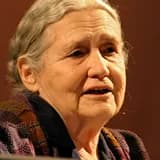
Doris Lessing died on November 17, 2013, in London at age 94, leaving behind a literary legacy spanning over sixty years and more than fifty published works.
Doris Lessing died on November 17, 2013, at her home in London at the age of 94. Her death marked the end of one of the most prolific and boundary-crossing literary careers of the twentieth and early twenty-first centuries, spanning genres from social realism and feminist fiction to science fiction and autobiography.
Tributes poured in from across the literary world, with authors, critics, and public figures celebrating her fearless engagement with difficult subjects — colonialism, communism, feminism, mental illness, and aging — often decades ahead of mainstream cultural acceptance. Her landmark 1962 novel The Golden Notebook remained a touchstone of second-wave feminism even though Lessing herself resisted being labeled strictly a feminist writer, insisting her concerns were broader and more universal.
At the time of her death, she left behind a body of work exceeding fifty books, including novels, short story collections, poetry, plays, and non-fiction, along with two volumes of autobiography. Her legacy endures in the continued academic study of her work, her influence on generations of writers exploring gender, politics, and psychological realism, and her status as only the eleventh woman to win the Nobel Prize in Literature, awarded in 2007. She was survived by her son and grandchildren; her passing was widely covered by major international news outlets as the loss of a defining literary voice of her era.