← All women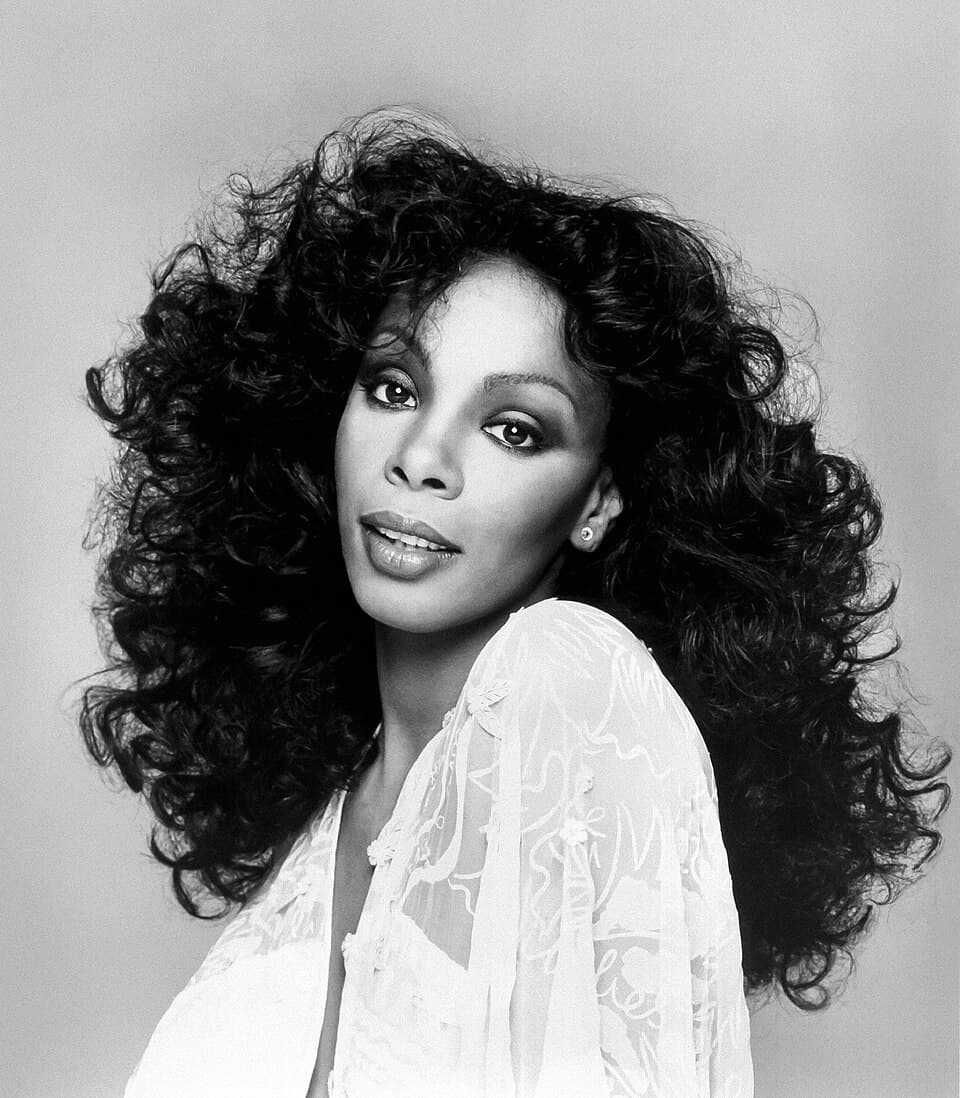
American · Arts
Donna Summer
December 31, 1948 – May 17, 2012
Early Life and Background
Donna Summer was born LaDonna Adrian Gaines on December 31, 1948, in the Mission Hill neighborhood of Boston, Massachusetts. She was the fourth of seven children born to Andrew Gaines, a butcher, and Mary Gaines, a schoolteacher. Raised in a devoutly Christian household, Summer was immersed in gospel music from early childhood, singing in her church choir. Her extraordinary vocal talent became evident as a teenager when she reportedly substituted for a soloist during a church service and astonished the congregation, an early sign of the powerful voice that would later define her career.
Summer attended Jeremiah E. Burke High School in Boston but left before graduating to pursue music. She was drawn to the emerging psychedelic rock and soul scenes of the late 1960s, performing with a band called Crow in Boston before relocating to New York City to further pursue music opportunities.
Career Beginnings and European Success
In 1968, Summer auditioned for and won a role in the Munich, Germany production of the musical Hair, moving to Europe at just nineteen years old. This decision proved pivotal, exposing her to European music scenes and giving her opportunities unavailable to her in the United States at the time. She remained in Germany for several years, performing in musicals such as Godspell and joining the Vienna Volksoper, while also working as a session and backing vocalist.
It was in Munich that Summer met record producers Giorgio Moroder and Pete Bellotte, a collaboration that would prove transformative for both her career and the future of popular music. In 1974, she released her first single, "Lady of the Night," in Europe, adopting the stage name "Donna Summer" (derived from her married name at the time, Sommer, from her first husband, Austrian actor Helmuth Sommer, whom she married in 1973 and divorced in 1976).
Breakthrough: "Love to Love You Baby" and the Birth of Disco Queen
Summer's international breakthrough came in 1975 with the release of "Love to Love You Baby," an extended, sensually charged disco track produced by Moroder and Bellotte. The song's suggestive moaning vocals and hypnotic groove made it a sensation in discotheques and on radio, propelling it to the Billboard Top 10 in the United States. The song was controversial for its overt sexuality but undeniably successful, establishing Summer as a rising star in the emerging disco genre.
In 1977, Summer released "I Feel Love," a groundbreaking single built entirely around synthesizers, produced by Moroder and Bellotte. Widely regarded as one of the most influential dance records ever created, "I Feel Love" pioneered the use of electronic sequencers in popular music and is credited by music historians as a foundational track for electronic dance music, techno, and house music genres. Brian Eno famously told David Bowie the song would "change the sound of club music for the next fifteen years" — a prediction that proved remarkably accurate.
Peak Stardom: Late 1970s Chart Dominance
Between 1976 and 1980, Summer released a string of highly successful albums, including A Love Trilogy (1976), I Remember Yesterday (1977), Once Upon a Time (1977), the chart-topping Live and More (1978), Bad Girls (1979), and On the Radio: Greatest Hits Volumes I & II (1979). During this period she achieved the rare distinction of scoring four number-one Billboard Hot 100 singles within a thirteen-month span in 1978–1979: "MacArthur Park," "Hot Stuff," "Bad Girls," and "No More Tears (Enough Is Enough)," a duet with Barbra Streisand.
Her 1979 album Bad Girls showcased her versatility, blending disco with rock guitar and funk influences, further establishing her as more than a one-dimensional disco performer. She earned the informal title "Queen of Disco" during this era, becoming one of the defining voices of the genre and one of the best-selling artists of the decade.
At the 22nd Annual Grammy Awards in 1980, Summer won the inaugural Grammy Award for Best Female Rock Vocal Performance for "Hot Stuff," a notable crossover recognition given her disco reputation. She would go on to win five Grammy Awards over her career and receive numerous other nominations.
Later Career and Musical Evolution
As disco's commercial dominance waned in the early 1980s amid a cultural backlash (epitomized by the infamous "Disco Demolition Night" of 1979), Summer transitioned toward more mainstream pop and rock-inflected sounds. She signed with David Geffen's newly formed Geffen Records label and released albums such as The Wanderer (1980) and She Works Hard for the Money (1983), the title track of which became an anthem addressing the struggles of working-class women and achieved significant chart success, further demonstrating her ability to evolve with changing musical tastes.
Throughout the 1980s and 1990s, Summer continued recording, exploring gospel and Christian music influences reflecting her faith, notably with the album The Donna Summer Anthology and gospel-inspired tracks. She remained active as a touring artist and occasional recording artist into the 2000s, releasing her final studio album, Crayons, in 2008 to positive critical reception, and continuing to perform live for enthusiastic audiences worldwide.
Personal Life
Summer married Austrian actor Helmuth Sommer in 1973; the couple had one daughter, Mimi Sommer, before divorcing in 1976. In 1980, she married musician Bruce Sudano, a member of the band Brooklyn Dreams, with whom she had two daughters, Brooklyn and Amanda. Summer and Sudano remained married until her death in 2012, and their relationship was often cited as a source of stability throughout her career.
Summer was a devout Christian throughout much of her later life, and her faith informed both her personal choices and some of her later musical output. She also pursued visual art as a painter later in life, exhibiting her artwork and demonstrating creative talents beyond music.
Awards and Honors
Over her career, Donna Summer received five Grammy Awards and eighteen Grammy nominations, along with numerous other accolades including American Music Awards. Her contributions to music were recognized posthumously in 2013 when she was inducted into the Rock and Roll Hall of Fame, a recognition that affirmed her legacy beyond the disco genre as a pioneering and influential artist in American popular music. She also received a star on the Hollywood Walk of Fame in 1989.
Later Life and Death
In her final years, Summer largely kept her health struggles private, continuing to perform and make public appearances even while battling lung cancer, which she reportedly attributed in interviews to environmental exposure rather than smoking. She died on May 17, 2012, at her home in Naples, Florida, at the age of 63. She was survived by her husband, Bruce Sudano, and her three daughters.
Her death prompted an outpouring of tributes from musicians, politicians, and fans worldwide, reflecting her enormous cultural impact. Numerous artists cited her influence on their own work, and her music has continued to be sampled, covered, and celebrated in the years since her passing.
Legacy
Donna Summer's influence on popular music is difficult to overstate. As the definitive voice of the disco era, she helped popularize a genre that reshaped American and global popular culture in the 1970s. Beyond disco, her pioneering work with electronic instrumentation on tracks like "I Feel Love" laid essential groundwork for electronic dance music, techno, and house music, genres that continue to dominate global club culture decades later. Her ability to cross genre boundaries, from gospel to disco to rock to pop, demonstrated a versatility rare among artists of her era.
As a Black woman who achieved massive commercial and critical success in a music industry often resistant to such crossover, Summer broke significant barriers and paved the way for generations of artists who followed. Her legacy endures through her extensive catalog of hit songs, her posthumous induction into the Rock and Roll Hall of Fame, and her continued influence on contemporary music and popular culture.
Dated achievements
2 indexed.
- Dec311948Arts
Birth of Donna Summer
Donna Summer was born on December 31, 1948, in Boston, Massachusetts.
View details Encyclopaedia Britannica - Donna Summer - May172012