← All women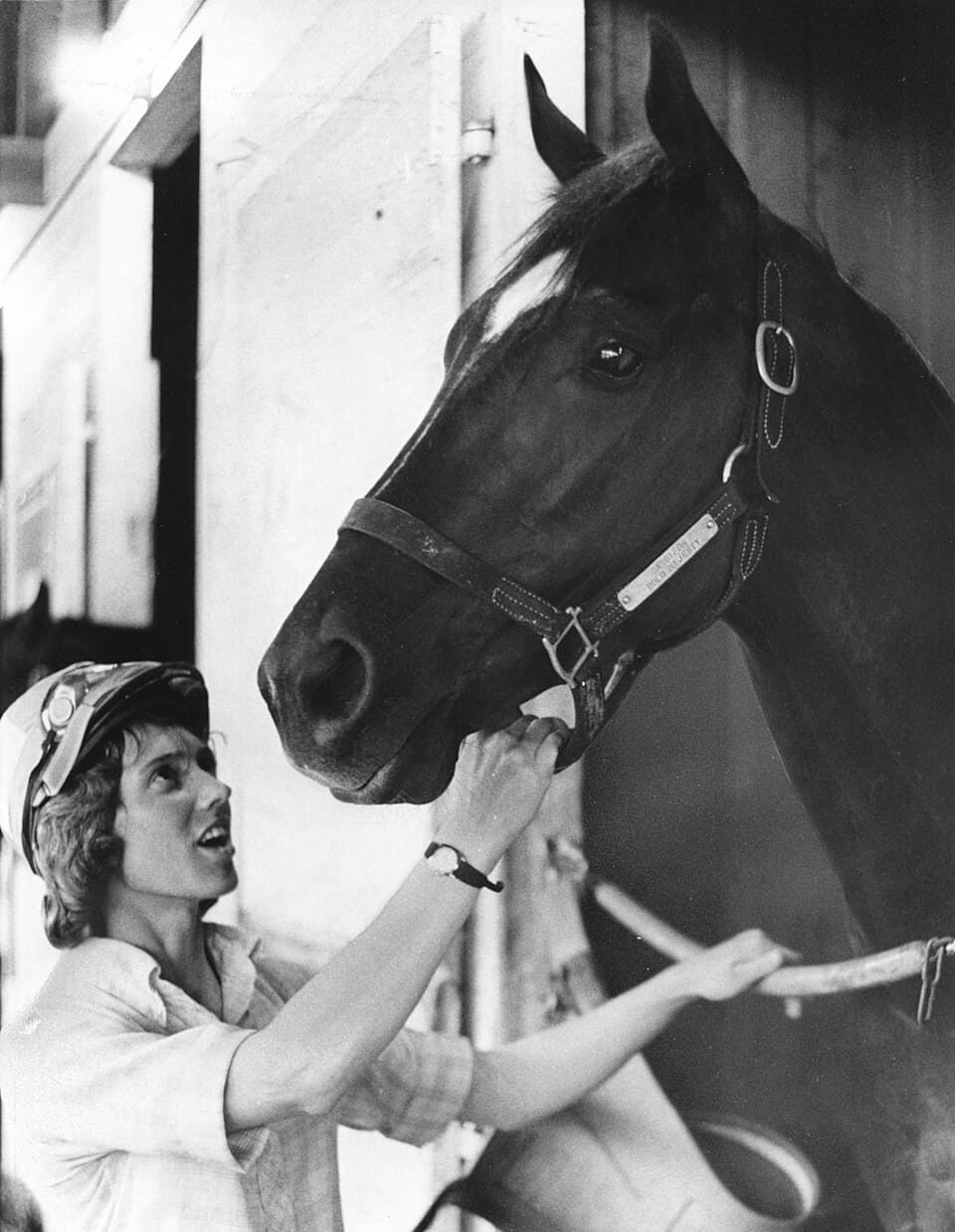
American · Sports
Diane Crump
May 18, 1948 – January 1, 2026
Early Life and Background
Diane Crump was born on May 18, 1948, in Milford, Connecticut, United States.[4] She grew up in a non‑horseracing family, but with parents whose interests subtly foreshadowed her future. Her father, Walter Crump, worked for Sikorsky Aircraft, a major helicopter manufacturer, while her mother, Jean (Boreiko) Crump, was a poet and visual artist known for painting horse murals.[2] The combination of technical engineering and artistic fascination with horses created a household in which curiosity and creativity were encouraged, even if professional sport was not initially seen as a path for a daughter.
Crump’s childhood coincided with the conservative social climate of the 1950s, when expectations for girls generally emphasized domestic roles rather than athletic careers. Nonetheless, she became deeply fascinated with horses at an early age. Later profiles note that she was "the only horse person in her family" and that her fascination with horses "seemed to come out of thin air," suggesting an intense, self‑directed passion.[7][13] Her family eventually moved to Florida, a region whose racing and training facilities offered more direct access to the equine world.[13]
As a teenager, Crump sought out opportunities to work with horses. She found employment on a horse farm, caring for weanlings and helping teach them basic skills.[15] This hands‑on experience on the farm was crucial: it allowed her to observe professional trainers and riders at close range, understand the physicality of horses, and develop the resilience needed for long days of barn work. These formative years also exposed her to the gendered division of labor in racing—women were generally accepted as grooms or exercise riders but were not expected to seek jockey licenses.
Career Beginnings and Development
Crump’s ambition was to become a professional jockey, a goal that, in the early 1960s, put her directly at odds with entrenched norms. Racing authorities and male jockeys often argued that women lacked the strength or temperament to handle thoroughbreds in competition. As the women’s liberation movement gained momentum, female riders began to push for licenses; Crump emerged as one of the most determined figures in this struggle.[1][3]
She initially worked as an exercise rider, galloping horses in the mornings to keep them fit. This role allowed her to demonstrate her skill and fitness to owners and trainers, many of whom nonetheless hesitated to put her in official races. Her persistence, combined with broader legal and social changes that were slowly opening opportunities for women in sport, eventually led to her being granted a jockey’s license in Florida.[3]
By the late 1960s, the question of whether women should be allowed to ride as professional jockeys had become a contentious public issue. Several state racing commissions faced legal challenges over their refusal to license women. Within this context, Crump’s determination to ride in pari‑mutuel races positioned her at the center of a national debate about gender equality in horse racing.[3][10]
First Woman in a U.S. Pari‑Mutuel Race (1969)
Crump’s breakthrough came on February 7, 1969, at Hialeah Park Race Track in Florida. Riding the filly Bridle ’n Bit in the seventh race, she became the first woman to ride in an officially sanctioned pari‑mutuel race in the United States.[1][3][12] The significance of this moment lay not only in the race itself but in the intense resistance surrounding it.
Reports from the time and later retrospectives describe a hostile atmosphere. Some spectators shouted that women did not belong on the track, and there were fears of physical confrontation. To ensure her safety, officials arranged a police escort to accompany Crump through the crowd as she walked to the paddock and then out to the track.[1][12][14] Despite the tension, she completed all the required pre‑race procedures, mounted Bridle ’n Bit, and broke from the starting gate alongside eleven male‑ridden horses in a 12‑horse field.
Accounts differ on her exact finishing position—some sources record her as finishing tenth, others ninth—but all agree that she did not place near the front of the field.[1][12] Nonetheless, the outcome was far less important than the fact that she competed. The race represented the first time a female professional jockey had ridden at a legal betting track in the United States, decisively challenging the notion that women were unsuited for the profession.
This event made national news and quickly entered the historical record as a key milestone in women’s sports history. It forced racing authorities, owners, and fans to reckon with their assumptions about gender and athletic competence. For Crump personally, it marked the start of a 17‑year riding career that would see her accumulate hundreds of wins and a reputation as one of the sport’s most important trailblazers.[3][10][12]
First All‑Female Parimutuel Race: Lady Godiva Stakes (1969)
Less than three months after Hialeah, Crump participated in another historic race. On April 29, 1969, she rode in the Lady Godiva Stakes at Suffolk Downs in Boston, noted as the first parimutuel horse race in the United States featuring an all‑female field of jockeys.[3]
The Lady Godiva Stakes brought together multiple licensed women jockeys, each riding in a sanctioned betting race. While specific details of the race—such as the final order of finish—are less widely documented, its symbolic importance is clear. After years in which women had been excluded from professional riding roles, an entire race carded with female jockeys demonstrated that Crump’s appearance at Hialeah was not an isolated event, but part of a broader shift.
The promotional framing of the race, invoking "Lady Godiva," reflected both novelty and spectacle. Media coverage tended to emphasize the perceived daring of women riders rather than their tactical skill. Yet for Crump and her peers, the event was a serious professional opportunity to prove their competence in front of owners, trainers, and bettors.
The Lady Godiva Stakes helped normalize the idea of women as jockeys in the pari‑mutuel system. It showed that racing authorities could sanction an all‑female race without undermining the integrity of the sport, and it gave women riders shared visibility rather than isolating them as single curiosities in all‑male fields. Crump’s participation linked her personal fight for acceptance to an emerging collective presence of women in American racing.[3]
First Woman to Ride in the Kentucky Derby (1970)
Crump’s most famous achievement came the following year. On May 2, 1970, she rode the colt Fathom in the Kentucky Derby at Churchill Downs, becoming the first woman jockey ever to compete in the race.[1][4][6][14]
The Kentucky Derby, inaugurated in 1875, had been run for 95 years with 1,055 all‑male entrants before Crump’s appearance.[6] Owners and trainers were initially reluctant to place a woman on a Derby mount, fearing public backlash and doubting that she would be accepted by fellow jockeys and bettors. Crump’s strong record as an exercise rider and her demonstrated courage at Hialeah eventually persuaded connections to entrust her with Fathom.
On Derby day, Crump first rode—and won—an earlier race on the same card, illustrating her competence under intense pressure.[1][6] In the main event, Fathom went off as a long shot. Crump guided him through the crowded field and finished 15th in a field of 17, a mid‑pack result that nonetheless carried historic significance.[1]
Media coverage of the 1970 Derby highlighted Crump’s presence as a groundbreaking moment in sports. Commentators discussed the broader issue of women’s roles in professional competition, and her ride became a reference point in debates about gender equality. Over subsequent decades, only a handful of other women would ride in the Derby, underscoring how rare her achievement remained.[4][14]
The Kentucky Derby Museum and later historical accounts consistently recognize Crump as the first woman to ride in the Derby, emphasizing that her participation "shattered tradition" and helped redefine expectations for women in racing.[14] This single ride has often been cited in women’s history almanacs and sports histories as one of the most important barrier‑breaking moments in American sport.
Riding Career, Statistics, and Later Transitions
Following her landmark rides in 1969 and 1970, Crump continued to compete as a professional jockey for nearly two decades. Statistical records differ slightly, but authoritative racing sources report that she made over 1,600 starts and achieved between 228 and 235 victories during her career.[3][6][10][12]
Encyclopedia.com summarizes her record as 1,614 starts with 235 wins, 204 seconds, and 203 thirds, and total purse earnings of over $1 million.[3] Other sources, drawing on Equibase data, note 228 wins and nearly $1.3 million in earnings for the horses she rode.[10][12] While the exact numbers vary slightly by source and time of compilation, all agree that she had a long and successful career, particularly given the limited opportunities afforded to women riders.
Crump’s career was not uninterrupted. Some accounts indicate that she briefly retired around the mid‑1980s to focus on training and other equine work before returning to the saddle.[8] She remained active as a jockey into the late 1990s. Many sources state that she rode her last race in 1998, about a month shy of her 50th birthday, while others place her formal retirement around 1999.[4][5][7][12] All agree that her riding career spanned roughly three decades from her 1969 debut.
After leaving race riding, Crump stayed deeply involved with horses. She worked as a trainer, managed thoroughbred horse farms—including time at the training barn at Calumet Farm in Kentucky—and served as barn manager at Keysville Post Stables in Virginia.[3] She later founded Diane Crump Equine Sales, an equine sales company based in Virginia that connected buyers and sellers of sport horses and racing prospects.[10][13] This business allowed her to use her expertise and contacts to support other riders and owners, extending her influence beyond her own mounts.
Awards, Honors, and Recognition
Although Crump’s career was defined more by barrier‑breaking firsts than by formal awards, she received wide recognition from racing institutions and media. The Kentucky Derby Museum has publicly honored her legacy, emphasizing her role as the first woman to ride in the Derby and highlighting her courage and perseverance in a sport that had long resisted women’s participation.[14][18]
Her story has been chronicled in numerous articles, documentaries, and books. Sports historians and journalists have repeatedly used her Hialeah and Derby rides as key examples in discussions of gender integration in professional sports. For instance, Sportshistoryweekly and ESPN have featured retrospectives on her trailblazing career and its impact on later generations of women jockeys.[5][10]
Crump is also the subject of the biography "Diane Crump: A Horse‑Racing Pioneer’s Life in the Saddle", which examines her career and broader significance in racing history.[10] Educational outlets such as Britannica and Kids Britannica include entries on her, ensuring that her story is accessible to younger readers and students studying women’s history and sports.[4][9]
Personal Life
Publicly available biographical sources focus primarily on Crump’s professional achievements, but some details of her personal life are known. She spent much of her adult life in Florida and later in Virginia, where the region’s horse farms and training centers provided a natural base for her work.[3][13][16]
Obituaries report that she was survived by a daughter, often identified as Maryanne Payne, three grandchildren, and a brother and sister.[13][16] Her close family ties and ongoing engagement with horses suggest a personal life deeply intertwined with the equine world. Crump herself frequently described her relationship with horses as central to her identity, emphasizing that she "loved horses from the start" and that her desire to ride was rooted in that affection rather than in a conscious quest for fame.[7]
While some sources mention periods of marriage and work alongside partners in the horse business, detailed accounts of her marriages and private relationships are less systematically documented than her public career. Editorially rigorous treatments therefore emphasize her family survivorship and professional collaborations rather than speculative details of her personal relationships.
Legacy and Historical Impact
Crump’s historical significance rests on her role as a pioneer for women in professional horse racing. By becoming the first woman to ride in a U.S. pari‑mutuel race and the first to compete in the Kentucky Derby, she directly challenged institutional barriers and cultural assumptions about gender and athletic courage.[1][3][4][6][14]
Her Hialeah ride in February 1969 demonstrated that a woman could fulfill all the demands of professional jockeyship—making weight, handling thoroughbreds in competition, and performing under intense pressure—despite widespread skepticism. The hostile crowd and need for a police escort dramatized the resistance to women’s participation, but her completion of the race forced racing authorities to confront the untenability of excluding qualified female riders.[1][3][12]
Her Derby ride in May 1970 had even broader impact. The Kentucky Derby occupies a central place in American sports culture, and her presence on the track sent a powerful message to aspiring women athletes across disciplines. Over subsequent decades, only a small number of women have ridden in the Derby, but each has been understood as following the trail Crump blazed.[4][14][18]
Beyond these headline achievements, Crump’s long career—encompassing more than a thousand starts and hundreds of wins—helped normalize women’s presence in everyday racing. As more women obtained jockey licenses, her early struggles provided both inspiration and a practical precedent. Contemporary female jockeys and racing commentators often cite her as an influence and a symbol of resilience.
Her story also intersects with broader themes in women’s history, including the fight for workplace equality, the challenge to stereotypes about physical strength and risk‑taking, and the slow pace at which major sports institutions integrate women at the highest levels. In educational materials and museum exhibits, Crump’s career is often used to illustrate how individual courage can catalyze institutional change.
Later Life and Death
In later life, Crump remained active in the equine world through training, farm management, and her equine sales business in Virginia. She continued to advocate informally for women in racing and to participate in public events, interviews, and museum programs that highlighted her pioneering role.[10][14][16]
Her health declined after she was diagnosed with an aggressive form of brain cancer, as reported by family and media. On January 1, 2026, Crump died at an inpatient hospice facility in Winchester, Virginia, at age 77.[2][15][16] Major outlets, including The New York Times, ESPN, and regional newspapers such as the Miami Herald and Courier‑Journal, published obituaries recounting her trailblazing achievements and emphasizing her influence on generations of women jockeys.[2][5][13][15]
These obituaries noted that her professional career spanned from her 1969 debut through the late 1990s, during which she accumulated 228 or more victories and significant purse earnings.[5][12][16] They also highlighted her post‑riding work in equine sales and her role as a mentor and symbol for women in racing.
Crump’s death prompted renewed reflection on how much the sport had changed since her first rides—and how much work remained. While women jockeys were by then a recognized part of the racing landscape, the small number of female Derby participants underscored the enduring challenges of full gender parity. In this context, Crump’s life continues to serve as both a historical landmark and an inspiration for future riders.
Assessment
For editorial almanacs of women’s history, Diane Crump stands out as a figure whose achievements are precisely dated and extensively documented. Her rides on February 7, 1969, April 29, 1969, and May 2, 1970 mark clear turning points in the inclusion of women in professional horse racing. Combined with her long career, post‑racing contributions, and documented death on January 1, 2026, her biography offers a rich case study in the intersection of individual determination and institutional change.
Crump’s legacy is preserved through museum recognition, biographical works, and ongoing references in sports journalism and educational materials. She remains an essential figure in understanding how women gained access to high‑profile competitive arenas in the late 20th century and how those gains continue to shape the landscape of professional sport today.
Dated achievements
5 indexed.
- May181948Sports
Birth of Diane Crump in Milford, Connecticut
Born May 18, 1948, in Milford, Connecticut, to Walter and Jean (Boreiko) Crump.
View details Diane Crump – Kids Britannica - Feb071969Sports
First woman to ride in a U.S. pari-mutuel race at Hialeah Park
Rode Bridle ’n Bit at Hialeah Park on Feb. 7, 1969, becoming the first woman to compete in an officially sanctioned U.S. pari-mutuel race.