← All women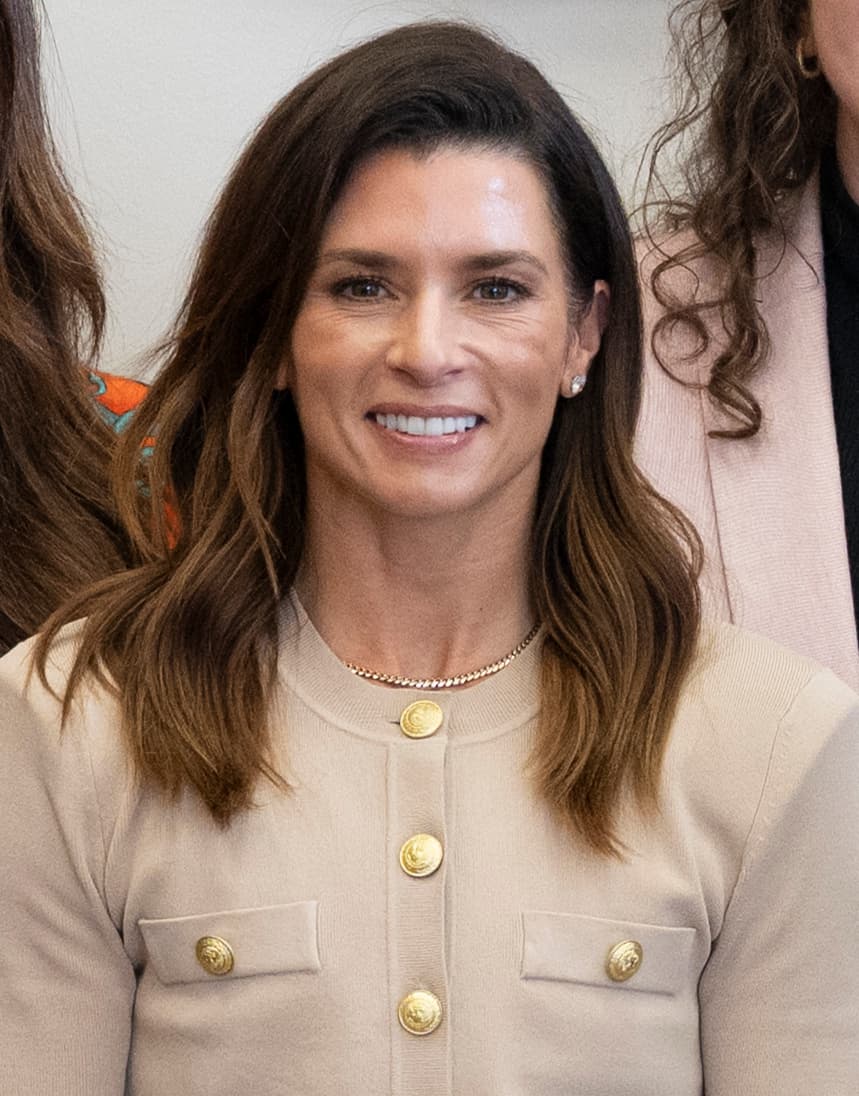
American · Sports
Danica Patrick
March 25, 1982 – present
Early Life and Background
Danica Sue Patrick was born on March 25, 1982, in Beloit, Wisconsin, and grew up in nearby Roscoe, Illinois, a small community on the Illinois–Wisconsin border. Her parents, Terry and Bev Patrick, both worked in and around motorsports and mechanical trades: her father raced various cars, including midgets and snowmobiles, while her mother worked as a snowmobile mechanic. This environment normalized racetracks and garages as everyday spaces, laying the groundwork for Patrick’s unusual career aspirations in a male-dominated field.
Patrick’s interest in racing emerged early. At around age ten, after her sister initially expressed interest, her parents purchased a go‑kart, and Danica quickly took to driving it herself. She soon began competing at local karting tracks, where her competitiveness and aptitude became apparent. Over the following years, she claimed multiple regional and national karting titles in the United States, often racing against and defeating boys in mixed-gender fields. These formative experiences helped her develop racecraft, confidence, and resilience in a setting where female drivers were rare.
Patrick attended Hononegah Community High School in Rockton, Illinois, but her education soon became secondary to her racing ambitions. As her talent became clear, her family made substantial financial and logistical sacrifices, traveling extensively for karting events and pursuing opportunities that might place her on a professional path. The decision to prioritize racing required significant risk, especially for a girl in the 1990s, when established pathways for women in motorsport were limited.
Racing Beginnings and Move to Europe
By her mid-teens, Patrick had outgrown the U.S. karting scene and needed higher-level competition to advance. At age sixteen, she moved from the Midwest to the United Kingdom to compete in European open‑wheel racing, a traditional proving ground for future Formula One and top-tier drivers. There she entered series such as Formula Ford and Formula Vauxhall, facing deeper fields and more advanced machinery than she had previously encountered.
One of her most notable early results came at the prestigious Formula Ford Festival at Brands Hatch, where she finished second, the best result ever achieved by a woman in that event. Her European stint exposed her to highly competitive, male-dominated paddocks, demanding circuits, and the intense scrutiny that accompanies young drivers with sponsorship backing.
Financial limitations, cultural distance, and the challenge of securing long-term backing eventually led Patrick back to the United States. However, her time in Europe enhanced her profile and gave her a depth of experience that would prove crucial when she transitioned into North American open‑wheel racing.
Rise Through American Open-Wheel Ranks
Upon returning to the U.S., Patrick joined the Toyota Atlantic Championship, a key feeder series for higher-level open‑wheel racing. In 2003 she became the first woman to stand on a podium in the history of the series when she finished on the rostrum at the season-opening race at Monterey, California. The following year, she became the first woman to secure a pole position in Toyota Atlantic, starting from pole at Portland International Raceway. Although these achievements are typically recorded by season rather than specific race dates, they signaled her readiness for the next step.
Her performances attracted the attention of prominent team owners. Patrick signed with Rahal Letterman Racing, co-owned by 1986 Indianapolis 500 winner Bobby Rahal and television host David Letterman, to compete in the top-tier IndyCar Series (then part of the Indy Racing League). This move placed her on a major stage and made her one of the most closely watched rookies in American motorsport.
IndyCar Series Breakthrough (2005–2011)
Patrick entered the IndyCar Series full time in 2005 and quickly emerged as a leading figure. That year’s Indianapolis 500 became a defining moment in her career and in the history of women in motorsport. On May 29, 2005, in her first Indy 500 start, Patrick not only qualified strongly but also led the race for 19 laps, becoming the first woman ever to lead laps in the Indianapolis 500. Her ability to run at the front of the field, manage restarts, and contend for victory in a race steeped in tradition and male dominance was unprecedented.
Patrick ultimately finished fourth in that 2005 Indy 500, at that time the best finish by a woman in the race’s history. The performance resonated far beyond racing media, making her a mainstream sports figure. She won the IndyCar Series Rookie of the Year award for the season, recognition that reflected both her Indianapolis performance and her competitiveness throughout the year. Her impact extended off-track as well, sparking wider conversation about women’s roles in professional motorsport and the marketing of female athletes.
Over subsequent IndyCar seasons, Patrick remained a consistent presence near the front of the field. She regularly finished in the top ten in points and built a reputation for smooth, strategic driving, particularly on oval circuits. However, the signature victory that would fully cement her status as a trailblazer had yet to come.
Historic IndyCar Victory: Indy Japan 300
On April 20, 2008, Patrick achieved a milestone that would define her legacy: winning the Indy Japan 300 at Twin Ring Motegi. In a race decided by fuel strategy and disciplined pace management, she conserved fuel better than many competitors, moving into the lead in the closing laps as others pitted. She held the top spot to the checkered flag, becoming the first woman to win an IndyCar race and the first woman to win a major open‑wheel championship event in North America.
The win was historic not only because of Patrick’s gender but also because it occurred in a full-field, points-paying race featuring many of the era’s top drivers. She had to execute strategy, maintain speed, and withstand pressure in the final laps. The victory drew global media coverage and cemented her status as one of the most successful women in motorsport history.
Patrick continued to produce strong results in IndyCar after her Motegi win. On May 24, 2009, she finished third in the Indianapolis 500, the best Indy 500 result of her career and an improvement on her own previous benchmark for women at the event. That podium highlighted her enduring competitiveness on one of racing’s grandest stages and reinforced that her earlier achievements were part of a sustained pattern of high performance.
Transition to NASCAR
While still competing in IndyCar, Patrick began exploring stock car racing. In 2010 she started racing part-time in NASCAR’s Nationwide Series (now Xfinity Series), gradually learning the craft of heavy, closed-wheel cars and the distinct culture of U.S. stock car racing. The move represented a significant technical and cultural shift: she was transitioning from open‑wheel machinery and road-and-oval circuits to the high-contact, drafting-intensive world of NASCAR.
In 2012, Patrick moved full time into NASCAR competition, running a complete Nationwide Series schedule and making selected starts in the top-tier Sprint Cup (later Cup) Series. She joined Stewart-Haas Racing in 2013 for a full Cup Series campaign, driving the No. 10 car. Her presence in NASCAR’s premier series drew intense scrutiny, with commentators questioning whether her open‑wheel success would translate to stock cars and whether she could justify extensive sponsorship attention.
Daytona 500 Milestones
Patrick delivered her most significant NASCAR achievements at the sport’s showcase event, the Daytona 500. On February 23, 2013, she qualified on pole for the race, becoming the first woman ever to win a NASCAR Cup Series pole position. Her speed at Daytona International Speedway demonstrated that she could master the intricacies of restrictor-plate qualifying and adapt to the drafting-focused dynamics of superspeedway racing.
The following day, on February 24, 2013, she finished eighth in the Daytona 500, the highest finish by a woman in the race’s history at that time. Patrick ran much of the race in the lead pack, led laps, and avoided major accidents—no small feat in an event known for multi-car crashes and unpredictable outcomes. Together, the pole and the top-ten finish turned her Daytona 2013 campaign into a landmark moment in NASCAR history, proving that a woman could both start up front and finish competitively in the series’ most important race.
Beyond Daytona, Patrick steadily accumulated top-ten finishes in the Cup Series. On November 15, 2015, she surpassed trailblazer Janet Guthrie’s record to claim the mark for the most top-ten finishes by a woman in NASCAR’s premier series. Though achieved through accumulated results rather than a single headline race, this milestone underlined her longevity and consistency in an environment where women had rarely maintained full-time rides.
Later NASCAR Years and the “Danica Double” Farewell
Patrick continued to race full-time in the Cup Series through the 2017 season. While she did not secure a Cup race victory, she routinely qualified for and completed some of the sport’s most challenging events, setting records for starts, laps led, and other metrics for women in NASCAR’s top division. Her presence helped normalize female participation at the highest level of stock car racing, even as she faced persistent scrutiny regarding her results.
In 2018, Patrick announced that she would step away from full-time racing and mark her retirement with a pair of final starts in the two races most closely associated with her public identity: the Daytona 500 and the Indianapolis 500, a farewell tour she dubbed the “Danica Double.”
On February 18, 2018, she made her final Daytona 500 appearance, driving for Premium Motorsports. Her race ended in a multi‑car crash, but the event was widely framed as a symbolic closing to her NASCAR chapter. Then, on May 27, 2018, Patrick returned to Indianapolis with Ed Carpenter Racing for her final Indianapolis 500 start. Though she again retired due to an accident, the 2018 Indy 500 marked the end of her professional driving career at the track where she first rose to international prominence.
Following these events, Patrick effectively retired from professional racing, having announced her decision earlier that year. Her exit drew extensive reflection on her contributions to both IndyCar and NASCAR and on the broader significance of her career for women in motorsport.
Awards, Honors, and Recognition
Throughout her career, Patrick accumulated numerous honors that recognized both her on-track performance and her cultural impact. She was awarded the IndyCar Series Rookie of the Year title for 2005, reflecting her strong debut season and historic Indianapolis 500 performance. She also received Rookie of the Year honors specifically for the 2005 Indy 500.
Patrick’s breakthrough at Twin Ring Motegi and her standing as the most successful woman in American open‑wheel racing drew international attention. Major media outlets, including Time magazine, profiled her as part of broader features on women who were “firsts” in their fields, highlighting her 2013 Daytona pole as a defining barrier-breaking moment. She received frequent fan-voted awards and was a regular in sports and mainstream magazines, reflecting her role as both athlete and cultural figure.
Many of her most significant recognitions are embedded in record books: she became the only woman to win an IndyCar race, the first woman to lead laps in both the Indianapolis 500 and the Daytona 500, and a record holder for women’s starts, laps led, and top-ten finishes in NASCAR’s top series. These statistical records, while sometimes incremental, have lasting significance in the historical narrative of women in sport.
Entrepreneurship, Media, and Later Career
After retiring from racing, Patrick expanded her activities as an entrepreneur, media personality, and author. She launched businesses including a clothing line and a wine brand, leveraging her public profile to build consumer ventures. She also hosted a podcast and made regular appearances as a commentator and guest in sports and entertainment media, continuing to influence public conversations about performance, resilience, and women in competitive environments.
Patrick authored or co‑authored books, including a fitness and lifestyle guide that intertwined her personal experiences with advice on health and mindset. Her post-racing career reflects a broader trend in modern sports, whereby high-profile athletes extend their influence beyond competition into business, media, and advocacy.
Personal Life
Patrick’s personal life has been widely covered by sports and entertainment media due to her visibility. She has been married and later divorced, and has had several high-profile relationships, including with fellow racer Ricky Stenhouse Jr. and NFL quarterback Aaron Rodgers. While such coverage has sometimes overshadowed discussions of male athletes’ private lives, it also underscores the double standards female athletes often face in media narratives.
Patrick has spoken publicly about training, nutrition, and wellness, positioning herself as an advocate for fitness and self-discipline. She has also engaged in charitable initiatives and appearances, although much of her philanthropy has been conducted with relatively low publicity compared to her racing career.
As of the 2020s, Patrick resides in Arizona and continues to be active in business and media, while maintaining ties to the motorsport community through commentary and special appearances.
Legacy and Historical Impact
Danica Patrick’s legacy in women’s history and sports history rests on a combination of tangible records and symbolic breakthroughs. She is widely regarded as the most successful woman in the history of American open‑wheel racing, anchored by her victory in the 2008 Indy Japan 300 and her multiple top-five finishes at the Indianapolis 500. In NASCAR, she set new benchmarks for female participation, performance, and visibility in the Cup Series.
Her achievements challenged longstanding assumptions that women could not compete at the highest levels of motorsport. By leading laps and contending for victories in marquee events such as the Indy 500 and Daytona 500, Patrick disrupted the visual and cultural norms of racing, a sport long associated with hypermasculine imagery. Her presence attracted new fans, particularly young girls, to motorsport, and broadened the commercial imagination of sponsors and broadcasters regarding female athletes.
At the same time, Patrick’s career also illuminated the structural barriers that remain. She was often the only woman on the grid, and her every result, positive or negative, drew disproportionate scrutiny. While she opened doors conceptually, the relatively small number of women who have followed her into top-tier IndyCar or NASCAR competition underscores that systemic issues—funding pathways, developmental opportunities, and cultural biases—have not been fully resolved.
Nonetheless, Patrick occupies a central place in the history of women in sport. She bridged eras between early pioneers who fought merely for the right to compete and future generations for whom female participation at elite levels is increasingly normalized. Her records, from firsts at Indianapolis and Motegi to milestones at Daytona, will continue to serve as reference points for historians tracing the ongoing evolution of gender, performance, and representation in motorsport.
Later Life and Continuing Influence
Since stepping away from professional racing after the 2018 season, Patrick has used her platform to explore a multifaceted post-driving career. She remains a recognizable figure in sports media, often providing commentary around major racing events and participating in interviews that revisit her groundbreaking career.
Her entrepreneurial ventures, lifestyle advocacy, and continued presence in public discourse ensure that her influence extends beyond historical footnotes and record books. For many aspiring drivers, particularly young women, Patrick’s story offers a roadmap of both possibility and challenge: she demonstrated that women can compete at the front of motorsport’s highest levels, while also highlighting the persistence required to navigate a system not originally built with them in mind.
In the broader story of women’s history, Danica Patrick stands as a vivid example of how one athlete’s achievements can reshape expectations across an entire domain of professional sport.
Dated achievements
11 indexed.
- Mar251982Sports
Birth of Danica Patrick
Danica Sue Patrick was born in Beloit, Wisconsin, later becoming one of the most prominent women in American auto racing.
View details Danica Patrick - Wikipedia - May292005Sports
First woman to lead laps in the Indianapolis 500
Patrick became the first woman to lead laps in the Indianapolis 500, a historic breakthrough in one of motorsport's most storied races.