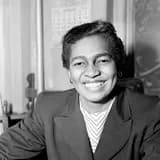
On 30 January 1959, Claudia Jones staged the first indoor Caribbean Carnival at St Pancras Town Hall, a direct precursor to Notting Hill Carnival.
On 30 January 1959, Claudia Jones organized the first indoor Caribbean Carnival at St Pancras Town Hall in London. Promoted under the slogan 'A people's art is the genesis of their freedom', the event was broadcast by the BBC and brought together Caribbean music, dance, and pageantry in a celebratory response to the racial violence of the 1958 Notting Hill riots.
This event is widely regarded by historians and cultural institutions as the direct precursor to the modern Notting Hill Carnival, now one of the largest street festivals in the world and a cornerstone of Black British cultural life. At a time when Caribbean communities in Britain faced hostility, discrimination, and violence, Jones's carnival asserted the value and vibrancy of Caribbean culture as a form of political resistance and community healing.
The carnival was also a genuine first in its format and scale as an organized, publicly promoted celebration of Caribbean culture in Britain, using the arts deliberately as a tool of political and social affirmation. Its legacy is direct and traceable: subsequent indoor carnivals organized by Jones, and later the outdoor street carnival that emerged in Notting Hill in the mid-1960s, drew explicitly on the model and spirit she established. Jones is consequently often credited as 'the mother of Notting Hill Carnival.'