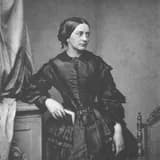
In Vienna, Clara Wieck is appointed k.k. Kammer-Virtuosin by Emperor Ferdinand I, a rare imperial title for a young woman pianist.
On 13 March 1838, during her triumphal visit to Vienna, Clara Wieck was appointed k.k. Kammer-Virtuosin (Imperial and Royal Chamber Virtuosa) by Emperor Ferdinand I of Austria. This court title was rarely bestowed on such a young performer and was exceptional for a woman pianist.
The honor recognized Clara’s extraordinary success in a series of Viennese concerts, where critics hailed her as one of the greatest pianists of her time. The imperial designation effectively made her an official artist of the Habsburg court, placing her in a select circle of musicians who enjoyed state patronage and prestige. For a nineteen-year-old German woman, the appointment signaled international acclaim at the highest social level.
Historically, Clara’s investiture as k.k. Kammer-Virtuosin is a genuine "first": she was among the earliest, and certainly among the youngest, women pianists to receive such a title in Vienna’s court system. It validated her status not just as a touring prodigy but as a mature artist worthy of imperial recognition. The award also strengthened her bargaining position with concert organizers and publishers, enhancing her ability to shape programs and promote serious repertoire. In the broader context of 19th-century gender norms, this event marks a significant breach in the barriers that limited women’s access to institutional honors, illustrating how Clara’s artistry compelled major political and cultural institutions to acknowledge a woman as a leading figure in European music.