← All women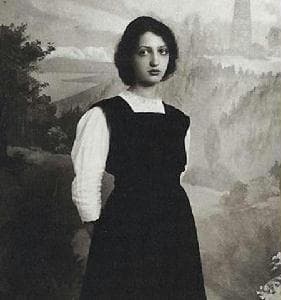
Romanian, Swiss · Arts · Science
Clara Haskil
January 7, 1895 – December 7, 1960
Early Life and Background
Clara Haskil was born on January 7, 1895, in Bucharest, Romania. She was the youngest of three daughters in a Jewish family. Her mother, Berthe Haskil, was an accomplished pianist herself and recognized Clara's musical talents early on. After the death of her father, Clara and her family moved to Vienna and later to Paris, where she began her formal musical education at the age of five. She studied under renowned teachers such as Alfred Cortot and Lazare Lévy at the Paris Conservatory, where she graduated at the age of 15 with top honors.
Career Beginnings and Development
Haskil's professional career was marked by significant challenges. She suffered from severe scoliosis and other health issues that required her to be bedridden for long periods in her youth. Despite these obstacles, her unique talent was undeniable, and she made her debut in Paris in 1925. Her performances were noted for their clarity and sensitivity, qualities that would become hallmarks of her interpretation.
Major Works and Accomplishments
Clara Haskil was particularly renowned for her interpretations of Mozart, Beethoven, and Schumann. Throughout the 1940s and 1950s, she performed with many of the world's leading orchestras and was a frequent collaborator with legends such as Arthur Grumiaux and Eugene Ormandy. Her recordings, especially those of Mozart's piano concertos, are still celebrated for their precision and emotional depth.
Awards, Honors, and Recognition
Haskil received numerous accolades throughout her career. She gained international recognition after winning the Geneva International Music Competition in 1949. Her reputation continued to grow as she was highly regarded by her peers and critics alike, often being invited to prestigious concert halls around the world.
Personal Life
Despite her fame, Haskil lived a quiet life, intensely devoted to her art. She never married but maintained close friendships with many artists and musicians, some of whom were instrumental in promoting her career in its early days.
Legacy and Historical Impact
Clara Haskil's legacy is defined by her profound musicality and ability to communicate deep emotion through her playing. She remains a respected figure among pianists, and the Clara Haskil International Piano Competition, held in Vevey, Switzerland, continues to be a testament to her enduring influence.
Later Life and Death
In the later years of her life, Haskil continued to battle health issues but remained dedicated to her performances until her death. She passed away on December 7, 1960, in Brussels, Belgium, due to injuries sustained in a fall. Her death marked the end of a luminous career that, despite its many hurdles, left an indelible mark on the world of classical music.
Dated achievements
2 indexed.
- Jan071895Arts
Birth of Clara Haskil
Clara Haskil was born on January 7, 1895, in Bucharest, Romania.
View details Clara Haskil | Biography & Facts | Britannica - Dec071960