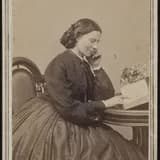
Barton died of pneumonia in Glen Echo, Maryland, ending a life that transformed American humanitarian work and Red Cross history.
Clara Barton died of pneumonia on April 12, 1912, at her home in Glen Echo, Maryland. Her death marked the end of a life that had spanned nearly a century and reshaped American humanitarian practice. By the time she died, Barton was already remembered as a Civil War relief worker, a founder of the American Red Cross, and a pioneer in disaster response.
The historical significance of her death lies partly in the breadth of the legacy she left behind. Barton had entered public life at a time when women had few formal paths into government work or national leadership. She overcame those barriers through persistence, administrative ability, and moral authority. Her career helped normalize women’s involvement in medicine, relief work, and civic organization on a scale that was still unusual in the nineteenth century.
Her influence continued long after her passing. The American Red Cross remained one of the most visible institutions in U.S. humanitarian life, and Barton’s example endured as a model of practical compassion. Her death in 1912 therefore closed a singular career but did not diminish the institution-building and cultural memory she helped create.