← All women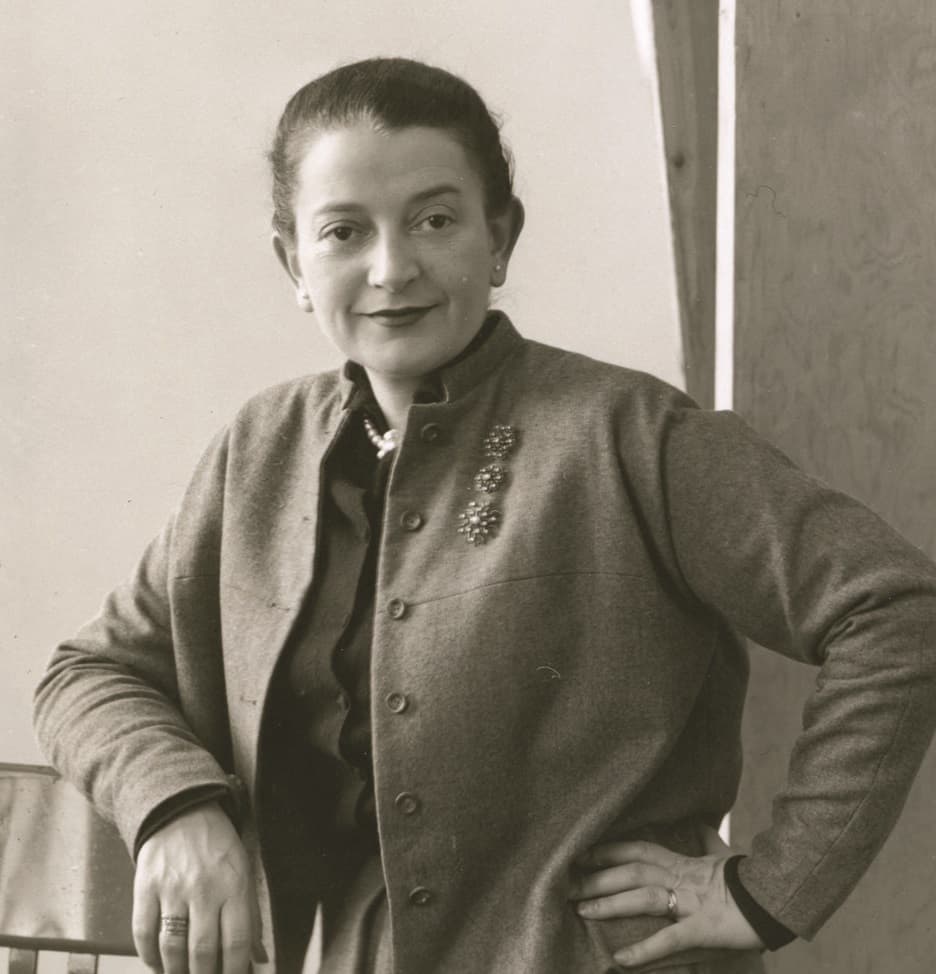
Austrian, American · Arts
Cipe Pineless
June 23, 1908 – January 3, 1991
Early Life and Background
Cipe Pineles (born June 23, 1908) was an Austrian-born Jewish graphic designer and art director who became one of the most influential women in twentieth-century magazine design. She is widely credited as one of the first female art directors of major American magazines and the first independent woman graphic designer in the United States.[1][8]
Pineles was born in Vienna, Austria, the fourth of five children in an Orthodox Jewish family.[1][8] Some accounts describe her early childhood in Poland before the family returned to Austria and later emigrated, reflecting the mobility and instability common among Jewish families in Central and Eastern Europe in the early twentieth century.[1][10][8] Her birth coincided with a period of relative calm before the upheavals of the First World War and the Russian Revolution, events that would affect her family directly; one narrative notes that she survived a Bolshevik raid before emigration.[6][8]
Sources differ slightly on the date and circumstances of her emigration. Several accounts state that Pineles came to the United States in 1923 as a teenager, arriving at Ellis Island and settling in Brooklyn.[6][10][9] Others mention an earlier migration in the mid-1910s.[7][16] Despite these discrepancies, historians agree that she reached New York as a young immigrant, navigating linguistic and cultural barriers while developing an early interest in art.
In New York, Pineles attended public schools and worked to support her family before gaining admission to Pratt Institute, a key turning point in her trajectory. She enrolled at Pratt in the second half of the 1920s to study fine art and design, one of relatively few women in such programs at the time.[2][11][16] Her training exposed her to modernist ideas and professional standards that would later inform her work in editorial design.
Education and Early Career
Pineles completed her studies at Pratt Institute in 1929, graduating into a labor market devastated by the onset of the Great Depression.[2][11][4][16] Accounts of her job search describe a pattern of gender-based discrimination: despite a strong portfolio and multiple interviews, firms declined to hire her explicitly because she was a woman.[4][6] These experiences left a lasting impression and underscore how rare it was for women to present themselves as independent professional designers at the time.
After graduation, she secured her first sustained employment in art education. In 1929, Pineles began teaching watercolor painting at the Newark Public School of Fine and Industrial Art in New Jersey.[2] This role allowed her to support herself while maintaining a link to the professional art world. Teaching also honed her ability to articulate visual principles—skills that later made her an influential instructor at Parsons School of Design.
Her transition into professional design came through the New York consortium Contempora, noted in some sources as an early employer.[16] Around the early 1930s she was hired by Condé Nast, initially working on Vogue and Vanity Fair under the direction of the celebrated art director Dr. M.F. Agha.[1][2][9] Agha was known for his modernist approach and for bringing European avant-garde sensibilities to American magazines. Under his mentorship, Pineles absorbed advanced editorial design techniques, including grid systems, experimental typography, and the integration of photography and illustration.
Working at Condé Nast during the Depression, Pineles learned to balance artistic innovation with the economic and marketing constraints of mass publication. Her responsibilities grew from production tasks to more substantive design decisions. She quickly earned respect for her visual judgment, though as a woman she still confronted barriers to promotion and recognition.
Rise as a Magazine Art Director
The early 1940s marked Pineles’s breakthrough into high-profile art direction. In 1942, she became art director at Glamour, a Condé Nast title aimed at young working women.[6][13][14] Multiple sources describe this appointment as making her the first female art director of a major American mass-market magazine, a role that placed her at the center of wartime visual culture.[6][14][13] As art director she supervised covers, layouts, typography, and photography, using design to shape ideas about modern femininity.
Her work at Glamour emphasized accessible, aspirational images of women who participated in the workforce and public life. During World War II, this approach resonated with readers and advertisers seeking to align fashion with patriotism and practical concerns. Pineles’s ability to combine modernist aesthetics with commercial appeal distinguished her from many contemporaries and helped establish her reputation.
In the mid-1940s, Pineles moved to become art director at Seventeen, a pioneering magazine aimed at teenage girls.[2][6][15][17] Design historians credit her with creating a new visual vocabulary for adolescence in mass media. Rather than treating teenage girls simply as miniature adults or trivial consumers, she presented them as individuals with distinct tastes, aspirations, and social concerns. Layouts under her direction often combined fashion photography, illustration, and educational content about careers, college, and social etiquette.
By the late 1940s and 1950s, Pineles extended her influence as art director of Charm, a magazine oriented toward working women.[6][7][16] Charm’s editorial mission—to address "women who work"—aligned closely with her own experiences and beliefs. She crafted visuals that showed women in offices, factories, and professional environments, frequently using modern furniture and equipment to signal progress and competence.[7] A noted January 1954 fashion feature in Charm juxtaposed clothing with office technology and interiors, underscoring the normalization of women’s paid labor.
Integration of Fine Art into Mass Media
One of Pineles’s most important contributions was her role in bringing fine artists into mass-market magazines. Across her work for Seventeen and Charm, she commissioned artists whose primary reputations were in painting and illustration rather than commercial advertising. These included figures such as Ben Shahn and a young Andy Warhol, whom she gave some of his earliest editorial assignments.[8][6][1]
In Seventeen, Pineles used illustration not only for decorative purposes but as a means of narrative and social commentary. The magazine’s pages featured stylized, sometimes experimental images that reflected the anxieties and dreams of postwar youth. In Charm, she maintained high artistic standards for images of working women, resisting stereotypes of trivial fashion and instead emphasizing agency and self-respect.
Her approach blurred the boundary between "high" art and commercial design. Rather than treating magazines as purely promotional vehicles, she saw them as platforms for visual culture that could educate readers about modern art and design. Historians frequently credit Pineles as "the first person to bring fine art into mainstream mass-produced media" in a sustained and systematic way.[1][15][8]
Specific examples of her editorial innovation include the July 1949 cover of Seventeen, photographed by Francesco Scavullo, which combined fashion photography with a sophisticated compositional strategy that reflected her art-direction oversight.[7][18] In Charm, spreads depicting women in contemporary office settings further showed her commitment to integrating design, social reality, and aspirational imagery.
Professional Recognition and Barrier-Breaking Firsts
Pineles’s professional achievements unfolded in a context of pronounced gender inequality. For years she was excluded from key professional organizations, despite being at the forefront of magazine design. Her eventual membership in the New York Art Directors Club is consistently described as a major first: sources note that she became the first female member, with one timeline placing this in 1943, after about a decade of nominations.[2][1][11]
Although surviving records do not document the exact date of her admission, design historians agree that her entry broke the Club’s all-male tradition and opened the door—symbolically and later practically—for other women to join. Some educational materials cite 1948 in connection with her membership, reflecting ongoing uncertainty about the precise year.[9][2] What is uncontested is that she was the first woman to be admitted, and that this achievement was publicly recognized as a historic breakthrough.
Pineles’s standing extended beyond national organizations. In 1955, she became the first—and for many years the only—female member of Alliance Graphique Internationale (AGI), an international association of leading graphic designers.[1][8] The membership underscored her global stature in the field and highlighted how exceptional it remained for women to attain such recognition. AGI records and secondary sources agree on the year but do not specify the day or month of her induction.
Her most widely publicized honor came in 1975, when she was inducted into the New York Art Directors Club Hall of Fame as its first woman honoree. A New York Times advertising column dated November 28, 1975 reported that she had "entered the Hall of Fame," describing her as the first woman to receive this distinction.[11] The event itself is generally associated with November 27, 1975. The article noted that two of her husbands, William Golden and Will Burtin, were already in the Hall of Fame, emphasizing the unusual circumstance of a woman joining their ranks.
Later, Pineles received a lifetime achievement medal from the American Institute of Graphic Arts (AIGA), often described as the "Nobel Prize of design."[7][16] Available sources link the award to the late twentieth century but do not give a precise date. The medal reflects the professional community’s recognition of her long-term impact on design practice and education.
Teaching and Mentorship
Alongside her editorial work, Pineles devoted substantial energy to design education. She taught for decades at Parsons School of Design in New York, where she influenced generations of aspiring designers.[2][7][12] Courses under her guidance emphasized the relationship between concept, typography, and image, as well as the importance of understanding audience and context.
Students and colleagues often recalled her as demanding yet supportive, insisting on professional standards while encouraging originality. Her own experience of struggling for recognition as a woman in a male-dominated field informed her mentorship of younger women, whom she sought to equip with both technical skills and the confidence to navigate institutional barriers.
Pineles also contributed to distinctive educational projects such as the "Parsons Bread Book", a collaborative publication featuring recipes and student work that reflected her interest in everyday culture and domestic themes.[3] Her illustrated recipes, created for friends and family and later rediscovered, combined typography, layout, and watercolor painting in a way that bridged personal and professional practice.
Personal Life
Pineles’s personal life was closely intertwined with the design world. She married William Golden, a prominent art director known for creating the CBS "eye" logo, and later Will Burtin, an influential information designer and fellow Hall of Fame member.[1][8][11] She was widowed twice, an experience that shaped both her emotional life and her professional independence.
Sources mention that she adopted two children and had two grandchildren.[1][15] Balancing family responsibilities with a demanding career in magazines and teaching presented challenges, particularly in an era when married women and mothers were often discouraged from full-time professional work. Her ability to sustain a long career despite these pressures has been cited as part of her pioneering role as an "independent woman" designer.[8]
Accounts of her life also acknowledge periods of strain and mental health struggle. A scholarly article on her editorial work notes that she faced significant stress as she negotiated the demands of work, gender expectations, and personal happiness, and that she attempted suicide at one point.[13] This dimension of her story has prompted feminist scholars to consider the emotional costs borne by women who broke barriers in mid-century professional environments.
Later Work, Recipes, and Rediscovery
In the later decades of her career, Pineles continued to work as a consultant and educator. She served as a design consultant to institutions such as Lincoln Center and remained active in professional circles, even as younger generations of designers began to enter the field.[3] Her influence was often more evident in the work of others than in direct publicity about herself, leading some commentators to describe her as an "unsung" pioneer.[7]
One of the most remarkable posthumous rediscoveries of her work came through a cookbook-manuscript she had created, comprising illustrated recipes and personal reflections. Long after her death, this material was found at a Brooklyn flea market and eventually published as Leave Me Alone with the Recipes: The Life, Art, and Cookbook of Cipe Pineles.[8] The book revealed a deeply personal side of her design practice, demonstrating how she applied professional-level typography and layout to domestic themes and everyday cooking.
The rediscovery of her recipe book sparked renewed interest in her career among designers, historians, and the broader public. Essays about the project emphasize how Pineles’s work anticipated contemporary ideas about the intersection of food, design, and identity.[8][16] They also highlight the degree to which her contributions had been overlooked in standard narratives of graphic design history, prompting efforts to reassess and re-center her role.
Legacy and Historical Impact
Today, Cipe Pineles is widely recognized as one of the most important women in the history of graphic design and editorial art direction. Scholars and practitioners credit her with several overlapping "firsts": she is often described as the first independent female graphic designer in America, the first female art director of major mass-market magazines like Glamour, Seventeen, and Charm, and the first female member of the New York Art Directors Club and the first woman in its Hall of Fame.[2][6][7][8][15]
While some of these claims reflect the language of secondary sources rather than systematic archival enumeration, there is broad consensus that Pineles’s career was extraordinary in its scope and impact. She helped redefine what women could do in the graphic arts, both by occupying leadership roles and by using design to represent women’s lives and aspirations in new ways. Her editorial strategies for teenage and working women’s magazines anticipated later feminist critiques of media representation, even as she worked within commercial frameworks.
Pineles’s integration of fine art into popular magazines shifted expectations about the visual quality of mass media. By hiring artists like Ben Shahn and Andy Warhol for editorial work, she elevated the status of illustration and contributed to the emergence of a more sophisticated visual culture in mid-century America.[6][8] This approach influenced subsequent generations of art directors who sought to combine artistic integrity with commercial viability.
Her legacy also endures through design education. Former students and colleagues at Parsons and other institutions recall her as a formative influence, particularly for women seeking to enter the profession. The continuing publication of essays, academic studies, and online tributes—such as features by Eye Magazine, AIGA Eye on Design, and institutional histories—has helped cement her place in the canon of design history.[6][2][1]
Later Life and Death
Pineles remained professionally active into the late twentieth century, continuing to consult, teach, and participate in design organizations. She lived to see some of her contributions formally recognized, including her Hall of Fame induction and lifetime achievement honors.[11][7] Yet she also witnessed the gradual entry of more women into the field she had once navigated almost alone.
On January 3, 1991, Cipe Pineles died in the United States, concluding a life that had bridged continents, wars, and major shifts in women’s roles.[8][15] Some sources list Suffern, New York, as her place of death.[12] At the time of her passing, she had been active in design for nearly sixty years, during which she had reshaped editorial aesthetics, mentored students, and challenged the gender boundaries of her profession.
In the decades since her death, archives and collections—such as the Cary Graphic Arts Collection at Rochester Institute of Technology—have preserved her work and papers, making them available to researchers and students.[5] Renewed interest in women’s history and feminist design scholarship has brought her story to broader audiences, ensuring that her pioneering role in magazine design and art direction is increasingly acknowledged.
For historians of women’s labor and media, Cipe Pineles stands as a key figure who demonstrates how individual talent and persistence can transform institutional structures. Her life provides a lens on the gendered dynamics of twentieth-century visual culture and continues to inspire designers who seek to combine artistic ambition with social awareness.
Dated achievements
6 indexed.
- Jun231908Arts
Birth of Cipe Pineles
Birth of Cipe Pineles in Vienna, Austria, future pioneering graphic designer and art director.
View details Wikipedia: Cipe Pineles - Jun011929Arts
Graduation from Pratt Institute (approximate date)
Approximate June 1929 graduation of Cipe Pineles from Pratt Institute, launching her professional design career.