← All women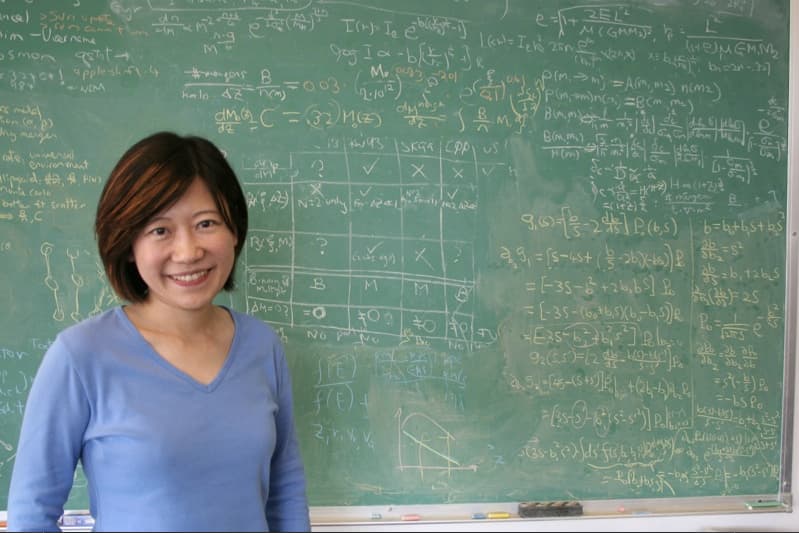
Taiwanese, American · Science
Chung-Pei Ma
1966 – present
Early life and education
Chung-Pei Ma (馬中珮) is a Taiwanese-American astrophysicist and cosmologist whose career has been shaped by work at the intersection of theory, simulation, and observation. Sources identify her as born in Taiwan in 1966, though a full birth date is not publicly documented in the materials reviewed. She later moved to the United States as a teenager to study physics, an early transition that placed her among the generation of Taiwanese women scientists who built international careers through U.S. graduate education and research institutions.
Ma’s academic path began at the Massachusetts Institute of Technology, where she earned a bachelor’s degree in physics in 1987 and later completed a Ph.D. in physics in 1993. Her doctoral work focused on baryon asymmetry and structure formation in the universe, reflecting the broad cosmological questions that would define her research career. Institutional biographies also note study in violin performance at the New England Conservatory, underscoring an artistic dimension to her life that has remained part of her public profile. Her early training combined rigorous physics with an interest in the large-scale architecture of the cosmos, giving her a foundation in both mathematical theory and computational modeling.
Early career
After completing her doctorate at MIT in 1993, Ma held a postdoctoral fellowship in theoretical astrophysics at Caltech from 1993 to 1996. She then joined the University of Pennsylvania as an assistant professor of physics and astronomy in 1996, becoming an associate professor in 2001. In 2002 she moved to the University of California, Berkeley, and by 2003 she held a professorship there in astronomy; later institutional records identify her as a professor of astronomy and physics and the Judy Chandler Webb Professor in the physical sciences. These appointments mark a steady ascent through elite research universities, reflecting both the competitiveness of her field and the strength of her work.
Ma’s research program developed around the formation and evolution of galaxies, dark matter, dark energy, gravitational lensing, the cosmic microwave background, and the large-scale structure of the universe. She became known for combining analytic theory with large numerical simulations, including work on the nonlinear growth of dark matter and galaxies. Her Berkeley biography describes structure formation as the central theme of her research, and her institutional profiles emphasize her efforts to compare simulation results with astronomical observations in order to constrain cosmological parameters. She also served as a cosmology scientific editor for the Astrophysical Journal, contributing to the evaluation and dissemination of research in her specialty.
Major research contributions
Ma’s early theoretical work helped lay foundations for the study of relativistic linear perturbation theory for structure growth in the universe. Later, she originated the analytic halo model, a framework that became important in describing how matter clusters on nonlinear scales, and she coined the terms one-halo and two-halo to capture different regimes of gravitational clustering. These contributions were influential because they provided conceptual tools that could connect large cosmological simulations with observable galaxy distributions. Her work on the merger rates of dark matter halos further advanced understanding of how cosmic structures assemble over time.
In the 2000s and 2010s, Ma’s group became especially known for studies of supermassive black holes. She led teams that identified some of the largest black holes ever observed in the local universe, including objects with masses exceeding ten billion solar masses. In 2016, she coauthored work on a black hole in NGC 1600 with an estimated mass of about 17 billion suns. These discoveries were important because they pushed the known boundaries of black hole growth and forced astronomers to reconsider how such massive objects form in galaxies. The results gained broad public attention and reinforced Ma’s standing as a leader in black hole astrophysics.
Awards and honors
Recognition for Ma’s work began relatively early. In 1997 she was announced as the recipient of the Annie Jump Cannon Award in Astronomy, a major honor for a young woman astronomer. In 2003 she received the Maria Goeppert-Mayer Award of the American Physical Society for theoretical astrophysics contributions. She was elected to the National Academy of Sciences in 2022 and to the American Academy of Arts and Sciences in the same year. In 2024, Academia Sinica listed her as an Academician, reflecting her significance in Taiwanese and international science. These honors collectively document her rise from emerging researcher to a scientist whose work has become foundational in modern cosmology.
Ma has also been recognized in institutional and public profiles that emphasize her dual role as researcher and mentor. UC Berkeley highlighted her in its “Brilliance of Berkeley” series in 2025, and the National Academy of Sciences featured her in a black-hole-themed profile tied to the broader public interest in her discoveries. Her honors matter not only as personal distinctions but also as evidence of the increasingly visible role of women in theoretical physics and astronomy.
Teaching, service, and leadership
In addition to research, Ma has played a significant role in academic leadership and scientific service. She has taught at several major universities and has been part of the faculty at UC Berkeley since the early 2000s. Institutional records indicate that she later served as chair of Berkeley’s astronomy department and, by 2023, as executive director of basic research at the Miller Institute. These positions place her in the centers of graduate training, hiring, and intellectual agenda-setting, where women scientists have historically been underrepresented.
Her service as an editor, faculty leader, and research mentor reflects the broader impact of her career beyond her published papers. In a discipline shaped by long-term collaborations, computational teams, and observational programs, leadership roles matter as much as individual discoveries. Ma’s presence in those roles has made her a visible figure for younger scientists, especially women and Asian-American researchers seeking models of success in physics and astronomy.
Personal life
Publicly available sources focus more on Ma’s professional life than on her private one. Institutional biographies do note her interest in classical violin performance, and one profile describes her as a concert violinist. She also studied violin at the New England Conservatory during her graduate years. This musical background has often been mentioned as part of the broader portrait of her intellectual and artistic range.
Reliable sources reviewed for this profile do not provide detailed information about marriage, children, or other family relationships, and no such details are included here. In historical and biographical work, the absence of documentation matters: the record supports a robust account of her scientific career, but not a fuller narrative of private life.
Legacy
Chung-Pei Ma’s legacy lies in the way she helped move cosmology into an era of precision and scale. Her work on dark matter halos, structure formation, and supermassive black holes has influenced how astronomers interpret the growth of the universe from its earliest fluctuations to the densest environments in galaxies. By developing analytical frameworks and then using them alongside numerical simulations and observations, she contributed to a style of astrophysics that is now standard in the field.
Her career is also significant in women’s history. Ma advanced through elite institutions at a time when women remained a minority in physics and astronomy, and her awards and elections record a series of recognitions that helped legitimize women’s leadership in theoretical science. As a Taiwan-born scientist who built an American career while maintaining ties to Taiwanese institutions, she also embodies the increasingly transnational character of contemporary scientific accomplishment. Her record of discovery, mentoring, and leadership makes her an important figure in the history of modern astrophysics and in the broader history of women in science.
Dated achievements
8 indexed.
- Jan151997Science
Annie Jump Cannon Award in Astronomy announced
On January 15, 1997, the American Astronomical Society announced Chung-Pei Ma as the 1997 recipient of the Annie Jump Cannon Award in Astronomy.
View details Chung-Pei Ma professional page - Apr112003Science
Maria Goeppert-Mayer Award coverage in Taipei Times
On April 11, 2003, the Taipei Times reported Chung-Pei Ma's receipt of the Maria Goeppert-Mayer Award from the APS.