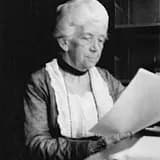
Ladd-Franklin began teaching at Johns Hopkins as a lecturer in philosophy, becoming the first woman on the Arts and Sciences faculty.
Beginning in October 1888, Christine Ladd-Franklin took up a position as a lecturer in philosophy and psychology at Johns Hopkins University, becoming the first woman ever to teach within the university's Arts and Sciences faculty. This was a remarkable breakthrough at an institution that had refused, only years earlier, to grant her the Ph.D. she had rightfully earned.
Her appointment came with significant restrictions: she was permitted to teach only one course per academic term, and her position lacked the security, pay, and status afforded to her male colleagues. Nonetheless, her presence in the classroom represented a crucial symbolic and practical victory, demonstrating that a woman could hold an instructional role at one of America's premier research universities.
Ladd-Franklin used this platform to teach logic and the psychology of vision, drawing on her own original research into color theory and binocular vision. Her lectures introduced students to cutting-edge debates in these fields, including her own emerging evolutionary theory of color vision that would later be formally published in 1892.
This appointment, though limited in scope, set an important precedent for women's participation in university teaching in the sciences and humanities. It foreshadowed the slow, uneven progress toward gender equity in American academia, a process Ladd-Franklin herself would continue to advocate for throughout her life, including public writings decrying the exclusion of women from full faculty status and equal academic opportunity.