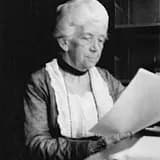
Ladd-Franklin's paper on horopters became the first piece of psychological research published by an American woman.
In July 1887, Christine Ladd-Franklin published her paper on horopters—the geometric locus of points in visual space that produce single, fused images when viewed with both eyes—in The American Journal of Psychology. This publication is widely regarded as the first piece of psychological research authored by an American woman, a distinction that has led some historians to credit her as America's first woman psychologist.
The horopter paper demonstrated Ladd-Franklin's rare combination of mathematical rigor and experimental insight, applying geometric analysis to problems of binocular vision at a time when experimental psychology itself was a nascent discipline, barely a decade removed from Wilhelm Wundt's founding of the first psychology laboratory in Leipzig.
This achievement was particularly significant because psychology as a formal academic discipline was still establishing its scientific credentials, and women were almost entirely excluded from its professional ranks. Ladd-Franklin's entry into this field via rigorous mathematical and observational methods helped legitimize both her own place in the discipline and opened a narrow but real pathway for other women to follow.
Her horopter research also laid important groundwork for her subsequent, more famous work on color vision theory, demonstrating her lifelong interest in the geometry and physiology of visual perception. This publication remains a touchstone in the history of women's early contributions to experimental psychology in the United States.