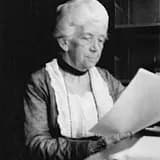
Ladd-Franklin completed all Ph.D. requirements in mathematics at Johns Hopkins, though the degree was withheld because she was a woman.
By June 1876, Christine Ladd had completed every requirement for the Ph.D. in mathematics and logic at Johns Hopkins University, including her dissertation "The Algebra of Logic," a rigorous contribution to symbolic logic that engaged directly with the work of George Boole and Charles Sanders Peirce.
Despite fulfilling all academic requirements at the highest level, Johns Hopkins' trustees refused to formally confer the degree because university policy did not permit granting doctorates to women. This refusal exemplified the systemic barriers facing women in American higher education during the late nineteenth century, even when their scholarly work was unimpeachable.
Ladd's completed dissertation was nonetheless recognized as an important contribution to logic and was eventually published, cementing her reputation among logicians of her era. The injustice of the withheld degree became a notable episode in the history of women's fight for academic recognition, later cited by advocates for women's education as a stark example of gender discrimination in institutional academia.
Remarkably, this wrong was not righted until 1926, fifty years later, when Johns Hopkins finally awarded her the Ph.D.—by which time she was 78 years old. Her 1876 completion of requirements stands as the true intellectual achievement, an early marker of a woman's capacity to master and contribute original work to the most rigorous fields of mathematics and logic.