← All women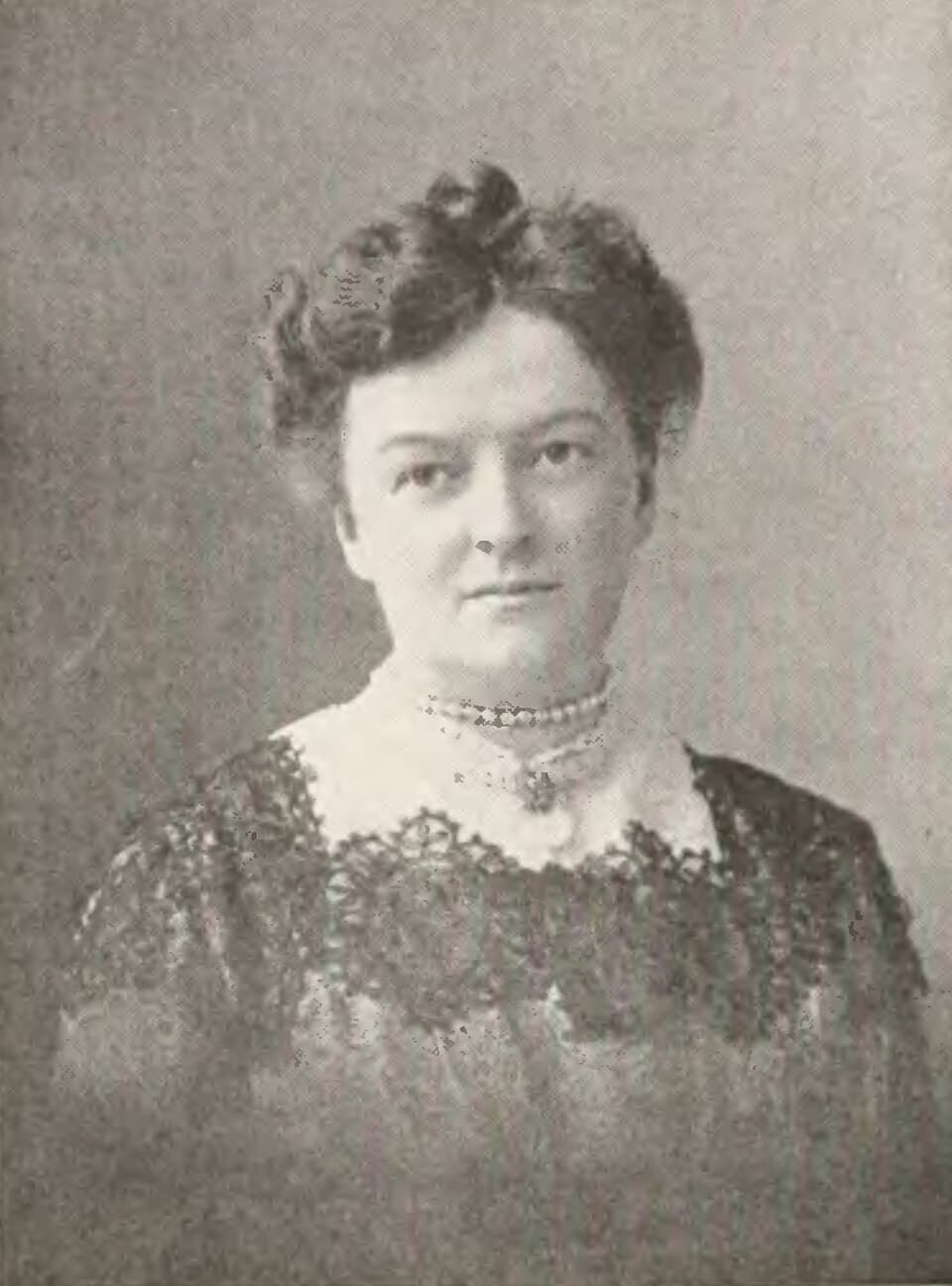
American · Literature · Arts
Carro Morrell Clark
September 6, 1867 – February 16, 1950
Early life and background
Carro Morrell Clark was born on September 6, 1867, in Unity, a small town in Waldo County, Maine.[1] The rural New England setting into which she was born shaped both her early experiences and the regional sensibilities that later informed her work as a publisher. Although detailed records of her parents, childhood, and formal education are sparse in the surviving biographical sources, she grew up in the decades following the American Civil War, a period marked by expanding literacy, the growth of public schooling, and the rising popularity of mass-market fiction and periodicals.[1]
Clark’s youth coincided with an era in which women’s roles were slowly changing. In New England, women increasingly participated in teaching, clerical work, and some forms of business, even as the upper levels of finance and industry remained dominated by men. The broader cultural environment was saturated with printed material—newspapers, magazines, and serialized fiction—and this world of print offered both employment opportunities and cultural influence to those who could navigate it. Clark’s later career suggests that she absorbed the possibilities of this world and developed strong capacities in business, marketing, and an intuitive sense of what would appeal to a broad reading public.[1]
Sources note that Clark would later operate under multiple names. She used the pen name Carro Frances Warren, and after marriage she was known by the surnames Atkinson and Lempert, yet she remained best known professionally as Carro Morrell Clark.[1] These name changes indicate that she experienced the conventional expectations of marital identity for women of her time, while also retaining control over a distinct business persona as a publisher. The tension between domestic naming conventions and professional continuity is a subtle but significant aspect of her story, reflecting how women navigated personal and public identities in the early twentieth century.
Career beginnings and development
By 1900, Clark had relocated to Boston, Massachusetts, a major center of American publishing. The city was home to established firms and a rich literary scene, and it offered more opportunities for entrepreneurial ventures than her rural birthplace. In that year she took a decisive step that would define her historical significance: she founded the C. M. Clark Publishing Company, headquartered in a shop on Massachusetts Avenue in the Back Bay neighborhood.[1]
Contemporary accounts and later research describe Clark as the founder and manager of the firm, responsible for both its editorial decisions and its business operations.[1] She did not merely serve in a symbolic capacity; rather, she owned and managed the company, negotiated with authors, oversaw production, and directed marketing campaigns. Beginning in 1900, she was reported by some observers to be the only woman publishing books in the United States, and in some claims, in the world.[1] While there were certainly other women working in various roles in publishing and related industries, the assertion captures the rarity of a woman who both owned and actively managed a general commercial publishing house.
Clark’s firm entered the market during a period when popular novels, often sentimental or regional in tone, enjoyed wide readership and were commonly sold through bookstores, mail order, and subscription. Her Back Bay store functioned as a combined retail outlet and office, and it was from this base that she began to assemble a list of titles, focusing on fiction that she believed could appeal to a broad audience. Her early choices demonstrate a keen understanding of readers’ interest in stories that blended regional character, moral sentiment, and accessible language.
Major works, publications, and accomplishments
Shortly after founding her company, Clark achieved a breakthrough that would define both her business and her legacy. In November 1900, the C. M. Clark Publishing Company issued its first book, Quincy Adams Sawyer and Mason’s Corner Folks – A Story of New England Home Life by Charles Felton Pidgin.[1] This novel depicted life in a fictional New England village, tapping into readers’ appetite for regional color and sentimental narratives.
Clark’s handling of Quincy Adams Sawyer went far beyond the conventional practices of her time. She developed an extensive advertising campaign, reportedly determining "to advertise this book as no American novel was ever advertised."[1] She placed numerous advertisements in newspapers, used striking visual layouts, and promoted the book vigorously from her Massachusetts Avenue store. The campaign was so notable that, on March 2, 1902, the Los Angeles Herald reported on her strategy, emphasizing the unprecedented scale and intensity of her advertising efforts.[1]
Her approach paid off. The novel became a major commercial success, with sources reporting that it sold approximately 500,000 copies, an extraordinary figure for the period.[1] The book’s popularity led to stage adaptations and helped establish the reputation of both the author and the publisher. For Clark, it demonstrated that a woman-led firm could not only compete in the commercial marketplace but also innovate in marketing techniques in ways that influenced national reading patterns.
Between 1900 and 1912, the C. M. Clark Publishing Company released an estimated 171 titles, covering a range of popular fiction and other works.[1] Clark managed the firm through at least the end of 1906, during which she was widely noted for her unique status as a woman in a field dominated by male proprietors.[1] Her catalog contributed to the widespread circulation of light fiction and regional stories, which were part of the everyday reading diet of many American households.
Clark’s achievements were not limited to publishing a single blockbuster novel. She helped demonstrate the viability of aggressive promotion for books, treating them as mass-market commodities that could be sold through coordinated campaigns rather than relying solely on critical reviews or literary prestige. Her Back Bay store and the C. M. Clark imprint became associated with energetic marketing and accessible stories, anticipating later practices in twentieth-century commercial publishing.
Awards, honors, and contemporary recognition
No record of formal literary awards or institutional honors for Clark has been found in the available sources, which is not unusual for a commercial publisher of her era. The major American literary and professional awards that exist today were either not yet established or tended to recognize authors rather than publishers.
However, Clark received substantial informal recognition during her active years. Newspaper coverage, such as the Los Angeles Herald article of March 2, 1902, drew attention to her exceptional advertising campaigns and described her decision to promote Quincy Adams Sawyer "as no American novel was ever advertised," highlighting her as an innovator in the industry.[1] Local histories and later biographical notes emphasize that she was widely described as the first American woman to establish, own, and manage a book publishing firm, underscoring the significance of her role in a male-dominated profession.[1]
In more recent scholarship and local journalism, Clark has been remembered as "the woman who stunned the publishing world from her Back Bay store a century ago," a phrase used in a modern article examining her life and work.[1] This retrospective recognition situates her among the women entrepreneurs whose contributions were substantial but have often been overlooked in mainstream narratives of business and literary history.
Personal life and identities
Clark’s personal life, as reflected in surviving records, involved multiple marriages and corresponding changes in surname. She used the pen name Carro Frances Warren, and after her first marriage she appeared as Atkinson; following a second marriage, she used the name Lempert.[1] Despite these changes, her enduring professional identity in historical accounts remains Carro Morrell Clark, the name attached to her publishing enterprise.
Details about her husbands, children, and domestic circumstances are not extensively documented in the accessible sources. What is clear is that, like many women of her era, Clark navigated the expectations of marital name changes while maintaining a distinct public persona associated with her business. The fact that she continued to be recognized as Carro Morrell Clark in industry and historical accounts suggests that she asserted a measure of control over how she was known in the professional realm.
The use of a pen name, Carro Frances Warren, also points to her engagement with authorship or editorial work, though the surviving record focuses primarily on her role as publisher rather than as a writer. Adopting different names for different roles was a strategy used by many women in the nineteenth and early twentieth centuries to separate personal, domestic, and business identities in a society that placed strong gendered expectations on each sphere.
Legacy and historical impact
Clark’s most enduring legacy lies in her status as a pioneering woman in the American publishing industry. From 1900 through the end of 1906, she was reported by some sources to be the only woman publishing books in the United States, with some claims extending this distinction to the entire world.[1] While such statements may exaggerate the uniqueness of her position, they accurately reflect how unusual it was for a woman to own and manage a general commercial publishing house.
Her decision to found and operate the C. M. Clark Publishing Company demonstrated that women could exercise authority over editorial choices, financial risk, and marketing strategy in an industry that shaped national culture. By building a list of approximately 171 titles between 1900 and 1912, she participated directly in determining which stories, voices, and genres reached a broad readership.[1] This influence was particularly significant in the realm of popular fiction, where publishers helped define the parameters of everyday reading and entertainment.
Clark’s bold advertising campaign for Quincy Adams Sawyer, and the extensive coverage it received, showcased her willingness to adopt and refine modern promotional techniques. The reported sales of around 500,000 copies exemplify how such strategies could amplify a book’s reach and impact.[1] In the long view, her work anticipated later developments in twentieth-century publishing, including the practice of focusing intensive marketing resources on select commercial titles.
Her story also contributes to the broader history of women’s entrepreneurship. Operating from her Back Bay store, Clark took on the risks and responsibilities of business ownership at a time when access to capital, formal networks, and professional recognition for women remained limited. Her trajectory illustrates how women could carve out spaces of agency within the constraints of early twentieth-century gender norms.
In contemporary women’s history and local Boston narratives, Clark is increasingly recognized as an important figure who challenged professional boundaries and expanded the possibilities for women in the cultural industries. Her rediscovery by historians and journalists underscores how some women’s economic and cultural achievements can be overlooked or marginalized, and how renewed attention can restore them to the historical record.
Later life and death
After the C. M. Clark Publishing Company ceased operations in 1912, Clark largely disappeared from the public record of the publishing world.[1] The reasons for the closure of the firm are not fully documented in accessible sources, though changes in the market, competition, and the challenges of sustaining a relatively small, independent house may all have played roles. Her active period in publishing, especially from 1900 to 1906, remains the focus of most historical discussions.
In the decades following the closure of her company, Clark’s life is less thoroughly chronicled. She continued to live through a period of enormous change, including World War I, the interwar years, the Great Depression, and World War II. These transformations reshaped the book industry, with the rise of new publishing conglomerates, changing reading habits, and the eventual emergence of modern paperback culture. While she did not remain a visible figure in these later developments, her earlier work can be seen as part of the longer arc of commercialization and professionalization in American publishing.
Clark died on February 16, 1950.[1] By the time of her death, the landscape she had once navigated as a rare woman publisher had shifted; more women were working as editors, agents, and, in some cases, executives, though significant barriers remained. Her passing marked the end of a life that had intersected with crucial phases of American literary and business history.
In recent years, renewed interest in Clark’s story has helped situate her within the broader narrative of women’s contributions to cultural industries. By remembering the circumstances of her death alongside the achievements of her earlier life, historians emphasize the continuity between her pioneering role and the subsequent expansion of opportunities for women in publishing and related fields.
Dated achievements
5 indexed.
- Sep061867Science
Birth in Unity, Maine
Carro Morrell Clark was born in Unity, Maine, later becoming a pioneering American book publisher and businesswoman.
View details Carro Morrell Clark - Wikipedia - Sep011900Science
Launch of C. M. Clark Publishing Company
In September 1900, Clark launched the C. M. Clark Publishing Company from her Massachusetts Avenue store in Boston.