← All women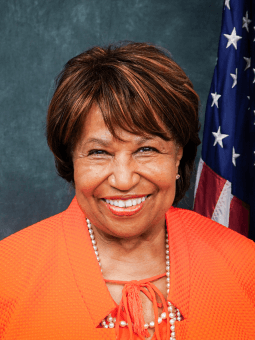
United States · Politics · Law · Activism
Carol Moseley Braun
August 16, 1947 – present
Early Life and Family Background
Carol Elizabeth Moseley, later known professionally as Carol Moseley Braun or Carol Moseley-Braun, was born on August 16, 1947, in Chicago, Illinois, U.S., the eldest of four children of Joseph J. Moseley, a Chicago police officer, and Edna A. Davie Moseley, a medical technician.[4][9][5] She grew up on Chicago’s South Side in a working-class African American family at a time when the city was deeply segregated and the modern civil rights movement was taking shape.[9][11] Her parents divorced when she was young, and she was largely raised by her mother and extended family, an experience that sharpened her awareness of economic insecurity and the challenges faced by women heads of household.[5]
Moseley Braun attended Chicago public schools and was influenced by both the rhetoric and realities of the civil rights era.[5][9] She later recalled being inspired by the movement’s insistence on equality and civic participation, which convinced her that public service could be a vehicle for change.[11][14] To help pay for her education, she worked in grocery stores and at the post office, developing early a reputation for diligence and self-reliance.[9]
Education and Legal Training
After high school, Moseley Braun enrolled at the University of Illinois at Chicago, where she studied political science.[4][6][11] She earned her B.A. in political science in 1969, a period marked by campus activism, protests against the Vietnam War, and the aftershocks of the assassinations of Martin Luther King Jr. and Robert F. Kennedy.[4][6] These upheavals reinforced her interest in the structures of government and the law as tools to address social injustice.
She continued her education at the University of Chicago Law School, one of the nation’s most prestigious and competitive institutions. There she earned her Juris Doctor (J.D.) in 1972 and was admitted to the Illinois bar the following year.[3][5][6] Legal training steeped her in constitutional law, administrative law, and statutory interpretation, and it prepared her for a career that would bridge prosecution, legislation, and diplomacy.
Early Legal Career and Federal Service
After law school, Moseley Braun briefly worked in private practice before entering public service.[5] From 1973 to 1977, she served as an assistant U.S. attorney for the Northern District of Illinois, based in Chicago.[6][11] In that role she prosecuted federal cases involving narcotics, fraud, and public corruption, gaining courtroom experience and familiarity with federal agencies and law enforcement practices.
Her performance earned recognition; she received a special achievement award from the U.S. Attorney’s Office for her work.[7] The prosecutorial post also deepened her exposure to systemic inequities within the criminal justice system, reinforcing her evolving belief that structural reform and legislation were necessary complements to case-by-case prosecution.
Entry into Electoral Politics: Illinois House of Representatives
Moseley Braun moved from litigation to lawmaking when she ran for the Illinois House of Representatives. She was elected in 1978 and took her seat in 1979, representing a district on Chicago’s South Side.[6][9][11] Over approximately a decade in the state legislature, she developed a reputation as an effective and often uncompromising advocate on issues such as education, health care, and social services.[9]
Within the Illinois House she rose into leadership, becoming the first African American woman to serve as assistant majority leader, a significant breakthrough in a chamber long dominated by men and by party machines.[9][11][15] Her legislative work included efforts to reform education funding and to improve protections for children and families, aligning with her broader commitment to civil rights and economic justice.
Cook County Recorder of Deeds and Local Executive Leadership
In 1986, Moseley Braun ran unsuccessfully for Illinois lieutenant governor, but the campaign raised her profile statewide.[6] Two years later, in 1988, she ran for and won the office of Recorder of Deeds for Cook County, Illinois, which encompasses Chicago and its suburbs.[6][9][11] In doing so, she became the first woman and the first African American elected to an executive office in Cook County, a local government historically dominated by white male political figures.[6][11]
As recorder of deeds from 1988 to 1992, she managed land records and undertook administrative reforms to improve efficiency and accountability.[6][7] She also used the platform to draw attention to issues of fair housing, property rights, and consumer protection, connecting local land-records administration to broader patterns of discrimination in real estate and lending.
The 1992 Senate Race and Landmark Election
Moseley Braun entered the race for the U.S. Senate from Illinois in November 1991, challenging incumbent Democrat Alan Dixon in the primary.[11][5] Dixon’s support for the confirmation of Supreme Court Justice Clarence Thomas, despite Anita Hill’s testimony, galvanized many women’s groups against him and created an opening for a challenger. Running on a reformist and progressive platform, Moseley Braun attracted support from feminists, civil rights advocates, and grassroots organizations, even as many party insiders initially discounted her chances.[14]
In March 1992, she scored an upset victory over Dixon in the Democratic primary and subsequently faced Republican Richard Williamson in the general election.[2][4] On November 3, 1992, she won the general election, becoming the first African American woman elected to the U.S. Senate, the first woman elected to the Senate from Illinois, the first African American U.S. senator from the Democratic Party, and the first woman to defeat an incumbent U.S. senator in a general election.[2][4][6][11]
Her victory came during what the media dubbed the “Year of the Woman”, when a record number of women entered the Senate following the contentious Clarence Thomas confirmation hearings.[4][11] Yet she was unique among the 1992 cohort as a Black woman winning statewide office in a large, diverse, and politically competitive state. The campaign’s success reshaped expectations about who could be viable in national politics and became a touchstone for women of color seeking elected office.
Service in the United States Senate (1993–1999)
Moseley Braun’s term in the Senate began with her swearing-in in January 1993, when the 103rd Congress convened.[5][2] She was, at that time, the only African American member of the U.S. Senate, a status she would maintain throughout her six-year term.[10][6] Her presence in the chamber had immediate symbolic significance but also substantive policy implications.
She received high-profile committee assignments, most notably becoming the first woman to serve on the Senate Finance Committee when committee rosters were approved on January 27, 1993.[1][6][13] The Finance Committee’s jurisdiction over tax, trade, and major entitlement programs gave her a central role in debates over budget priorities, health policy, and economic strategy. She also served on the Senate Judiciary Committee, where she participated in hearings on judicial nominations and civil rights legislation.[13]
Moseley Braun’s legislative portfolio emphasized education, civil rights, crime policy, and support for families.[1][13] She advocated increased federal investment in schools, opposed efforts to weaken civil-rights protections, and supported measures aimed at gun control.[1] Her speeches often connected policy debates to her own experiences growing up in a segregated city and working as a prosecutor and state legislator.
Confronting Racism and Sexism in the Senate
Moseley Braun frequently confronted entrenched norms and discriminatory practices within the Senate itself. One widely noted example arose in 1993, when she wore pants on the Senate floor at a time when women senators were expected to wear skirts. Her quiet challenge to this unwritten rule contributed to a reconsideration of the chamber’s dress expectations and preceded the Senate’s adoption of clarified attire guidelines on March 16, 1993, effectively normalizing the wearing of pantsuits by women senators.[5]
She also played a prominent role in debates over the use of the Confederate battle flag in the emblem of the United Daughters of the Confederacy, which was seeking a patent renewal for its insignia. Moseley Braun vigorously opposed granting federal protection to a symbol she argued represented slavery and racial oppression. Her efforts helped block the renewal, marking a rare defeat for the flag’s defenders in the early 1990s and underscoring her willingness to challenge racially insensitive practices in the Senate.[2][5]
Her tenure, however, was not without controversy. She faced scrutiny over campaign finances and travel expenditures, particularly relating to trips to Nigeria, and her political opponents attempted to portray her as ethically compromised.[2][4] No criminal charges were brought, but the investigations and negative publicity weakened her political standing.
1998 Re-election Campaign and Senate Defeat
In 1998, Moseley Braun sought a second term in the Senate. The race quickly became one of the most closely watched contests in the country. She faced Republican State Senator Peter Fitzgerald, a wealthy banker who poured significant personal resources into the campaign and criticized her record and ethics.[2]
Despite strong support from core Democratic constituencies and national women’s organizations, she lost the general election to Fitzgerald, ending her Senate career after a single term.[2][4] Analysts cited a combination of factors, including sustained negative advertising, lingering ethical questions, and shifting political winds in Illinois. Her defeat underscored the fragility of gains made by pioneers from underrepresented groups in American politics.
Diplomatic Career: Ambassador to New Zealand and Samoa
After leaving the Senate, Moseley Braun returned to national public service when President Bill Clinton nominated her as U.S. ambassador to New Zealand and Samoa in 1999.[3][11][13] The U.S. Senate confirmed her by a 98–2 vote on November 10, 1999, making her the first former U.S. senator to hold the post of American ambassador to New Zealand.[3][11]
She presented her credentials to New Zealand’s governor-general, Sir Michael Hardie Boys, on December 15, 1999, formally beginning her ambassadorial duties.[3] Media and institutional accounts have also identified her as the first Black woman to serve as U.S. ambassador to New Zealand and Samoa, extending her trailblazing record into the sphere of foreign relations.[1][8][11]
As ambassador, she served from 1999 to 2001, working to strengthen bilateral political and economic ties, including cooperation on regional security issues and trade.[3][6][7] She also engaged in cultural diplomacy, emphasizing educational exchanges and mutual understanding between the United States and Pacific partners. Her tenure coincided with debates over U.S. foreign policy in the post–Cold War era and efforts to redefine alliances in the Asia-Pacific region.
Business Ventures, Teaching, and Later Public Roles
Following her diplomatic service, Moseley Braun’s career diversified. In 2004, she briefly entered the national presidential race, seeking the Democratic nomination and becoming one of the first Black women to mount a serious campaign for a major-party presidential nomination.[1][2] Although her campaign was short-lived and she did not win any primaries, her candidacy continued the work of contesting racial and gender boundaries in presidential politics.
In the mid-2000s she turned to entrepreneurship, founding Good Food Organics, an organic products company, in 2005.[6] The venture reflected her long-standing interest in public health, environmental sustainability, and local agriculture. She also maintained a role in civic and educational life, serving on boards and advisory bodies.
Moseley Braun has remained connected to higher education. In 2016, she became a visiting professor of political science at Northwestern University, where she shared her experiences in lawmaking and diplomacy with students and participated in public discussions on governance and representation.[6][13] She has also been associated with the University of Illinois Chicago as a distinguished alumna and featured figure in initiatives highlighting Black excellence.[11]
In civic and commemorative work, she has served on the board of the DuSable Museum of African American History and as a special adviser to the U.S. World War I Centennial Commission, roles that connect her to broader efforts to interpret and preserve African American and national history.[13]
Memoir and Reflection on Legacy
In the mid‑2020s, Moseley Braun further documented her life and career in a memoir titled “Trailblazer: Perseverance in Life and Politics”, published in 2025.[8][11] In it, she reflects on her journey from Chicago’s South Side to the Senate chamber and diplomatic service, recounting both the overt and subtle forms of racism and sexism she encountered.
Interviews conducted around the memoir’s release emphasize her belief that sexism has often proven more intractable than racism in American political culture, even as she acknowledges progress on both fronts.[10][8] She situates her own achievements within a broader continuum of Black women’s activism and leadership, highlighting the sacrifices of earlier generations and the importance of mentoring those who follow.
Personal Life
Moseley Braun married Michael Braun, with whom she had one son, Matthew; the couple later divorced.[2][4] She has generally kept her private life out of the spotlight, focusing public attention on her work in law, politics, and diplomacy. Her identity as a single mother at various points in her career has nonetheless informed her advocacy for families, education, and child welfare.
Throughout her public life, she has maintained close ties to Chicago and often frames her story as one rooted in the city’s neighborhoods and political traditions. Her reflections frequently refer to the influence of her mother and extended family, whose support and expectations helped propel her educational and professional pursuits.[5][9]
Legacy and Historical Impact
Carol Moseley Braun’s legacy rests most visibly on her status as the first African American woman elected to the U.S. Senate and the first woman senator from Illinois.[2][4][6] Her 1992 victory expanded the possibilities for Black women in electoral politics and signaled to major parties and donors that women of color could be competitive in statewide and national races. She remained the only Black woman ever to have served in the Senate until the election of Kamala Harris in 2016, underscoring both her pioneering role and the slow pace of change.[6]
Her career has also had enduring effects on the internal culture of the Senate. From tackling the symbolism of the Confederate flag to contesting unwritten dress codes, she helped challenge practices that marginalized women and people of color in the institution.[2][5] Her tenure on the Finance Committee set a precedent for women’s participation in high-level economic policymaking, and her service on the Judiciary Committee contributed to debates over civil rights and judicial philosophy.
As a diplomat, she extended the reach of Black women’s leadership into foreign policy, representing the United States in New Zealand and Samoa and participating in a broader movement to diversify the face of American diplomacy.[3][8][11] Her later work in business, teaching, and historical commemoration reflects a commitment to linking policy, economic development, education, and memory.
Historians and commentators frequently describe Moseley Braun as a trailblazer, a term she embraces but also contextualizes within a collective struggle. She has emphasized that her breakthroughs were made possible by earlier generations of activists and that the significance of her career lies as much in opening doors for others as in her individual achievements.[8][11][14] Her life story continues to serve as a reference point in discussions of representation, intersectionality, and the evolving meaning of equality in American democracy.
Continuing Influence
As of the mid‑2020s, Carol Moseley Braun remains alive and engaged in public discourse, interviews, and advisory roles.[2][11][13] She is often called upon to comment on the state of American politics, voting rights, and the experiences of women and minorities in public office. Her reflections offer a long view of the transformations and continuities in U.S. political institutions since the civil rights era.
For scholars and students of women’s history, African American history, and political science, her career provides a rich case study in the intersection of race, gender, region, and party politics. It illustrates both the possibilities created by social movements and the structural obstacles that pioneers often face once they enter elite institutions. In this sense, Carol Moseley Braun’s life and work remain central to understanding the trajectory of representation in late 20th‑ and early 21st‑century American public life.
Dated achievements
7 indexed.
- Aug161947Politics
Birth of Carol Moseley Braun
Carol Elizabeth Moseley Braun was born in Chicago, Illinois, U.S.
View details The HistoryMakers Biography: Honorable Carol Moseley Braun - Nov031992Politics
Elected first African American woman U.S. Senator
Elected to U.S. Senate, first African American woman, Illinois's first woman senator.