← All women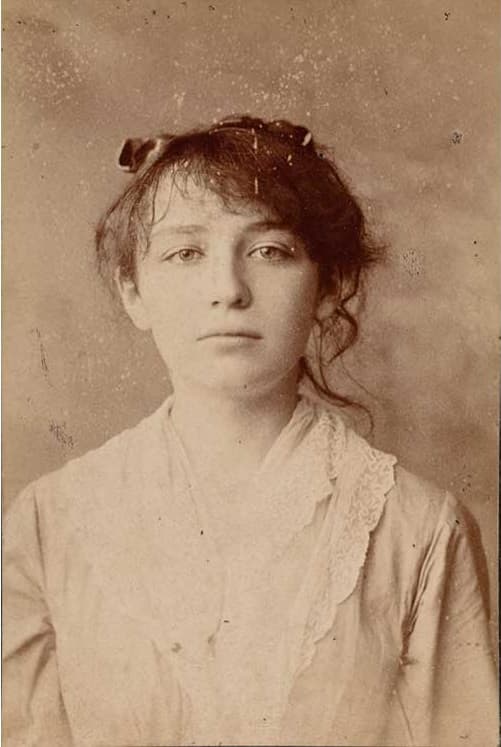
French · Arts
Camille Claudel
December 8, 1864 – October 19, 1943
Early Life and Background
Camille Claudel was born on December 8, 1864, in Fère-en-Tardenois, France. She was the oldest daughter of Louis-Prosper Claudel and Louise Athanaïse Cerveaux. Her younger brother, Paul Claudel, became a distinguished poet and diplomat. From a young age, Camille exhibited a keen interest in art, particularly sculpture. Her father supported her artistic inclinations, which led her to pursue formal studies in Paris, despite the prevailing gender biases of the 19th century.
Career Beginnings and Development
In Paris, Claudel studied under notable sculptors such as Alfred Boucher and later, Auguste Rodin. Her association with Rodin, both profound and tumultuous, significantly impacted her career. She soon became one of his most trusted assistants and collaborators, contributing to major projects such as "The Gates of Hell." Their professional relationship evolved into a complex personal affair, posing challenges to her individual recognition in the art world.
Major Works and Accomplishments
Claudel's oeuvre is acclaimed for its emotional intensity and realism, often exploring themes of human existence and suffering. Notable works include "The Waltz" (1893), showcasing her ability to capture movement and emotion, and "Clotho" (1893), a poignant interpretation of one of the Three Fates from Greek mythology.
Personal Life
Claudel's turbulent relationship with Rodin deeply affected her both personally and professionally. Despite their separation, his influence persisted in her life. The end of their relationship, coupled with family pressure and societal constraints, led to her mental health decline. In 1913, she was institutionalized by her family.
Legacy and Impact
Though her genius remained underrecognized during her lifetime, Claudel posthumously garnered appreciation for her innovativeness in sculpture. Today, her legacy is celebrated in museums worldwide, and she is recognized as a pioneering female artist who defied conventions of her era.
Later Life and Death
Claudel spent the latter part of her life in a psychiatric institution in Montdevergues, France, where she died on October 19, 1943. She was buried in a communal grave, her work nearly forgotten until a resurgence of interest in the late 20th century highlighted her contribution to art.
Dated achievements
2 indexed.
- Dec081864Arts
Birth of Camille Claudel
Camille Claudel was born on December 8, 1864, in Fère-en-Tardenois, France.
View details Camille Claudel - Britannica - Oct191943Arts
Death of Camille Claudel
Camille Claudel died on October 19, 1943, in Montdevergues, France.
View details