← All women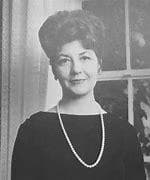
American · Arts
Bette Nesmith Graham
March 23, 1924 – May 12, 1980
Early life and background
Bette Clair McMurray, later known as Bette Nesmith Graham, was born on March 23, 1924, in Texas. Sources differ on the exact city, with some identifying Dallas and others San Antonio, but they agree that she grew up in Texas and later became one of the most famous women inventors of the twentieth century. She came of age during the Great Depression, a period that shaped the expectations and economic realities of her generation. Like many women of her era, she did not follow a linear path through higher education and professional certification. Instead, she learned through work, necessity, and self-instruction.
Graham left high school before graduating and later earned her GED while working. That detail is important because it underscores the unconventional nature of her later success. In a mid-century business culture that often equated formal schooling with authority, Graham built her reputation from experience rather than credentials. Her early interest in art also mattered. She worked as a freelance artist and developed an eye for practical problem-solving, a combination that would later help her refine both the formula and presentation of her invention.
Marriage, motherhood, and work
On August 7, 1942, she married Warren Audrey Nesmith in Dallas. Their son, Robert Michael Nesmith, was born on December 30, 1943. Graham later became a single mother, and the demands of raising her child while supporting herself shaped the conditions under which she worked. These years are central to her biography because they explain why her invention mattered so deeply to her personally: she needed a practical solution to a workplace problem, not a speculative product idea.
By the early 1950s, Graham was working in Dallas as a secretary. Accounts describe her as a poor typist who struggled with errors made on typewriters using carbon-film ribbons or carbon copies. In an era before word processors, even a single typo could mean wasted time, embarrassed workers, and ruined paperwork. Graham’s ingenuity emerged from this environment of repetitive clerical labor. She used tempera paint, a small brush, and experimentation to develop a quick-drying white fluid that would cover mistakes without damaging the paper beneath.
Invention of correction fluid
Graham’s first formula was called Mistake Out. She mixed the solution in her kitchen and bottled it at home, initially sharing it with co-workers. The product spread by practical word of mouth among secretaries and other office workers who faced the same problem every day. By December 1, 1956, the trademark LIQUID PAPER was in commercial use, and on February 1, 1957, it was first registered. These milestones show the transition from improvised office aid to branded product.
Her invention came at a time when office work was heavily feminized but not especially empowering. Women did much of the typing, filing, and administrative labor in American businesses, yet they rarely controlled the technologies they used. Graham’s correction fluid addressed a real need created by that workplace system. It allowed typists to recover from errors quickly and cleanly, making office communication more efficient and less punishing. For that reason, the invention became more than a convenience: it became part of the standard infrastructure of mid-century office life.
Building a company
By 1958, Graham had formed the Liquid Paper Company and devoted herself full-time to the business. Over time, she refined both the product and the enterprise, turning a home-made correction fluid into a nationally recognized brand. The company’s growth reflected both the broad usefulness of the product and Graham’s persistence in developing it despite the skepticism that often confronted women founders. She was not trained as a chemist or engineer, yet she learned through iteration and practical testing.
Her business success was substantial. The company became a major supplier to offices and eventually reached international markets. Reports describe the product’s peak production in the tens of millions of bottles annually, and by the late 1960s and 1970s Liquid Paper was widely associated with office correction in much the same way as photocopiers and typewriters defined modern paperwork. Graham’s story is often cited as an example of how a seemingly small idea, if it solves a universal problem, can become a major commercial innovation.
Patent and commercial recognition
On January 27, 1969, the U.S. Patent and Trademark Office issued U.S. Patent No. 3,418,089 for a liquid dispensing container connected to her product line. While much of the early recognition for Graham focused on the invention of correction fluid itself, the patent formalized a component of the broader system that made Liquid Paper usable at scale. This legal recognition mattered because it documented her role as a true inventor, not merely a seller of a homemade mixture.
Her achievement was especially notable because women inventors in the mid-twentieth century often had to overcome barriers in financing, legal protection, and business credibility. Graham’s early inability to pay for patent-related expenses, along with her later need to build a company from household production, reflects the practical obstacles she faced. Her success demonstrates how persistence and market insight could overcome structural exclusion.
Sale of the company and philanthropy
In 1979, Graham sold the Liquid Paper Corporation to Gillette for a reported $47.5 million. The sale transformed her from a successful inventor into a prominent woman entrepreneur whose wealth rivaled that of many better-known business founders. She also became known for charitable giving, particularly through support for women and the arts. These later philanthropic efforts are important because they show that her legacy extended beyond a single product; she used her success to create opportunities for others.
Graham has often been remembered primarily for Liquid Paper, but that narrow label misses the broader significance of her life. She was also a business builder, a self-taught problem-solver, and a woman who converted an office annoyance into a globally useful product. Her experience resonates because it reveals how innovation can emerge from ordinary work and how women’s labor in clerical settings has shaped modern technological history in ways that are often overlooked.
Personal life
Graham’s personal life was intertwined with her career. Her marriage to Warren Nesmith and the birth of her son Michael were formative events. Michael Nesmith later became famous as a musician and television personality, but his mother’s life had already established a legacy of creativity and independence. Graham later married Robert Graham, though the best-known threads of her public identity remained her invention, her business success, and her role as a mother.
Her own self-description also reveals something about her worldview. Texas historical sources note that she described herself as a “feminist who wants freedom for myself and everybody else.” That statement captures the independence that defined her later life. She moved from a constrained secretarial job into entrepreneurship at a time when women were still denied many forms of professional authority. Her career therefore belongs not only to business history but also to the broader history of women’s autonomy.
Later life and death
Graham spent her later years enjoying the financial security that came from the sale of her company and the recognition of her invention. On May 12, 1980, she died in Richardson, Texas, at age 56. Her death marked the end of a life that had begun in relative obscurity but ended in international significance. The product she developed continued to be used by office workers around the world, even as computer technology eventually changed the mechanics of editing and correction.
Her legacy remains powerful because it sits at the intersection of women’s history, office technology, and entrepreneurship. Graham did not merely invent a useful fluid; she demonstrated that a woman working in a routine clerical position could identify a widespread problem, solve it creatively, protect the idea legally, and build a substantial enterprise. In the history of American innovation, that sequence is itself a landmark achievement.
Legacy
Bette Nesmith Graham is remembered today as the inventor of Liquid Paper and as a symbol of resourceful female entrepreneurship. Her story has been celebrated by historians, museums, and institutions that highlight women’s contributions to innovation. The enduring relevance of her life lies in its combination of practicality and ingenuity: she solved a problem that millions of workers had accepted as inevitable. In doing so, she changed the everyday experience of office work and expanded the public understanding of who could be an inventor.
Her life also offers a broader lesson about historical memory. Many women innovators have been overlooked because their work emerged from domestic or clerical settings rather than laboratories or boardrooms. Graham’s rise from secretary to business founder challenges those assumptions. She belongs among the women whose inventions were so useful that they became invisible, even as they quietly reshaped modern life.
Dated achievements
8 indexed.
- Mar231924Arts
Birth of Bette Nesmith Graham
Bette Nesmith Graham was born in Dallas, Texas, inventor of Liquid Paper.
View details Bette Nesmith Graham - Wikipedia - Aug071942Arts
Marriage to Warren Audrey Nesmith
Bette married Warren Audrey Nesmith in Dallas, Texas.
View details