← All women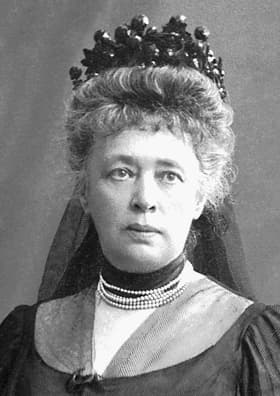
Austrian · Activism · Literature
Bertha von Suttner
June 9, 1843 – June 21, 1914
Early Life and Background
Bertha Sophie Felicitas Kinsky von Wchinitz und Tettau was born on 9 June 1843 in Prague, then part of the Kingdom of Bohemia within the Austrian Empire.[2][6][13] She was the posthumous daughter of Franz Michael Graf Kinsky, a field marshal in the imperial army, and Sophie Wilhelmine von Körner
Bertha grew up primarily in Vienna, immersed in the culture of the Habsburg monarchy.[8][5] Like most girls of her class, she did not attend a university; her education took place at home and in finishing schools, emphasizing languages, music, and cultural refinement rather than formal academic study.[1][6] Nonetheless, she cultivated an impressive intellectual curiosity, reading widely and learning French and other languages, which later facilitated her work as a writer and translator.[1][6] Her early environment was strongly marked by militarism. As the descendant of a field marshal in a dynastic empire, she was familiar with the honor culture of officers and the glorification of war.[1][15] These surroundings, combined with her later direct encounters with wartime suffering, would shape the critical perspective on militarism that underpinned her pacifist writings. In her twenties, Bertha worked as a companion and governess in aristocratic households, including that of the wealthy industrialist family von Suttner.[6][1] There she met Arthur Gundaccar von Suttner, a younger son of the family, with whom she formed a close emotional and intellectual bond.[6][12] Because Bertha lacked substantial dowry and Arthur’s family opposed the match on social and financial grounds, their relationship faced significant obstacles.[1][5] In 1876, seeking financial stability, Bertha accepted a position advertised by Alfred Nobel in Paris as his private secretary.[6][4] She stayed only a short time before returning to Austria, but this brief period initiated a long‑term correspondence and friendship that would prove historically important. Many biographers argue that her letters and discussions with Nobel about war and peace influenced his decision to include a Peace Prize in his will.[6][14][4] Also in 1876, Bertha and Arthur defied family opposition and secretly married.[6][1][12] Cut off from his family’s wealth, the couple moved to the Caucasus region, then part of the Russian Empire, where they lived from 1876 to 1885
During their years in the Caucasus, Bertha and Arthur witnessed the aftermath of the Russo–Turkish War of 1877–78
To make a living, Bertha began writing articles and short stories for newspapers and magazines, often under pseudonyms such as "Jemand" ("Someone").[1][6] She also translated foreign works into German. This period marked her transition from aristocratic governess to professional writer, and it allowed her to develop a clear narrative voice and a deep sympathy for ordinary people affected by high politics and war.[5][6] In the mid‑1880s, the Suttners returned to Vienna.[6][5] Bertha now turned more systematically to literature and political reflection. In 1883 she published Inventarium einer Seele ("Inventory of the Soul") in Leipzig, a work that explored ethical and psychological questions and marked her emergence as a writer engaged with moral philosophy.[6] Her first significant novel, Das Maschinenalter ("The Machine Age"), appeared in 1887 under the pseudonym "Jemand".[5] Drawing in part on her observations of the Russo–Turkish War and the rapid industrialization of Europe, the book examined how technological progress might transform society and warfare.[5] It already contained hints of the anti‑militaristic stance that would later define her most famous work. Bertha von Suttner achieved international renown with the publication of her novel Die Waffen nieder! ("Lay Down Your Arms!") in 1889.[7][13][6] The book is structured as the fictional memoir of Martha Althaus, a bourgeois woman whose life is scarred by successive wars, including the Austro–Prussian War of 1866 and the Franco‑Prussian War of 1870–71.[6][14] Through Martha’s experiences, Suttner exposed the romantic myths surrounding war and depicted its emotional and social devastation, particularly for women and families. The novel quickly became a bestseller across Europe.[13][7] It was translated into multiple languages and circulated widely within peace societies, women’s organizations, and liberal circles. Historians and Nobel officials later described Die Waffen nieder! as "one of the nineteenth century’s most influential books" in the antiwar genre.[13] Its success transformed Bertha from a relatively obscure novelist into a central figure of the emerging organized peace movement. Alongside Die Waffen nieder!, she brought out Das Maschinenzeitalter ("The Age of Machines") in book form in 1889, further developing her critique of the intersection between militarism and technological modernity.[5] These works established her as a writer who combined literary skill with sharp political insight. Following the success of her novel, Bertha von Suttner moved from literary advocacy into organizational activism. In 1891, she attended her first international peace congress.[5] That same year she played a leading role in founding the Austrian Peace Society (Österreichische Gesellschaft der Friedensfreunde), and she soon served for a long time as its president.[13][8][10] Within the Austrian Peace Society and the broader movement, she campaigned for several key goals: She became honorary president of the Permanent International Peace Bureau
Bertha’s brief employment as Alfred Nobel’s secretary in 1876 was followed by two decades of correspondence.[6][14] In their exchanges, she discussed the dangers of militarism and the need for international mechanisms to secure peace.[6][4] According to later accounts, Nobel came to see peace promotion as a cause worthy of recognition alongside science and literature. When Nobel’s will was made public after his death in 1896, it was revealed that he had provided for a Prize for Peace, to be awarded to those who had worked "for fraternity between nations, for the abolition or reduction of standing armies and for the holding and promotion of peace congresses".[6][13] Many scholars credit Bertha von Suttner as a significant influence on this decision.[6][14][4] The Nobel Peace Prize was first awarded in 1901, and four years later she would herself receive it. Beyond her major novels, Bertha von Suttner wrote essays, articles, and other books addressing ethical, social, and scientific issues. In 1898, she published Schach der Qual ("Check to Torment"), a work strongly opposing vivisection and animal experimentation.[1] This text extended her concern for suffering and moral responsibility beyond human warfare to include the treatment of animals in scientific practice. She also contributed numerous articles to peace journals and mainstream newspapers, commenting on current diplomatic developments and arguing against the arms race that was intensifying in Europe at the turn of the century.[1][15] In these writings she sought not only to condemn war but to articulate concrete institutional alternatives, such as arbitration treaties and international conferences. By the early 1900s, Bertha von Suttner was widely recognized as one of the most prominent pacifists in Europe.[9][8] In 1905, the Nobel Committee selected her as the Peace Prize laureate, citing "her audacity to oppose the horrors of war" and her leading role in the international peace movement.[13] She thus became the second female Nobel laureate (after Marie Curie in 1903), the first woman to receive the Nobel Peace Prize, and the first Austrian Nobel laureate.[6][13][4] The formal award ceremony took place in Stockholm on 10 December 1905, and she was later presented with the medal and diploma in Kristiania (Oslo) on 16 April 1906.[6][5][13] The prize dramatically increased her public profile. Newspapers across Europe reported the award, with outlets like Coburger Zeitung emphasizing her gender first and her pacifist achievements.[16] The recognition legitimized pacifism as a serious international cause and demonstrated that a woman writer and activist could shape global discourse on war and peace. Following her Nobel award, Bertha von Suttner undertook extensive lecture tours and participated in numerous peace conferences between 1906 and 1914.[16][8][9] She spoke in major European cities and in the United States, addressing audiences that included politicians, intellectuals, and broad segments of the public. Her speeches and writings during this period emphasized several themes: Bertha remained active in the Permanent International Peace Bureau and continued to lead the Austrian Peace Society, even as political tensions escalated on the eve of World War I.[13][8] She maintained contact with other leading pacifists and reformers, including women’s rights activists, contributing to the growing overlap between peace and feminist movements. Bertha’s marriage to Arthur Gundaccar von Suttner was intellectually and emotionally close. Arthur supported her writing and activism, sometimes co‑authoring or assisting with her projects.[6][1] Their life together modeled a partnership based more on shared convictions than on traditional gender roles. The couple did not have children, a circumstance that allowed Bertha to devote much of her time to writing, organizing, and travel.[6] After Arthur’s death (which occurred several years before her own), she continued her work despite personal grief and advancing age, maintaining a demanding schedule of correspondence and public engagements.[1][5] In the early 1910s, Bertha von Suttner watched with growing alarm as European governments accelerated military preparations and nationalist rhetoric intensified.[8][15] She warned that the arms race and rigid alliance commitments could lead to a catastrophic conflict, arguing that diplomatic crises should be resolved through arbitration and international conferences rather than mobilization. Despite declining health, she remained active almost until her death. She continued to publish articles, give lectures, and attend peace meetings, using her Nobel status to press for reforms.[9][16] Bertha von Suttner died of stomach cancer in Vienna on 21 June 1914.[2][4][8][10] Her death occurred just one week before the assassination of Archduke Franz Ferdinand in Sarajevo on 28 June 1914 and barely more than a month before the outbreak of World War I. The tragic timing has often been noted by historians, who see in it a symbolic contrast between her lifelong efforts to prevent war and the failure of European elites to heed such warnings. She was buried in Gotha, in today’s Germany; her urn is held in the columbarium of the main cemetery there.[10][17] Memorials and plaques in Vienna, Prague, and other cities later commemorated her life and work. Bertha von Suttner’s legacy is multifaceted, spanning literature, activism, and international institutional development. Her novel Die Waffen nieder! became a foundational text of the European peace movement, shaping public opinion by portraying war from the perspective of those who suffer its consequences rather than those who direct it.[13][7] The book helped to humanize debates about militarism and contributed to the growth of peace societies. Organizationally, her leadership in the Austrian Peace Society and the Permanent International Peace Bureau helped turn pacifism into a durable transnational movement. These networks later fed into the creation of larger structures for international cooperation, including bodies that anticipated aspects of the League of Nations and, ultimately, the United Nations.[15][9] Her role in inspiring the Nobel Peace Prize and her own receipt of the award in 1905 established an enduring link between moral advocacy and international recognition. The Peace Prize has since been awarded to many individuals and organizations working for disarmament, human rights, and conflict resolution, reflecting themes central to her thought.[6][13][4] In the history of women’s rights, Bertha von Suttner stands out as one of the first notable female pacifists to gain global visibility.[4] At a time when women were largely excluded from formal politics, she demonstrated that they could exert significant influence through literature, journalism, and civil‑society leadership. Her Nobel award broke a key gender barrier and offered a precedent for later female laureates in peace and other fields. Modern institutions and publications continue to recognize her significance. Encyclopedias, museums, and peace organizations describe her as a pioneering figure of organized pacifism and a "forerunner of the United Nations" because of her emphasis on international law and cooperation.[15][5][9] Educational materials for children and young adults present her as an example of how persistent advocacy can change global norms about war.[12] Bertha von Suttner’s ideas did not prevent the wars of the 20th century, but they contributed to a long‑term shift in international discourse. By insisting that war is not inevitable and that states can choose legal and diplomatic alternatives, she helped lay intellectual groundwork for contemporary peace studies, conflict resolution, and global governance debates.Personal Life and Marriage
Formative Experiences in the Caucasus
Return to Austria and Early Writings
"Die Waffen nieder!" and the Rise of a Pacifist Voice
Organized Peace Activism and the Austrian Peace Society
Influence on Alfred Nobel and the Nobel Peace Prize
Further Writings and Ethical Engagements
Recognition: The 1905 Nobel Peace Prize
International Lectures and Late‑Career Activism
Personal Life in Later Years
Later Life and Death
Legacy and Historical Impact
Dated achievements
6 indexed.
- Jun091843Activism
Birth in Prague
Bertha von Suttner is born in Prague, then part of the Austrian Empire.
View details Lay Down Your Arms: Bertha von Suttner, Most Prominent Austrian Peace Activist - Jan011905Activism
First woman Nobel Peace Prize laureate
Bertha von Suttner becomes the first female Nobel Peace Prize laureate.