← All women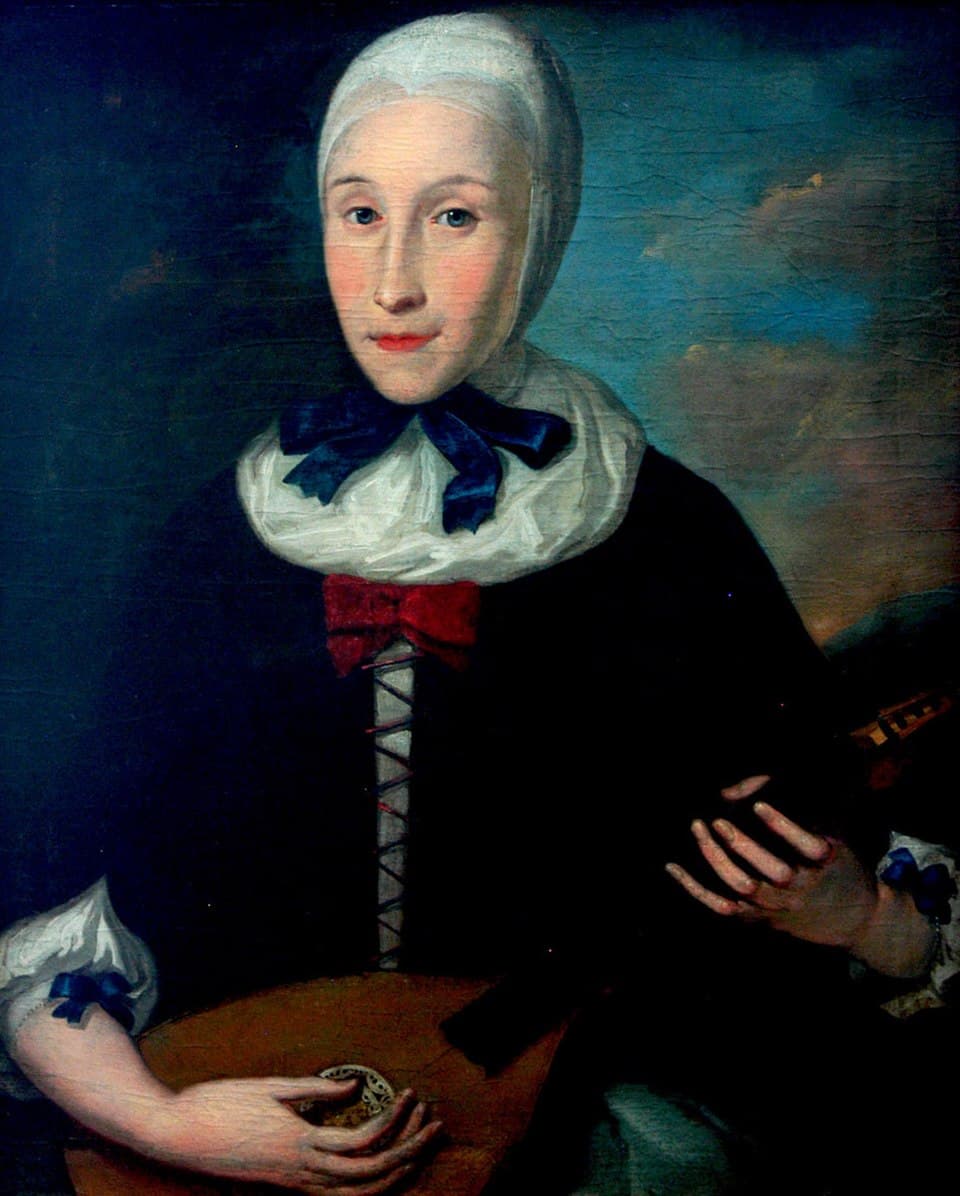
German · Activism · Arts · Politics
Benigna von Zinzendorf
December 28, 1725 – May 11, 1789
Early life and family background
Henrietta Benigna Justine Zinzendorf, later known as Benigna von Watteville, was born on 28 December 1725 in Berthelsdorf, Saxony, in the heart of the Moravian renewal movement led by her father, Count Nicolaus Ludwig von Zinzendorf. She belonged to a prominent aristocratic and Pietist household whose religious ideals shaped daily life, education, and social practice. Her mother was Countess Erdmuthe Dorothea of Reuss-Ebersdorf, another influential figure in the Moravian world. In this environment, faith was inseparable from community organization, music, correspondence, and mission activity.
Benigna’s upbringing gave her unusual exposure for a woman of her era. Moravian culture encouraged literacy, disciplined devotion, and practical service. The community also valued women’s participation more than many contemporary Protestant settings did, especially in areas such as teaching, choir leadership, household organization, and mission support. These influences helped prepare her for the work she would later undertake in North America.
Her family context was also international. The Moravian movement had links across German lands, the Netherlands, Britain, and the American colonies. Benigna therefore came of age not in a narrowly local setting, but in a transatlantic religious network that saw travel and correspondence as normal instruments of spiritual labor.
Journey to America and Moravian mission work
In 1741, Benigna traveled to British North America with her father and other Moravians. The exact day of her arrival is not documented in the accessible sources, but the journey itself is significant because it placed a teenage woman in the midst of one of the period’s most ambitious Protestant mission efforts. The Moravians were trying to establish settlements, strengthen congregations, and extend missionary work among settlers and Indigenous communities.
Benigna’s presence was not incidental. She was part of the Moravian communal system, which drew on family members and lay believers to sustain mission life. During her stay in the colonies, she assisted the mission environment created by her father and the wider community. Sources describe her as participating in religious and educational activity and remember her especially for her role in the beginnings of Moravian schooling in Pennsylvania.
The voyage also reflects the broader constraints and possibilities of women’s mobility in the eighteenth century. Long-distance travel by women was unusual, especially for a young unmarried woman, but Moravian communal structures made it more possible. Benigna’s transatlantic experience helped connect European Pietism with colonial America and gave her the practical context for her educational achievement.
Founding of the girls’ boarding school
Benigna’s most enduring contribution came on 4 May 1742, when she opened a girls’ boarding school in Germantown, Pennsylvania. The school served about twenty-five pupils and taught reading, writing, religion, and household arts. It was more than a small informal class. It was a structured boarding institution, and it has been recognized as the first boarding school for girls in the British American colonies.
This was a landmark in the history of women’s education. In colonial North America, girls’ schooling was often limited to basic literacy or domestic instruction, and few institutions were created with the explicit purpose of sustaining girls as resident students. Benigna’s school challenged that pattern. The Moravians believed education should form character, piety, and practical capability, and their educational model gave girls access to a more sustained curriculum than many contemporary communities would have considered necessary.
The school’s importance extends beyond its first day. It became the institutional ancestor of later Moravian educational bodies in Bethlehem, including what would become Moravian Academy and Moravian University. Thus, Benigna’s initiative was not a temporary experiment but the beginning of a lasting educational lineage. The school also demonstrates how a young woman could exercise leadership in a religious movement that, while patriarchal, still created limited but meaningful spaces for female initiative.
Marriage and later Moravian life
In 1746, Benigna married Johannes von Watteville (Johannes Langguth), a Moravian bishop. The marriage connected her life more closely to another major leader within the same religious network. In the eighteenth-century Moravian world, marriage did not necessarily remove women from religious service, and Benigna remained identified with the church’s communal and mission-centered priorities.
Her married life unfolded within a transatlantic religious culture that continued to value correspondence, travel, and the exchange of spiritual labor. The sources indicate that she and her husband later visited Bethlehem in 1785, returning to the community shaped in part by her early educational work. That visit underscores the durability of her connection to the Pennsylvania settlements and the memory of the school she had helped establish.
Benigna’s life in marriage should be understood in the context of eighteenth-century barriers facing women. Public authority remained limited, and women’s achievements were often absorbed into family or church records rather than celebrated independently. Yet within the Moravian movement, her identity as educator, missionary participant, and woman of the community remained visible enough for later generations to remember.
Relocation of the school to Bethlehem
In 1749, the girls’ boarding school founded by Benigna was permanently moved to Bethlehem, Pennsylvania. The school had already undergone several adjustments in the uncertain conditions of colonial settlement, but the Bethlehem relocation gave it a stable base in the growing Moravian center. Over time, this institution developed into the lineage associated with Moravian College, Moravian University, and Moravian Academy.
This move is historically significant because institutions are often remembered for their founding moments, but their survival depends on adaptation. The Bethlehem relocation ensured that Benigna’s educational vision would not vanish with the pressures of finance, settlement change, or shifting personnel. By anchoring the school in a more durable Moravian community, the church preserved a rare space for girls’ residential learning in North America.
The long-term result was substantial. The school’s history became part of the broader story of women’s access to education in the United States. Benigna’s contribution therefore belongs not only to local Bethlehem history, but to the larger history of female schooling and institutional development in colonial and early national America.
Legacy and historical impact
Benigna von Zinzendorf is remembered today primarily as a founder of women’s education and as a participant in the Moravian missionary world. Her achievement lay in translating religious conviction into a practical institution that offered girls a sustained learning environment at an early date in colonial America. That accomplishment mattered because it came at a time when women’s education was neither widely funded nor broadly imagined as a public good.
Her life also illustrates how women could exercise influence within religious communities that were otherwise structured by male authority. The Moravian Church’s communal order allowed daughters, wives, and sisters to participate in work that had public consequences, especially in education and mission support. Benigna’s school was therefore both a product of her personal initiative and a reflection of the distinctive Moravian ecosystem in which she lived.
Her legacy has remained visible in the institutions that trace their roots to the 1742 school. Bethlehem’s educational heritage, Moravian College’s historical memory, and later efforts to highlight women’s contributions have all helped keep her name in circulation. Although she did not leave a large body of published work, her institutional legacy continues to speak through the schools that descend from her founding act.
Death
Benigna Justine von Watteville died on 11 May 1789 in Herrnhut, Saxony. Her death marked the end of a life that linked eighteenth-century German Pietism to the foundations of women’s formal education in British North America. The institutions associated with her continued to evolve long after her lifetime, giving her a lasting place in the history of Moravian mission, transatlantic religion, and women’s education.
Dated achievements
8 indexed.
- Dec281725Activism
Birth in Berthelsdorf, Saxony
Henrietta Benigna Justine Zinzendorf was born in Berthelsdorf, Saxony, into the Moravian Pietist community led by her father, Count Nicolaus Ludwig von Zinzendorf.
View details Benigna Justine von Watteville (German Wikipedia) - Dec011741