← All women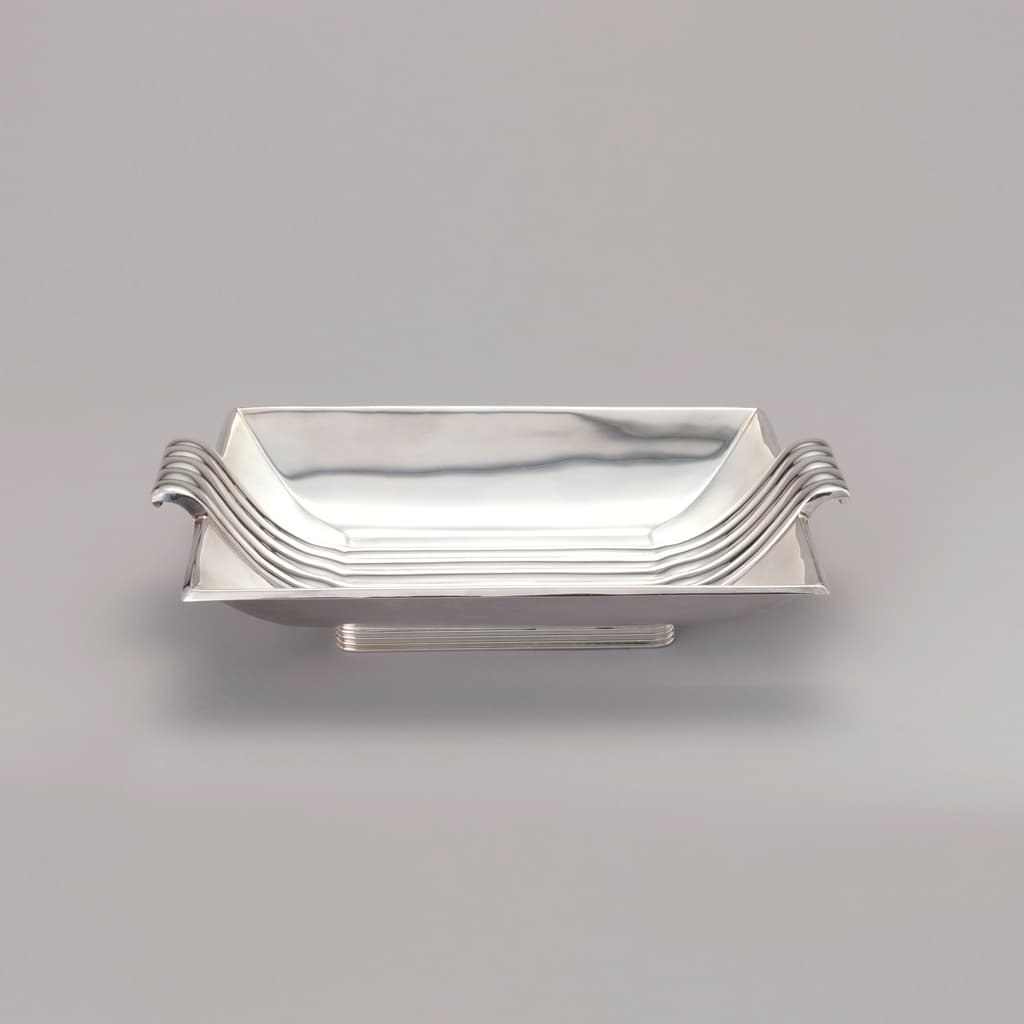
American · Arts
Belle Kogan
June 26, 1902 – February 1, 2000
Early Life and Background
Belle Kogan, born Bella Cohen on June 26, 1902, in Ilyashevka, Russia, emerged from modest immigrant beginnings to become one of the first prominent women in American industrial design.[1][2][3] She was born into a Jewish family at a time when political turmoil and antisemitism were reshaping Eastern Europe. In 1906, when she was about four years old, her father moved the family to the United States, settling in Allentown, Pennsylvania, where he opened a jewelry store.[1][2][3][6]
Growing up in Allentown, Kogan attended local schools and showed a strong aptitude for mechanical drawing and art. Sources note that she studied mechanical drawing in high school and later taught the subject after graduating, indicating both technical skill and early leadership.[3] Her father’s jewelry business exposed her to manufacturers and sales representatives, giving her insight into how products were conceived, marketed, and sold. The Archives of American Art record that she initially studied painting, but her interactions with manufacturers at the store made her aware of her potential as a designer of industrial products rather than solely as a fine artist.[6]
As a young woman, Kogan aspired to formal art education and saved money to attend Pratt Institute in Brooklyn, one of the few institutions offering robust training in design and applied arts.[3][6] She enrolled but had to withdraw in 1920 due to financial pressures and family needs, returning to work in her father’s jewelry store.[3] This interruption of formal education, common for working‑class women in the era, did not end her ambitions; instead, it pushed her toward a more self‑directed path into industrial design, guided by practical experience and relationships with manufacturers.
Career Beginnings and Development
During the 1920s, Kogan’s professional trajectory shifted gradually from mechanical drawing and jewelry store work to industrial design. She worked briefly as a color consultant for a plastics company, gaining familiarity with early synthetic materials such as Bakelite and celluloid.[3][6] This experience would later prove critical as plastics became central to mid‑century consumer products.
A pivotal moment came in 1929, when the Quaker Silver Company of Attleboro, Massachusetts, hired her to design pewter and silver items.[3][6] For a woman without a completed formal design degree, securing such a commission from an established silver manufacturer was notable. At Quaker Silver, she began to refine an approach that balanced aesthetics, manufacturability, and the economics of mass production.
In 1930, Quaker Silver sent Kogan to Germany to study glass and silver manufacturing techniques.[6] This study trip exposed her to European avant‑garde movements and the advanced industrial processes of German factories during the interwar period. The exposure informed her later designs, which often incorporated modernist geometry and streamlined forms. According to the Smithsonian’s Archives of American Art, this experience helped transition her fully into industrial design as a professional field.[6][8]
By 1931, Kogan had gained enough confidence and industry contacts to open her own design studio in New York City, Belle Kogan and Associates (BKA).[3][6] Operating an independent consultancy at that time was rare for any designer, and rarer still for a woman. Her studio offered comprehensive industrial design services, from concept development and styling to technical details suited to mass production. She remained based in New York for roughly four decades, closing her office in 1970.[6][9]
Within a few years of opening BKA, Kogan built a staff that notably included other women. The Smithsonian’s women’s history program notes that she became the first woman to establish her own independent consulting firm and had a staff of three female designers by 1939, challenging assumptions that women could not handle machinery or industrial processes.[7] Her practice thus functioned as both a commercial studio and a training ground for women entering the emerging discipline of industrial design.
Major Works, Designs, and Clients
Over the course of her long career, Belle Kogan designed a wide array of consumer products that spanned metals, glass, ceramics, plastics, and small appliances. She was often referred to as "the Silver Lady" due to her extensive work for silver and metalware firms.[3] Among her early and important clients were Quaker Silver, and later such firms as Tiffany & Company, Towle, and Samuel Kirk & Sons, for whom she designed silver objects and tableware.[3]
The Smithsonian highlights her Metropolis cup and saucer, designed in 1935, as a significant example of her work.[7] Influenced by European avant‑garde movements—including aspects of modernism and machine aesthetics—Kogan created a cup and saucer with sharp, geometric profiles and minimal ornamentation. The design was patented in 1936, with the patent grant dated March 1, 1936, underscoring both her creative authorship and the formal recognition of her intellectual property.[7] The Metropolis set is now part of museum collections and is frequently cited in discussions of early modern American tableware.
Kogan’s studio developed designs for numerous well‑known companies. According to mid‑century design commentaries, by the time she closed her New York office in 1970 she had designed for Reed & Barton, Red Wing Pottery, Bausch & Lomb, Boonton Molding, Libbey Glass, and Dow Chemical, among others.[9] Her projects included:
- Metal tableware and hollowware, especially in silver and pewter, aimed at both upscale and middle‑class markets.[3][6]
- Ceramic dinnerware and decorative pieces for firms such as Red Wing Pottery.[6][9]
- Plastic household goods, including Bakelite jewelry, celluloid vanity items, and clocks, marking her as one of the first American designers to experiment systematically with plastics in consumer products.[3]
- Optical and scientific accessories for companies like Bausch & Lomb, which needed aesthetically pleasing yet precise components.[9]
In addition to her industrial work, Kogan wrote numerous articles on silver for trade journals, contributing to professional discourse around design for metalware.[3] Her writings helped manufacturers and retailers understand trends in styling, consumer preferences, and the role of design in differentiating products.
One of her widely discussed lines was Boontonware, a brand of molded plastic tableware produced by Boonton Molding Company. Later retrospectives note Kogan’s role in shaping Boontonware’s sleek, colorful forms, which became emblematic of mid‑century modern plastic design.[9][17] These products demonstrated her ability to translate modernist aesthetics into affordable goods for everyday use.
Professional Leadership, Awards, and Recognition
Belle Kogan’s significance extends beyond her individual designs to her role in institutionalizing industrial design as a profession and opening the field to women. She is frequently described as "the first prominent female industrial designer in the United States" and the "Godmother of American Industrial Design."[1][2][4][14] These characterizations stem from her early entry into the field, her large body of work, and her leadership in professional organizations.
Kogan was a founding member of the New York chapter of the Industrial Designers Institute (IDI), sometimes referred to historically as the American Design Institute.[3][2] Her involvement in the IDI placed her among the small group of designers who worked to define standards, ethics, and public recognition for industrial design as a distinct profession separate from engineering and fine art.
In 1994, long after she had closed her New York studio, Kogan was recognized as a fellow of both the Industrial Designers Society of America (IDSA) and the Industrial Designers Institute.[1][2] Fellowship status is typically reserved for individuals who have made exceptional and sustained contributions to the field. These honors acknowledged her pioneering work, her role in founding professional organizations, and the influence of her designs across multiple industries.
Her papers, measuring 0.6 linear feet and dating from 1920 to circa 1990, are preserved in the Archives of American Art at the Smithsonian Institution, an archival recognition that underscores her historic importance.[6][8] Museum collections, including the Cooper Hewitt, Smithsonian Design Museum, and the National Museum of American History, hold examples of her work, such as the Metropolis cup and saucer and Boontonware pieces, ensuring continued scholarly and public access.[4][7][17]
Personal Life
Primary sources about Belle Kogan’s personal life are relatively limited, and most biographical accounts focus on her professional achievements. It is known that she was born as Bella Cohen and later used the name Belle Kogan, a change reflecting either marriage, personal choice, or both, though specific details of her marital status and family are not clearly documented in readily available sources.[1][2][3]
Accounts emphasize her identity as a Russian‑born Jewish immigrant woman who navigated gender and ethnic barriers in early twentieth‑century America.[2][4] Her decision to support herself through teaching mechanical drawing, to save for Pratt Institute, and to return to work in the family jewelry store when finances required, suggests a life shaped by economic realities and a strong sense of responsibility.
Later in life, Kogan’s move to Israel under contract with K.V. Design indicates that she maintained international connections and perhaps personal ties to the broader Jewish community.[3][6] However, existing public sources do not provide detailed information about children or close family relationships. Her legacy is therefore most visible through her professional network, her mentorship of women designers, and the archival record of her studio’s work.
Later Career, Work in Israel, and Retirement
After roughly forty years of operating her New York studio, Belle Kogan closed her office in 1970.[3][6][9] By then, she had accumulated a broad roster of clients and contributed to the development of modern consumer goods across multiple material categories. The closure marked the end of an era in which she had served as one of the few women leading an independent industrial design consultancy.
Following the closure, Kogan moved to Israel to work under contract with K.V. Design, an arrangement that involved setting up a studio offering comprehensive design services.[3][6] In Israel she applied her expertise to new contexts, helping to build local design capacity during a period when Israeli industry was growing and diversifying. Her presence as a seasoned American industrial designer likely offered valuable knowledge transfer to younger designers and manufacturers.
In 1972, Kogan left the K.V. Design studio and continued to work as an independent consultant, effectively transitioning from full‑time practice to advisory roles.[3][6] The Archives of American Art note that she retired from designing professionally in 1972, marking the conclusion of a career that spanned more than four decades from the late 1920s to the early 1970s.[6]
Despite retirement, her influence endured through the companies that continued to manufacture products she had designed and through the professional organizations she had helped shape. Her design philosophy—emphasizing functional modernism, manufacturability, and sensitivity to consumer tastes—remained embedded in industrial design practice.
Legacy and Historical Impact
Belle Kogan’s historical importance rests on several intertwined elements: her pioneering status as a woman in industrial design, her role in professionalizing the field, and the breadth of her contributions to everyday consumer products.
First, she is widely regarded as one of the first prominent female industrial designers in the United States and sometimes as "practically the first woman in her field."[1][2][4] At a time when industrial design companies and manufacturers often assumed women lacked knowledge of machinery and production, Kogan not only entered the field but built a successful independent consulting studio and hired other women designers.[7] Her example demonstrated that women could master both the creative and technical aspects of product development, opening pathways for subsequent generations.
Second, Kogan helped to found and shape professional organizations that legitimized industrial design as a distinct discipline. Her involvement in the Industrial Designers Institute and its New York chapter connected her to a community of designers who advocated for recognition, ethical standards, and education in the field.[2][3] Her 1994 fellowships from IDSA and IDI retroactively acknowledged her leadership in this formative period.[1]
Third, the scope of her work across materials and industries illustrates industrial design’s central role in modern consumer culture. From silver and pewter to glass, ceramics, plastics, and optical goods, Kogan’s designs helped define the look and feel of mid‑twentieth‑century domestic life.[3][6][9] Products like the Metropolis cup and saucer and Boontonware tableware show how she translated modernist aesthetics into accessible forms for everyday use, making design a tangible part of ordinary households.[7][9][17]
Institutions such as the Cooper Hewitt, Smithsonian Design Museum and the Smithsonian’s women’s history initiative continue to highlight her contributions, framing her as a crucial figure in "designing a place for women in the field of industrial design."[4][7] Archival collections of her papers support ongoing scholarship, allowing historians and designers to study her processes, business practices, and professional networks.[6][8]
More broadly, Kogan’s story underscores how immigrant women in the early twentieth century reshaped American industries. She transformed experiences in a small jewelry store and brief formal training into a career that helped define a new profession. Her life and work remain an important chapter in women’s history and in the evolution of industrial design.
Later Life and Death
After retiring from professional design work in 1972, Belle Kogan appears to have lived a relatively private life, with limited documentation in widely available sources. She remained associated with the legacy of her designs and continued to be recognized within the industrial design community.
Kogan died in 2000, closing the life of a designer whose career had spanned most of the twentieth century.[1][2][6] Although specific details about the month and day of her death are not provided in the major sources, the year is consistently recorded, and her passing prompted renewed interest in documenting her contributions. Subsequent articles, blog essays, and museum features have worked to restore her visibility in design history, emphasizing her pioneering status and the significance of her work for women in technical fields.[3][4][9][17]
Today, Belle Kogan is remembered through archival collections, museum objects, and scholarship that situates her among the founders of industrial design in the United States. Her story continues to inform efforts to recognize women’s contributions to design and to broaden the historical canon beyond its earlier focus on male practitioners.
Dated achievements
3 indexed.
- Aug061902Science
Born in Bardichev, Russian Empire
Belle Kogan was born on August 6, 1902, in Bardichev, Russia (now Ukraine).
View details Belle Kogan - Wikipedia - Jan011929Arts
Established her own industrial design studio in New York City
Kogan opened her own independent industrial design studio in New York, becoming one of the first women to do so.