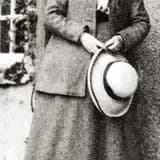
Potter's paper 'On the Germination of the Spores of Agaricineae' was read to the Linnean Society by George Massee, as women could not attend.
On 1 April 1897, Beatrix Potter's scientific paper, 'On the Germination of the Spores of Agaricineae', was presented to the Linnean Society of London—but not by Potter herself. Because women were barred from attending Society meetings and could not present their own research, the paper was read on her behalf by the botanist George Massee.
Potter had spent years conducting careful microscopic studies of fungi spores and germination, developing her own theories—ahead of mainstream British mycology—about the symbiotic relationship between fungi and algae in lichens. Her scientific illustrations of fungi are still admired today for their precision and beauty, and are held by the Armitt Museum and the Perth Museum.
This episode is a striking illustration of the institutional gender barriers facing Victorian women in science: despite the rigor of her research, Potter was denied both the platform to present it and the professional recognition that might have followed. She reportedly withdrew the paper for revision and never pursued publication, later shifting her creative energy toward the illustrated children's stories that made her famous. In recent decades, the Linnean Society has posthumously acknowledged the unfairness of her treatment.