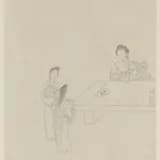
Ban Zhao died around 115 CE, ending the life of China's first known female historian; some sources place her death as late as c. 117–120 CE.
Ban Zhao died around 115 CE, though the precise month and day were not preserved in the historical record, and some reference sources place her death slightly later, around 117 or even 120 CE. By the time of her death, she had achieved a position of remarkable intellectual authority: she had completed the Han shu, authored Lessons for Women, served as an instructor to Empress Deng Sui and other women of the imperial court, and produced numerous other writings including poetry, commentary, and memorials to the throne.
Her death marked the end of a life that fundamentally shaped Chinese historiography and the discourse on women's education. As the first known female historian in China, Ban Zhao's scholarly legacy influenced generations of historians who used the completed Han shu as both source and model. Meanwhile, her Lessons for Women became one of the most widely circulated didactic texts on female virtue and duty for nearly two millennia of Chinese history, later canonized among the Four Books for Women during the Ming dynasty.
Following her death, Empress Deng Sui, her former student, is said to have observed official mourning in her honor — an extraordinary gesture that underscores the esteem in which Ban Zhao was held at the highest levels of Han court society. Her life and career remain a touchstone in discussions of women's intellectual history, both in China and globally.