← All women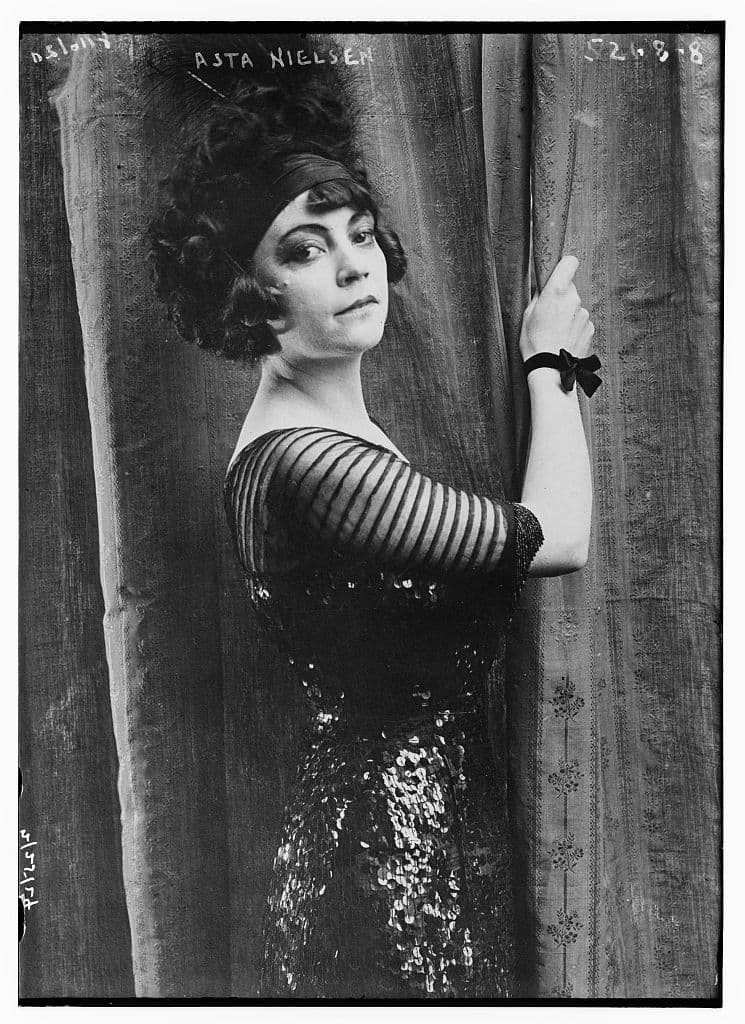
Danish · Arts
Asta Nielsen
September 11, 1881 – May 25, 1972
Early Life and Background
Asta Nielsen was born on September 11, 1881, in Copenhagen, Denmark. She was born into a working-class family, with her father being a blacksmith and her mother a washerwoman. This modest upbringing instilled in her a sense of resilience and determination. Asta showed an early interest in the arts, which led to her enrollment at the Royal Danish Theatre's acting school.
Career Beginnings and Development
Asta Nielsen's career began on the theatrical stage, but it was her transition to film that marked her as a true pioneer. In 1910, she starred in Afgrunden (The Abyss), which was both a critical and commercial success and launched her into international stardom. Her role showcased her naturalistic acting style, a stark contrast to the theatrical performances commonly seen in films at the time. This role and her subsequent move to Germany in 1911 facilitated her career growth as she became a significant figure in the burgeoning German film industry.
Major Works and Accomplishments
Nielsen's significant contributions were her performances in silent films, which largely revolved around themes of women’s sexuality and psychology, often pushing the boundaries of narrative cinema. Among her notable films were: Die freudlose Gasse (1925) and Hamlet (1921), where she played the title role, reflecting her ability to portray complex characters.
Nielsen's work is credited with pioneering modern film acting through her ability to convey emotion subtly and powerfully. Her performance was more subdued and internalized, differing fundamentally from her contemporaries.
Awards, Honors, and Recognition
Throughout her career, Asta Nielsen was widely celebrated for her contributions to early cinema, receiving accolades for pushing boundaries and establishing new norms in film acting. Her success in Germany made her one of the first true international film stars, a testament to the enduring impact of her work.
Personal Life
Nielsen's personal life was marked by complex relationships. She was married several times; first to director Urban Gad, who had directed her in her debut film. Her personal life, often mirrored the theatrical intensity of her film roles, navigating through various personal and professional landscapes over her lifetime.
Legacy and Historical Impact
Asta Nielsen left an indelible mark on the film industry, helping to transition acting from heightened drama to subtly expressive art. Her influence persisted long after the silent film era, impacting both European and global cinema. She is frequently studied for her groundbreaking contributions to the medium.
Later Life and Death
Later in her life, Nielsen retired to Denmark after a brief comeback in the 1930s. She lived a relatively private life until her death on May 25, 1972. Her contributions continue to be celebrated globally, inspiring countless actors and filmmakers who followed in her footsteps.
Dated achievements
2 indexed.
- Sep111881Arts
Birth of Asta Nielsen
Asta Nielsen was born on September 11, 1881, in Copenhagen, Denmark.
View details Asta Nielsen - Wikipedia - May251972Arts
Death of Asta Nielsen
Asta Nielsen passed away on May 25, 1972, ending an era of early cinematic brilliance.
View details