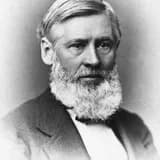
Gray died in Cambridge, Massachusetts, on January 30, 1888, ending a career that reshaped American botany and Darwinian debate.
Asa Gray died on January 30, 1888, in Cambridge, Massachusetts, after a lifetime devoted to botany, teaching, and scientific correspondence. Institutional sources agree on the date. By then Gray had become the most influential American botanist of the nineteenth century, a central figure in Harvard science, and a key early defender of Darwin’s theory in the United States.
His death was historically significant because it closed the career of a scientist who had helped define botany as a modern American discipline. Gray’s work on North American flora, his manuals, his development of Harvard’s botanical collections, and his advocacy for evolutionary interpretation had lasting institutional and intellectual effects. He had helped create the conditions under which later generations of botanists could work with stronger collections, better taxonomy, and a more international scientific outlook.
Gray’s legacy was already visible at his death: his name was attached to Harvard’s herbarium and to an enduring botanical canon, while honors from major academies testified to his international stature. In the context of the nineteenth century, when American science was still claiming equal standing with Europe, Gray’s life embodied that transition from dependence to authority.