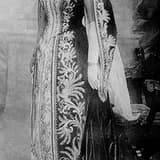
Anna Vyrubova was arrested by Russia's Provisional Government amid investigations into alleged German influence at court.
Following the abdication of Tsar Nicholas II in March 1917, Anna Vyrubova, as the Empress's closest friend and a figure widely (and largely unjustly) associated with the controversial influence of Grigori Rasputin, became a target of suspicion under Alexander Kerensky's Provisional Government. She was arrested and imprisoned in the Peter and Paul Fortress, where she was subjected to grueling interrogations regarding alleged treasonous ties to Germany and claims of improper influence over state affairs.
Despite months of investigation, no credible evidence was found to substantiate accusations of espionage or political corruption, and a special commission eventually cleared her of the most serious charges. Nonetheless, her imprisonment reflected the intense public animus directed at the inner circle of the fallen monarchy, and she endured harsh conditions that damaged her already fragile health, compounded by a permanent limp from an earlier train accident in 1915.
Her arrest and the subsequent scrutiny exemplify the turbulent transition from autocracy to revolutionary rule in Russia and the scapegoating of court insiders as symbols of the old regime's perceived corruption. It also marked the beginning of a period of persecution that would follow her through the Bolshevik Revolution, ultimately forcing her into hiding and exile.