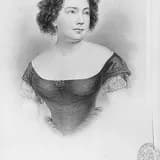
Anna Ella Carroll died on February 16, 1894, in Washington, D.C., after decades advocating for recognition of her Civil War contributions.
Anna Ella Carroll died on February 16, 1894, in Washington, D.C., at the age of 78. In her final decades she had become increasingly identified with her claim to have devised the strategic plan for the Union's Tennessee River campaign during the Civil War — specifically, the argument that Union forces should invade the Confederacy via the Tennessee and Cumberland Rivers rather than the Mississippi, a strategy credited with contributing to early Union victories at Forts Henry and Donelson in 1862.
Carroll spent years after the war petitioning Congress for financial compensation and formal recognition as a military strategist, arguing she deserved pay equivalent to that of a military officer for her wartime service as a pamphleteer and advisor to the Lincoln administration. Though she gained supporters, including suffragists who saw her case as emblematic of women's unrecognized contributions, Congress never granted her a pension commensurate with her claims.
Her death came without full official acknowledgment of her wartime role, but she left behind a substantial paper trail — political pamphlets, legal arguments defending Lincoln's suspension of habeas corpus, and personal correspondence — that later historians and biographers, including Sarah Ellen Blackwell, used to argue for her historical significance. She is buried at Trinity Episcopal Church Cemetery in Old Trinity Church, Church Creek, Maryland.