← All women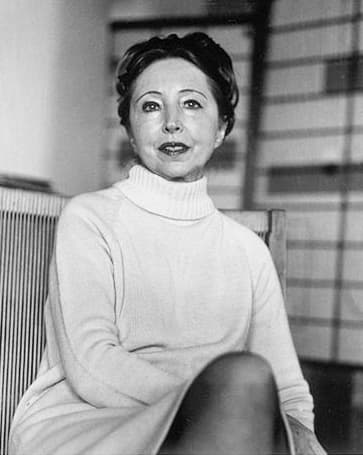
French, American · Literature
Anais Nin
February 21, 1903 – January 14, 1977
Early Life and Background
Anaïs Nin was born on February 21, 1903, in Neuilly-sur-Seine, France, to Cuban immigrant parents. Her father, Joaquín Nin, was a pianist and composer, and her mother, Rosa Culmell, was a classically trained singer. Nin spent her early years traveling across Europe with her family, settling briefly in Spain. In 1914, following her parents' divorce, Nin relocated to New York City with her mother and brothers. Her early life of cultural diversity and familial upheaval profoundly influenced her future writing.
Career Beginnings and Development
Nin’s literary career began with her translation work and essays, but it wasn't until she moved to Paris in the 1930s that her writing career truly flourished. During this period, she immersed herself in the vibrant literary and artistic community, meeting influential figures such as Henry Miller, with whom she had a profound personal and professional relationship. Her association with the Parisian avant-garde enabled her to explore themes of feminine identity and psychoanalytic principles, which permeated her work.
Major Works and Accomplishments
Nin is best known for her extensive diaries, which she began at age eleven and continued until her death. Her diaries, published posthumously, offer a deeply personal and candid portrait of her life, thoughts, and the literary milieu of her time. In 1944, she self-published her first novel, House of Incest, which, alongside other fictional works like Under a Glass Bell and A Spy in the House of Love, cemented her reputation as a pioneer in female erotica and introspective literature.
Awards, Honors, and Recognition
While Nin did not receive mainstream recognition during her lifetime, her posthumous influence has been substantial. Her work has been celebrated for its poetic prose and psychological depth. Nin's diaries particularly have become a significant part of feminist literary canon, celebrated for their exploration of female identity and empowerment.
Personal Life
Nin's personal life was as unconventional as her writing. She was married in 1923 to Hugh Parker Guiler, a banker. Although the marriage lasted until her death, Nin's diaries reveal numerous passionate affairs, most famously with Henry Miller and psychoanalyst Otto Rank. Her complex personal relationships were a major influence on her writing, adding layers of emotional and psychological realism.
Legacy and Historical Impact
Anaïs Nin's legacy lies in her pioneering exploration of female sexuality and psychology, making her an iconic figure in feminist literature. Her diaries are invaluable resources for understanding the inner life of women in the early-to-mid 20th century. Nin challenged social norms and boundaries, paving the way for future generations of writers to explore intimate and controversial subjects with honesty and bravery.
Later Life and Death
Anaïs Nin continued her literary activities until her health declined due to a cancer diagnosis. She passed away on January 14, 1977, in Los Angeles, California. Her writings, particularly the diaries, continue to be published and inspire new readers, keeping her legacy alive and impactful.
Dated achievements
3 indexed.
- Feb211903Literature
Birth of Anaïs Nin in Neuilly-sur-Seine, France
Angela Anaïs Juana Antolina Rosa Edelmira Nin y Culmell was born near Paris to Cuban-Spanish-Danish parents.
View details Anaïs Nin - Wikipedia - Jan011932Literature
Publication of D.H. Lawrence: An Unprofessional Study
Nin published her first book, a critical study of D.H. Lawrence, launching her career as a published writer.