← All women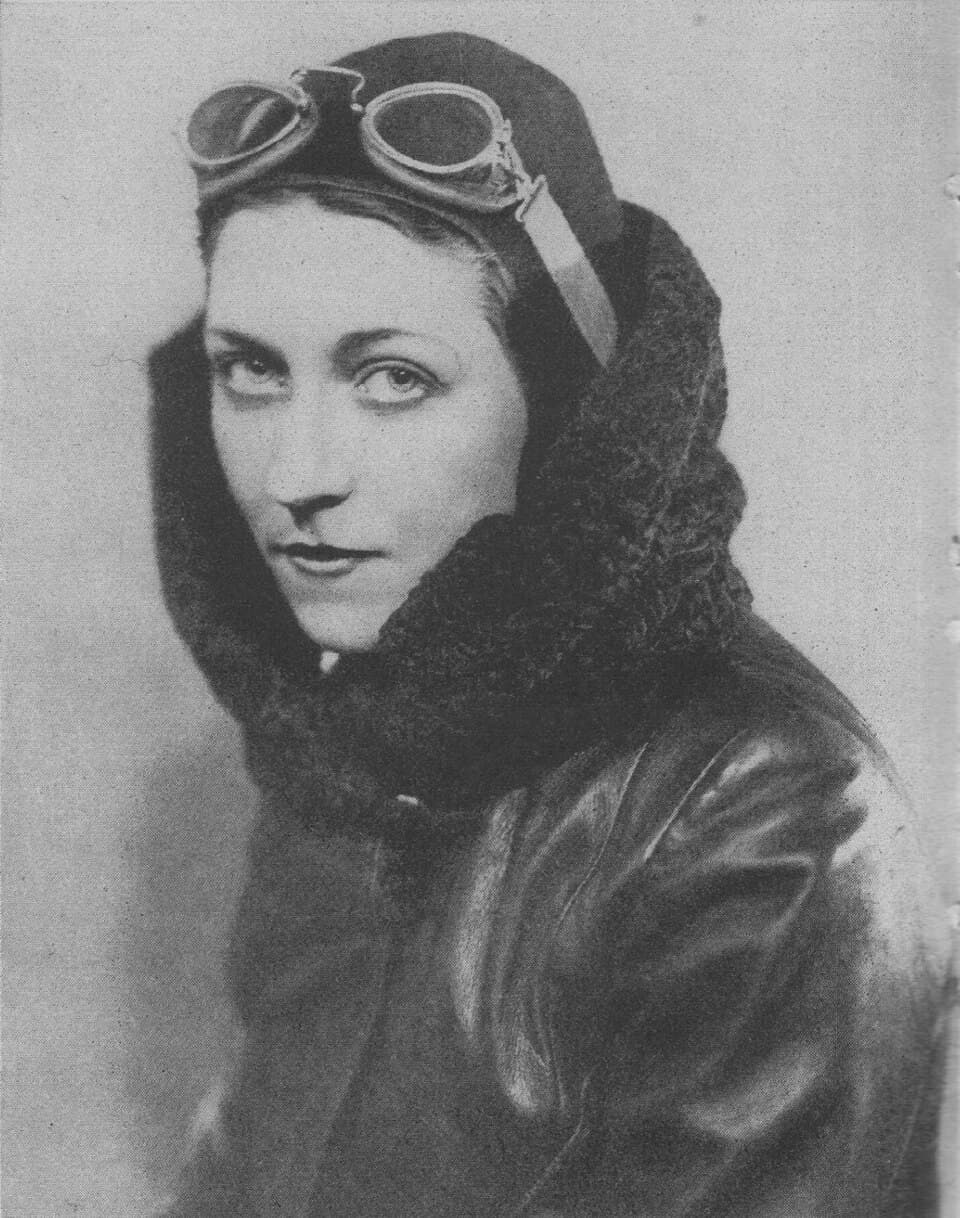
British · Aviation · Exploration
Amy Johnson
July 1, 1903 – January 5, 1941
Early Life and Background
Amy Johnson was born on July 1, 1903, in Kingston upon Hull, East Riding of Yorkshire, England. She was the eldest of four daughters in a traditional middle-class family. Amy's interest in aviation was piqued during her time at home as she watched the airplanes fly over her family's home. Her educational journey took her to the University of Sheffield, where she studied economics. Despite pursuing a conventional field of study, her passion for flying was kindled in the late 1920s when aviation was emerging as a field full of daring escapades and opportunities.
Career Beginnings and Development
Her aviation career began in earnest in 1929 when she obtained her pilot's license, number 19712, issued by the London Aeroplane Club. She was also one of the first women to earn a Category B flying license, which allowed her to carry passengers. Amy combined her love for aviation with mechanics, becoming the first woman to qualify as an aircraft ground engineer. Her mechanical skills earned her respect in an industry predominantly dominated by men.
Major Works, Discoveries, or Accomplishments
Amy Johnson rose to international fame in 1930 when she became the first woman to fly solo from England to Australia. She completed the journey from Croydon to Darwin in 19 days, piloting a de Havilland Gipsy Moth she called "Jason." This achievement garnered immense media attention and she was celebrated globally as a pioneering aviator. Following her historic flight to Australia, Amy continued to break more records, including a 1931 flight from London to Tokyo and a 1932 solo flight from London to Cape Town, South Africa.
Awards, Honors, and Recognition
Her contributions to aviation were acknowledged with various accolades. Johnson was awarded the Harmon Trophy three times and was appointed a Commander of the Order of the British Empire (CBE) for her services to aviation. Her determination and achievements not only challenged gender norms of the 1930s but also inspired many women to pursue careers in aviation and engineering.
Personal Life
In 1932, Amy Johnson married fellow pilot Jim Mollison. Their relationship was public and often under the scrutiny of media, especially as they attempted several long-distance flying records together. However, their union was short-lived and they divorced in 1938.
Legacy and Historical Impact
Amy Johnson's legacy lives on as a trailblazer in aviation. Not only did she challenge societal norms but she also expanded the possibilities for women in engineering and aviation. Her flights inspired a generation of women and men to look beyond gender barriers, highlighting the evolving role of women in science and technology sectors.
Later Life and Death
Amy Johnson's adventurous life tragically ended on January 5, 1941, during World War II when she was serving as an Air Transport Auxiliary pilot. Johnson was flying an aircraft from Blackpool to Kidlington when she encountered foul weather. Despite her experience, she was forced to bail out of her aircraft over the Thames Estuary and drowned. Her loss was deeply felt across the globe, cementing her as one of Britain's most beloved aviators.
Dated achievements
3 indexed.
- Jul011903
- May241930Aviation
First Woman to Fly Solo from England to Australia
Amy Johnson became the first woman to fly solo from England to Australia on May 24, 1930.
View details