← All women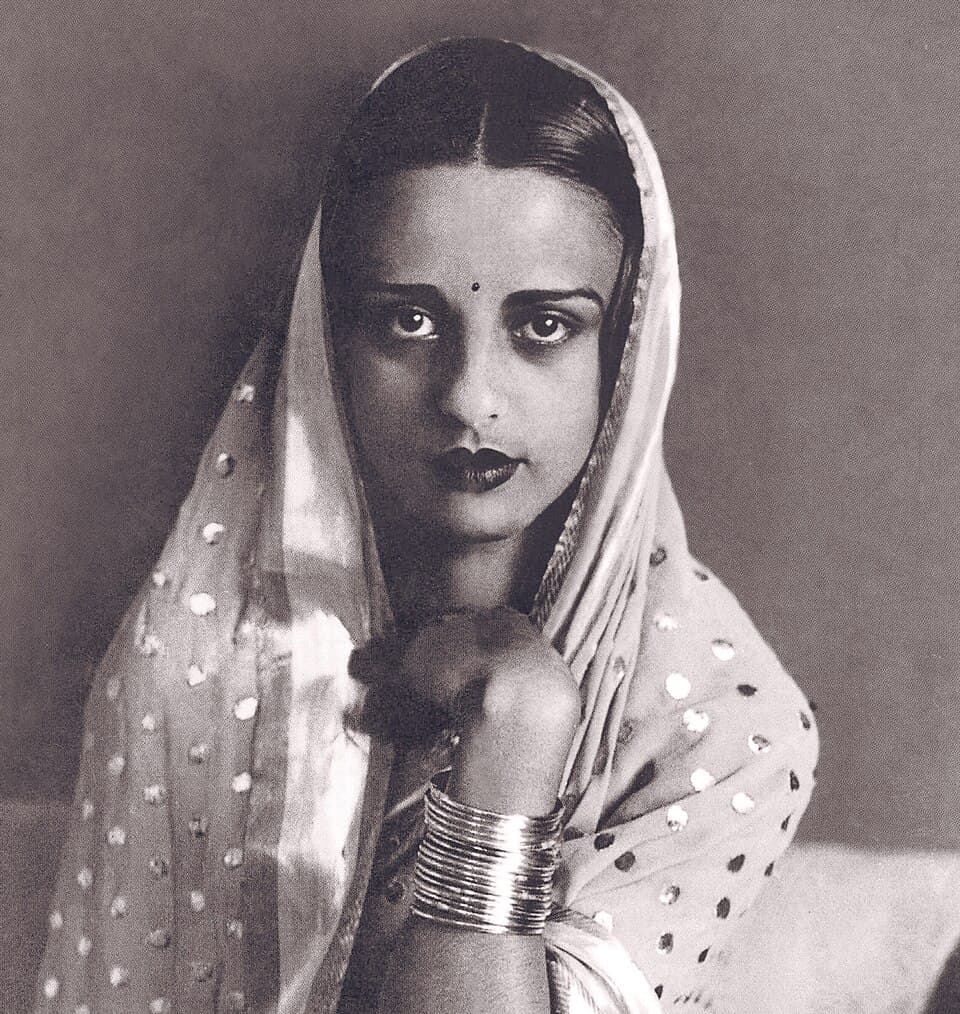
Hungarian, Indian · Arts
Amrita Sher-Gil
January 30, 1913 – December 5, 1941
Early Life and Background
Amrita Sher-Gil was born on January 30, 1913, in Budapest, Hungary, to an extraordinary pair of parents whose union itself crossed cultural and religious boundaries. Her father, Umrao Singh Sher-Gil Majithia, was a Sikh aristocrat, scholar, and amateur photographer from Punjab, India, deeply versed in Sanskrit and Persian literature. Her mother, Marie Antoinette Gottesmann, was a Hungarian-Jewish opera singer of some renown. This unusual pairing of an Indian nobleman and a European artist gave Amrita a hybrid identity from birth, one that would come to define both her personal life and her artistic vision.
She had one sibling, a younger sister named Indira, with whom she remained close throughout her life. Amrita spent her earliest years in Budapest, immersed in a household filled with music, art, and intellectual conversation. Even as a young child she displayed a natural aptitude for drawing and painting, and by the age of five she was already producing sketches that hinted at her prodigious talent.
In 1921, when Amrita was eight years old, the family relocated to India, settling first in Shimla, a hill station that had served as the summer capital of British India. This move exposed young Amrita to the colors, textures, and social realities of Indian life for the first time, providing a wellspring of imagery and inspiration she would draw upon for the rest of her career. Even as a child in Shimla, she took art lessons and continued to develop her technical skills.
Education and Artistic Training
Recognizing her daughter's exceptional talent, Marie Antoinette arranged for Amrita to receive formal art education. In 1929, at the age of sixteen, Amrita traveled to Paris to study art—first briefly at the Académie Julian, and then at the prestigious École des Beaux-Arts, where she trained under the guidance of the academic painter Lucien Simon.
Paris in the late 1920s and early 1930s was the epicenter of the modernist art world, and Amrita immersed herself fully in its currents. She was profoundly influenced by the works of Post-Impressionist masters, particularly Paul Cézanne and Paul Gauguin, whose techniques of color, form, and composition she absorbed and would later adapt to Indian subjects. She also studied the Italian primitives and the works of modern European painters, developing a sophisticated technical foundation that combined academic rigor with modernist experimentation.
During her Paris years, Sher-Gil produced several notable works, including Young Girls (1932), which won her recognition at the Grand Salon in Paris in 1933, where she was elected an Associate—an extraordinary achievement that made her the youngest-ever and only Asian to receive this honor at the time. This early European acclaim established her as a serious artistic talent well before she developed the distinctly Indian style for which she would become most celebrated.
Return to India and Development of a Mature Style
In 1934, Amrita made the pivotal decision to return to India permanently, driven by what she described as an overwhelming artistic calling to depict the lives of Indian people—particularly the poor and marginalized—with the same seriousness and technical sophistication she had learned in Europe. She famously wrote that she felt India "belonged to her" artistically in a way Europe never fully could, believing her destiny was to be a painter of Indian life.
She traveled extensively across India, visiting Ajanta, Ellora, and other sites of classical Indian art and architecture, absorbing the techniques and compositional sensibilities of Mughal and Pahari miniature painting, as well as the murals of the Ajanta caves. This period of study allowed her to synthesize her European academic training with indigenous Indian visual traditions, forging what is now recognized as a unique and pioneering artistic style.
During the mid-to-late 1930s, Sher-Gil produced what are widely considered her masterworks, including Bride's Toilet (1937), Brahmacharis (1937), and South Indian Villagers Going to Market (1937), often referred to collectively as her "South Indian trilogy." These paintings, created after a transformative trip to South India, depict rural and village life with an unflinching yet empathetic realism, emphasizing the dignity, weariness, and quiet strength of ordinary Indian people—especially women. Her palette during this period grew richer and more saturated, reflecting the vibrant colors of the Indian landscape and clothing she observed.
Other significant works from this era include Group of Three Girls (1935), which won her a gold medal from the Bombay Art Society, and numerous self-portraits that reveal her preoccupation with identity, femininity, and her own hybrid cultural position. Sher-Gil painted herself in various guises throughout her career—as a Tahitian woman, in Indian dress, in Western attire—reflecting her constant negotiation between her European and Indian selves.
Artistic Themes and Style
Sher-Gil's mature body of work is distinguished by her unflinching, often somber depictions of Indian women, frequently shown in states of quiet despair, resignation, or introspection. Unlike many of her contemporaries who painted idealized or romanticized visions of Indian life, Sher-Gil's paintings confronted the hardships, poverty, and social constraints faced by Indian women, without sentimentality. She once wrote of feeling a deep, almost painful connection to the "sad eyed" people of the Indian countryside.
Her technique combined the bold color and simplified forms of European modernism with a distinctly Indian sensibility in composition and subject. She was also deeply influenced by Mughal miniature painting styles, incorporating flatness of perspective and rich decorative detailing in her later works. This synthesis positioned her as a foundational figure in Indian modernism, someone who demonstrated that Indian art could engage fully with international modernist movements without losing its indigenous character.
Personal Life
In 1938, Amrita married her first cousin, Victor Egan, a Hungarian physician, in Budapest. The marriage was controversial within her family due to the close blood relation, but the couple remained together until her death. Following their marriage, they relocated to India, eventually settling in Lahore (then part of British India, now Pakistan), where Victor's medical practice was based.
Sher-Gil's personal life was marked by intense passions, numerous romantic relationships (with both men and women), and a bohemian sensibility that scandalized conservative Indian society of the era. She maintained an extensive and revealing correspondence with family and friends throughout her life, providing rich insight into her artistic philosophy, personal struggles, and ambitions. She was known to be outspoken, unconventional, and fiercely independent—qualities reflected in both her life choices and her unapologetic artistic subject matter.
Death and Immediate Aftermath
Amrita Sher-Gil died suddenly in Lahore on December 5, 1941, at the age of just 28. She had fallen seriously ill on December 1 and lapsed into a coma before her death days later. The precise cause of death remains disputed; the most widely accepted explanation attributes it to peritonitis resulting from a botched abortion, though other theories—including illness from unsanitary medical treatment—have also been proposed. Her death came just days before she was scheduled to open her first major solo exhibition in Lahore, cutting short a career that had already achieved remarkable heights and promised even greater accomplishments.
Legacy and Historical Impact
In the decades since her death, Amrita Sher-Gil's reputation and influence have grown enormously. The Government of India has declared nine of her paintings as National Art Treasures, restricting their export and ensuring their preservation as part of India's cultural heritage. The largest collection of her works is held at the National Gallery of Modern Art in New Delhi.
She is frequently referred to as "India's Frida Kahlo," a comparison rooted in both artists' unflinching self-portraiture, their hybrid cultural identities, their unconventional personal lives, and their premature deaths that curtailed extraordinary artistic potential. Sher-Gil is widely regarded as one of the most important pioneers of Indian modern art and among the greatest avant-garde women artists of the early 20th century. Her work is credited with paving the way for later generations of Indian modernist painters and demonstrating that Indian art could hold its own on the world stage while remaining rooted in indigenous subject matter and sensibility.
Her childhood home in Shimla, Summer Hill, has been preserved and is associated with heritage recognition efforts, while her paintings continue to command record prices at international auctions, reflecting her enduring stature. In 1978, the Indian postal service issued a stamp in her honor, and her life and work continue to be the subject of biographies, exhibitions, and academic study around the world. Sher-Gil's brief but incandescent career remains a touchstone for discussions of gender, colonialism, hybridity, and modernism in South Asian art history.
Dated achievements
3 indexed.
- Jan301913Science
Born in Budapest, Hungary
Amrita Sher-Gil was born in Budapest to a Sikh aristocrat father and a Hungarian-Jewish opera singer mother.
View details Wikipedia: Amrita Sher-Gil - Jan011933Science
Paints 'Young Girls', a landmark work of Indian modern art
Sher-Gil painted 'Young Girls' in 1933 while studying in Paris, later earning her recognition at the Grand Salon.