← All women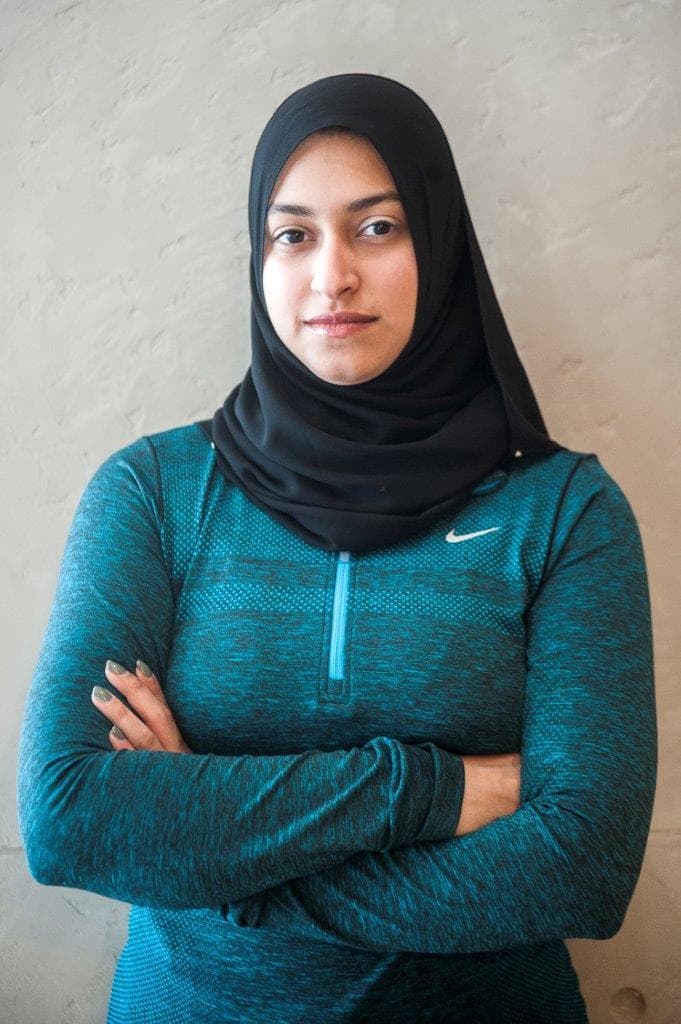
United Arab Emirates · Sports · Activism
Amna Al Haddad
November 21, 1989 – present
Early Life and Background
Amna Al Haddad was born on November 21, 1989, in Dubai, United Arab Emirates. She grew up in a rapidly transforming Gulf society, where traditional expectations for women coexisted with an emerging national push toward greater female participation in public life, education, and eventually sport. Like many young women in the UAE during the late 1990s and 2000s, Al Haddad was raised amid increasing access to global media, education, and evolving conversations about women's roles in Emirati society.
Before becoming known internationally as an athlete, Al Haddad struggled with body image issues and depression during her adolescence and young adulthood — struggles she has spoken about candidly in interviews as part of her broader advocacy for mental health awareness. She initially pursued a career in journalism, working as a reporter in the UAE, an occupation that gave her a public voice and communication skills she would later use extensively as an athlete-advocate.
Discovery of Weightlifting and Career Beginnings
Al Haddad's entry into strength sports came through CrossFit, which she discovered in the early 2010s while searching for a way to improve her physical and mental health. The intense, community-driven nature of CrossFit training helped her build both physical strength and self-confidence, and it was through this functional fitness community that she was introduced to Olympic-style weightlifting — the snatch and clean-and-jerk movements that form the technical backbone of competitive weightlifting.
She quickly distinguished herself, training seriously and competing in local and regional CrossFit competitions in Dubai, before transitioning to focus on Olympic weightlifting as her primary competitive discipline. This was a highly unconventional path for an Emirati woman: weightlifting had essentially no visible female participation from the UAE at the time, and gyms, coaching structures, and competition circuits were not designed with hijab-wearing women in mind.
Al Haddad trained in a hijab and modest sportswear throughout her career, at times having to source or modify her own gear because commercially available athletic hijabs and compression clothing were not built for the demands of heavy barbell lifts or high-intensity CrossFit workouts. This practical challenge would later directly inform her collaboration with Nike.
Major Accomplishments and International Recognition
Al Haddad represented the United Arab Emirates in international weightlifting competitions, including regional Arab and Asian championships, becoming one of the first Emirati women to compete seriously in the sport at an international level. She pursued qualification for the Olympic Games, and her attempt to reach the Olympics — even though she did not ultimately qualify — was itself a landmark story, illustrating how far Gulf women's sport had to travel and the systemic hurdles (limited domestic competition infrastructure, scarce coaching pathways, and social stigma) still facing aspiring female athletes in the region.
Her visibility as a hijabi weightlifter and CrossFit athlete made her a sought-after voice in global media, and she became a frequent subject of features in outlets such as The National, Gulf News, and CNN Arabic, which chronicled her journey as emblematic of shifting norms for women in UAE sport.
In 2017, Al Haddad partnered with Nike during the development and launch of the Nike Pro Hijab, a performance hijab engineered from lightweight, breathable fabric for elite Muslim women athletes. She was one of the athletes whose input and public story helped shape the product and its narrative, and she participated in press activities, including a widely cited Q&A with London's Design Museum, which later featured the Pro Hijab in its Beazley Designs of the Year exhibition. The product was seen as a milestone moment for the inclusion of Muslim sportswomen within mainstream athletic apparel design, addressing a long-standing gap in performance gear tailored to modest dress.
Beyond weightlifting, Al Haddad became a recognized advocate for mental health, sharing her personal experiences with depression and body image struggles to encourage open dialogue in a region where mental health topics were often stigmatized or under-discussed. She has spoken at conferences, been profiled by organizations tracking influential Muslim and Arab women in sport, and contributed to platforms such as the Muslim Women in Sport Network (MWISN), which recognized her on its "Power List" of influential figures.
Awards, Honors, and Recognition
- Recognized internationally as a pioneering Emirati woman in Olympic weightlifting and CrossFit.
- Featured by the Design Museum (London) in connection with the Nike Pro Hijab as part of the Beazley Designs of the Year exhibition.
- Named to the Muslim Women in Sport Network's Power List, honoring influential Muslim women shaping global sport.
- Extensively profiled by major regional and international media, including The National, Gulf News, CNN Arabic, and Girls Gone Strong.
Advocacy, Personal Life, and Later Ventures
Following her competitive athletic career, Al Haddad shifted increasingly toward coaching, wellness entrepreneurship, and public speaking. She has been associated with fitness and wellness initiatives in the UAE, including involvement connected to organizations such as 999 Fitness, which promotes sport and fitness access within the Emirati community. She has continued to use her platform to discuss the intersections of faith, femininity, mental health, and athletic performance, positioning herself as a mentor for younger Emirati and Muslim women pursuing sport.
Al Haddad has maintained a public presence through media appearances, interviews, and social platforms, using her story to challenge assumptions about what hijab-wearing women can achieve in traditionally male-dominated, physically demanding sports. Her openness about mental health struggles alongside her athletic achievements distinguished her from many contemporaries, framing her advocacy as holistic — addressing both physical and psychological wellbeing.
Legacy and Historical Impact
Amna Al Haddad's significance lies less in medals won and more in the barriers she visibly challenged. As one of the first Emirati women to seriously pursue Olympic weightlifting, she helped normalize the image of a hijab-wearing woman engaging in heavy strength sport on an international stage — an image that was virtually absent from global sports media before her emergence in the early-to-mid 2010s.
Her collaboration with Nike on the Pro Hijab had ripple effects across the sportswear industry, contributing to a broader movement toward inclusive athletic design for religious and modestly-dressed women, which subsequently influenced other brands and sporting federations to reconsider policies and product lines for hijab-wearing athletes.
Al Haddad is frequently cited in academic and journalistic discussions of the "modest sportswear" movement, Gulf women's sport development, and Muslim women's visibility in global athletics. Her story continues to be referenced in discussions about representation, faith, and femininity in professional sport, and she remains an active voice in conversations about mental health and empowerment for women across the Middle East.
Dated achievements
2 indexed.
- Nov211989Sports
Birth of Amna Al Haddad
Amna Al Haddad, pioneering Emirati weightlifter and CrossFit athlete, was born in Dubai, United Arab Emirates.
View details Wikipedia: Amna Al Haddad - Mar082017Sports
Featured in Nike Pro Hijab Launch Campaign
Amna Al Haddad was a lead athlete voice in Nike's unveiling of the Pro Hijab, a sports hijab designed for elite Muslim athletes.