← All women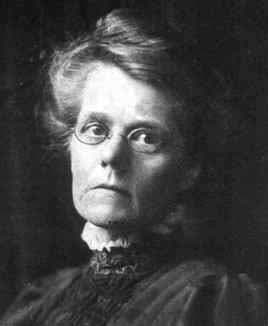
Irish, British · Science
Alicia Stott
June 8, 1860 – December 17, 1940
Early Life and Background
Alicia Boole Stott was born on June 8, 1860, in Cork, Ireland. She was the third daughter of the renowned mathematician and logician George Boole and Mary Everest Boole, who was also an accomplished mathematician and educationalist. After the early death of her father when she was four, Alicia and her family relied heavily on Mary's teaching methods, which encouraged exploration and intuitive learning. Despite the lack of formal education that many women faced during the Victorian era, Alicia benefited from a household rich in intellectual stimulation.
Career Beginnings and Development
Although not formally trained beyond early schooling, Alicia developed a profound interest in geometry. This interest was molded under the guidance of her family, and particularly influenced by the ideas of four-dimensional geometry conceptualized by Ludwig Schläfli and her brother-in-law Charles Howard Hinton. She started visualizing three-dimensional slices of four-dimensional polytopes, a significant breakthrough given the era’s mathematical limitations.
Major Works and Discoveries
Alicia Boole Stott’s major work revolved around visualizing and modeling four-dimensional polytopes, or "polytopes in hyperspace," as known today. She created models of these using cardboard and, later, more sophisticated techniques. Among her significant achievements was the discovery of 6 regular four-dimensional polytopes, which laid foundational work for later mathematicians analyzing multidimensional mathematics.
In 1910, Dutch mathematician Pieter Schoute invited her to Utrecht, where he introduced Alicia’s work to the mathematical community. This collaboration led to a series of important papers published in the Proceedings of the Royal Society of Edinburgh, establishing her as a leading figure in this niche field. Her work gained her admiration and recognition from peers, although societal norms at the time limited the scope of her direct influence.
Awards, Honors, and Recognition
Due to her significant contributions to four-dimensional geometry, Alicia was awarded an honorary degree from the University of Groningen, Netherlands. Despite such achievements, much of her work was not recognized until many years later, due to the inherent gender biases within the academic world of the late 19th and early 20th centuries.
Personal Life
Alicia married Walter Stott, an actuary, in 1890, and the couple had two children. Her family played a substantial role in her life, providing the support she needed to continue her mathematical pursuits alongside her domestic responsibilities, reflecting the typical path many women had to navigate during the era.
Legacy and Impact
Alicia Boole Stott's pioneering work set a pivotal foundation for the study of multi-dimensional spaces. Her dedication to visualizing complex geometrical concepts paved the way for future mathematicians and physicists, especially in areas related to theoretical physics and advanced geometry. Yet, she is often overshadowed by male counterparts, underscoring ongoing gender disparities in the recognition of scientific contributions.
Later Life and Death
Alicia continued her interest in mathematics throughout her life, although she did not pursue professional academia, partly due to the societal constraints of her time. She died on December 17, 1940, in England, leaving behind a legacy that would inspire greater appreciation for multidimensional mathematics in subsequent generations.
Dated achievements
2 indexed.
- Jun081860Science
Alicia Boole Stott's Birth
Alicia Boole Stott was born on June 8, 1860, in Cork, Ireland.
View details Alicia Boole Stott - Wikipedia - Dec171940Science
Death of Alicia Boole Stott
Alicia Boole Stott passed away on December 17, 1940, in England.
View details