← All women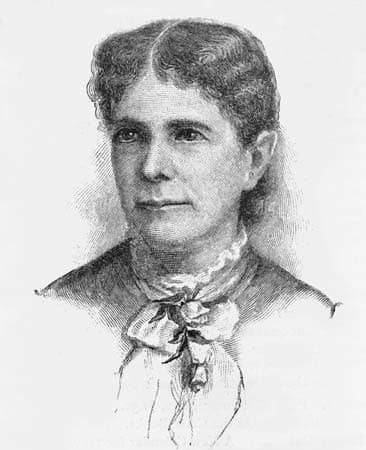
American · Literature
Adeline Dutton Train Whitney
September 15, 1824 – March 20, 1906
Early Life and Background
Adeline Dutton Train Whitney (pen name A. D. T. Whitney) was born on 15 September 1824 in Boston, Massachusetts.[1][3][4] She was the daughter of Enoch Train, a prosperous Boston merchant, and Adeline (Dutton) Train
Biographical accounts emphasize that she received a "fine education," suitable for a well‑to‑do Boston girl but relatively advanced compared to typical female schooling of the era.[4] Although detailed records of her curriculum are scarce, this education equipped her with the literary fluency and moral vocabulary that would define her later writing. Her upbringing in a merchant household accustomed her to the rhythms of business and domestic management, experiences that informed her recurring emphasis on thrift, order, and home‑centered virtue in her novels.[2][4] Whitney’s early years coincided with the rise of the "cult of domesticity" and the ideology of separate spheres, which separated public, economic life from the private, moralized space of the home. These concepts profoundly shaped her worldview. Rather than contesting them, Whitney would later become one of their most articulate literary advocates, directing her stories to girls and young women and urging them to embrace domestic roles as their highest calling.[2][4] Whitney married Seth Dunbar Whitney, a merchant more than twenty years her senior.[2][4] One reference source places the marriage in 1843, while another notes it as occurring in the early 1840s; the year is consistent though exact day and month are not securely documented.[2][3][4] Seth Whitney, like her father, was engaged in business, and the couple’s social position enabled Adeline to maintain a comfortable home while raising children. Sources agree that she had four children, one of whom died in infancy.[3][4] Swedish biographical notes identify her daughter Caroline Leslie Field, born in 1853, as one surviving child.[3] These domestic responsibilities shaped Whitney’s early adulthood; she did not seriously turn to professional writing until her children were older and household demands had eased.[4] This sequence—marriage, intensive motherhood, and later authorship—reflects patterns common among middle‑class women of her era. Whitney’s personal religious and moral convictions were closely tied to her domestic life. Biographical commentary indicates that she viewed the home as a spiritual center where character was formed and where women bore primary responsibility for cultivating virtue.[2][4] Her letters and didactic works present the home not merely as a physical space but as a moral institution. This outlook was reinforced by her social circle within Massachusetts, where Congregational and other Protestant traditions stressed the family as a unit of religious practice. Whitney’s literary career began relatively late. She started writing for publication in the late 1850s, once her children were largely grown.[2][4] Her early poems and essays appeared in local Massachusetts newspapers, where readers came to recognize her didactic yet humorous style.[2] One of her earliest notable works was the poem "Footsteps on the Seas", published in 1857
In 1859, Whitney published Mother Goose for Grown Folks; a Christmas Reading, a volume of satirical and moralizing verses that adapted familiar nursery‑rhyme figures to comment on adult behavior.[1][5] Britannica emphasizes that Mother Goose for Grown Folks was her "first book" and notes that her poems and articles had already become regular features in local newspapers by this time.[2] The book’s blend of humor and instruction quickly established her reputation as a writer who could speak to both adults and young readers. Throughout the early 1860s, Whitney expanded into juvenile fiction. Britannica credits her novels Boys at Chequasset (1862) and Faith Gartney’s Girlhood (1863) with winning the audience that would remain faithful to her for four decades.[2] These works introduced themes that became central in her oeuvre: the moral education of youth, the shaping of character through domestic experience, and the portrayal of everyday life as the stage for spiritual growth. Whitney did not confine herself solely to fiction. Over the course of her career, she wrote poetry collections, a cookbook, and even a work critical of Christian Science, demonstrating both literary versatility and engagement with contemporary religious debates.[4] Yet it was her novels for girls that ensured her enduring popularity and defined her place in American literary history. Adeline Dutton Train Whitney published more than twenty books for girls, along with additional works for broader audiences.[1][5] Her bibliography includes a series of well‑known juvenile novels and collections: Whitney’s works consistently revolve around a core thematic conviction: the "utter goodness" of hearth and home as the foundation of personal virtue and social stability.[2][4] She presents the domestic sphere as the primary realm in which girls should envision their futures. Her narrative arcs often lead characters toward spiritual maturity achieved through accepting household duties, cultivating kindness, and embracing family obligations. In the Real Folks series—A Summer in Leslie Goldthwaite’s Life (1866), We Girls (1870), Real Folks (1871), and The Other Girls (1873)—Whitney gathers diverse female characters who seek happiness in home and family life.[2][4] Even when economic circumstances require them to earn money, the novels suggest that women should prefer roles as servants in other women’s homes rather than pursuing work in commercial or professional settings.[4] This stance places Whitney firmly within conservative currents of 19th‑century gender ideology, but it also documents the moral reasoning of many middle‑class families and influential women who opposed expanding women’s work outside the domestic sphere. Whitney’s didactic style frequently includes direct counsel to her readers. In Friendly Letters to Girl Friends (1896), she describes novels as "stories of human possibilities" and directs those possibilities toward a vision of womanly life centered on home.[4] While her language can appear restrictive from a modern standpoint, it offers critical insight into how Victorian and Gilded Age domestic fiction functioned as both entertainment and moral instruction. Beyond her written works, Whitney ventured into educational design. On 7 March 1882, she was granted U.S. Patent No. 255,675 for an "Improvement in Alphabet-Blocks."[1] The invention involved arranging letter blocks in such a way that children could form numerous words and syllables with a limited set of pieces, facilitating early literacy through hands‑on play.[1] The patent situates Whitney within broader 19th‑century movements in child education, including the rise of kindergarten and object‑based learning. Her design reflects the same emphasis on the home as a pedagogical site that permeates her fiction: learning is to occur in domestic spaces, guided by parents (often mothers), through carefully chosen materials and activities.[2][4] Although existing scholarship does not identify her alphabet blocks as the first of their kind, the patent underscores how women writers could engage with technological and educational innovation despite constraints on women’s public recognition.[1] The fact that she appears in the patent record under her married designation, "Mrs. A. D. T. Whitney," illustrates how 19th‑century women navigated formal systems like the patent office while remaining embedded in marital and domestic identities. This artifact of legal and cultural history complements her literary legacy by revealing a concrete, material expression of her pedagogical ideas. Standard biographical references do not record major literary prizes or official honors for Whitney, which is consistent with the relatively undeveloped infrastructure of formal awards for women’s writing in the 19th century.[1][2][4] Her significance is instead measured by popular reception and enduring readership. Whitney’s novels enjoyed wide popularity during her lifetime. Wikipedia notes that her books "were popular throughout her life," and Britannica emphasizes that she retained a loyal audience for approximately four decades following the success of Boys at Chequasset and Faith Gartney’s Girlhood.[1][2] Contemporary reviews and subsequent reprints attest to the esteem in which her stories were held among middle‑class families seeking morally instructive reading for daughters. Her works saw multiple editions and international circulation. Swedish sources cite translations such as We Girls appearing in Swedish as "Vi flickor" in the 1870s, demonstrating her reach beyond the United States.[3] Later reprint houses and modern publishers have continued to issue her books, with titles like We Girls: A Home Story and White Memories available in contemporary facsimile editions.[8][10][13] This sustained availability contributes to her status as a classic, if ideologically conservative, figure in girls’ literature. Whitney’s writing captures a particular stance within 19th‑century debates about women’s roles. Her novels and essays consistently argue that women should not seek work outside the home unless compelled by necessity, and even then they should prefer domestic service in other households to work in factories or offices.[4] She portrays professional or public ambitions as distractions from the true moral vocation of womanhood, which she locates in homemaking, motherhood, and familial care. This perspective places her in tension with contemporaries who advocated expanded female education and employment opportunities. For example, while some women’s rights reformers pressed for entry into professions and public office, Whitney’s fiction encouraged readers to find fulfillment in traditional domestic paths. Her work thus provides a valuable counterpoint for historians examining the diversity of female opinion in the period. At the same time, Whitney’s narratives acknowledge economic realities by depicting women who must earn money and showing them as capable, resourceful, and morally serious, even within constrained roles.[4] Her insistence that home‑like settings are preferable reveals both the limitations of her vision and its responsiveness to anxieties about industrialization, urbanization, and changing family structures. Whitney remained active as an author into her later years. Works such as Daffodils (1887), a collection of verse, and later novels like Square Pegs (1899) and Biddy’s Episodes (1904) show her continuing to address questions of character, domestic adaptation, and moral decision‑making.[2] Even as the United States transitioned into the Progressive Era, with growing public discourse on women’s suffrage and labor, Whitney’s books maintained their focus on home and family life. Biographical commentary suggests that she did not significantly alter her thematic positions in response to these societal changes.[2][4] Instead, she offered continuity for readers who preferred traditional narratives. Her longevity as a writer and the persistence of her domestic ideal make her an important figure for understanding how conservative gender norms were maintained and transmitted into the early 20th century. Adeline Dutton Train Whitney died in Milton, Massachusetts, in March 190620 March 1906 and note her burial in Milton Cemetery.[3] Other English‑language reference works, including Britannica and Encyclopedia.com, list 21 March 1906 as the date of death.[2][4] The discrepancy has not been fully resolved in published scholarship. Despite this minor chronological inconsistency, there is broad agreement about the place and circumstances of her death: she died in the town where she had long resided, after a life marked by literary productivity and domestic stability.[1][3] Her passing at age eighty‑one closed a career that had begun before the American Civil War and extended into the age of mass‑market publishing. Milton Cemetery, recorded as her burial place in Swedish sources, anchors her memory in the local landscape of Massachusetts.[3] Adeline Dutton Train Whitney’s legacy lies primarily in her role as a major voice in 19th‑century domestic fiction for girls. She helped codify an ideal of girlhood characterized by piety, modesty, self‑discipline, and devotion to home. Her Real Folks series and other novels shaped the expectations of many middle‑class families about appropriate reading for daughters, offering narratives that aligned with religious and social norms of the period.[2][4] For scholars of women’s history and literature, Whitney’s work is significant not because it broke institutional barriers or inaugurated new feminist ideas, but because it reveals how influential women could reinforce conservative gender ideologies. Her stories document a sustained, articulate defense of separate spheres and domestic vocation during decades when other voices sought broader horizons for women.[4] At the same time, her characters’ struggles and aspirations provide insight into the emotional and moral complexity of women’s lives within constrained roles. The tension between desire for self‑expression and loyalty to home, which appears in many of her plots, makes her novels important sources for understanding the internalization and negotiation of social norms among 19th‑century women. Whitney’s books remain available in modern facsimile editions and digital formats, and her works are catalogued on platforms such as Wikisource and in library collections.[5][9][10][13] Contemporary readers and researchers can thus trace the evolution of domestic fiction and explore the ways in which earlier generations of girls were taught to imagine their futures. In this sense, Adeline Dutton Train Whitney continues to contribute to historical conversations about gender, education, and the power of literature to shape social ideals.Marriage, Family, and Personal Life
Career Beginnings and Development
Major Works and Thematic Concerns
Educational Innovation and the Alphabet-Blocks Patent
Awards, Honours, and Reception
Personal Views and Social Context
Later Life and Continuing Work
Death
Legacy and Historical Impact
Dated achievements
3 indexed.
- Sep151824Science
Birth in Boston, Massachusetts
Adeline Dutton Train was born in Boston, Massachusetts, the daughter of Enoch Train, a prominent merchant and shipowner.
View details Adeline Dutton Train Whitney - Wikipedia - Mar071882Science
Granted U.S. Patent for Educational Alphabet Blocks
Whitney received U.S. Patent No. 255,675 for an 'Improvement in Alphabet-Blocks,' an educational toy design for teaching children letters.