← All women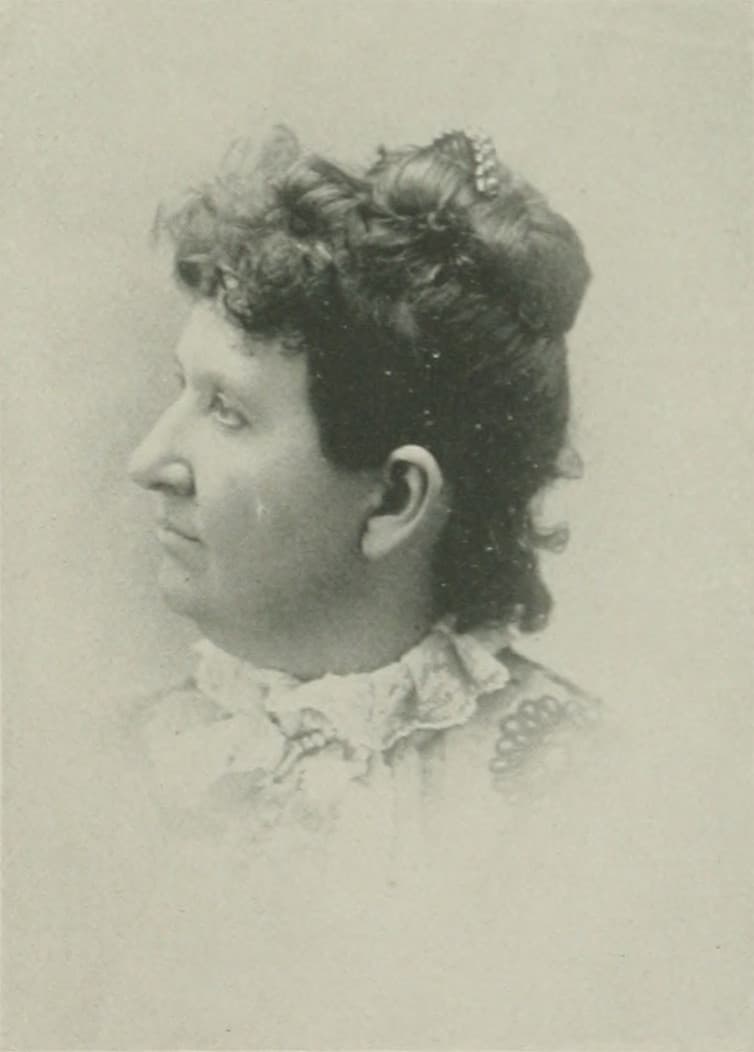
American · Activism · Law
Ada Kepley
February 22, 1847 – 1925
Early Life and Background
Ada Harriet Miser Kepley was born in Ohio in 1847, with most modern women’s‑history scholarship identifying her as Ada Miser and placing her birth on February 22, 1847, in St. Clair (or Somerset) in the state of Ohio.[9] Earlier biographical compilations and reference works often describe her as having been born on February 11, 1847, in Somerset, Ohio, reflecting the fragmentary nature of mid‑19th‑century records concerning women.[2][4] Whatever the precise day, there is wide agreement that she spent her earliest years in Ohio before her family moved westward to Illinois as part of the broader mid‑century migration into the Midwest.
Kepley grew up in a period of significant social upheaval. Her childhood and youth coincided with the antebellum era, the Civil War, and Reconstruction. The culture around her emphasized domestic roles for women, and formal higher education for women remained limited. Nonetheless, she would later be described as intellectually ambitious and deeply engaged with questions of law, morality, and social reform. According to later legal‑history accounts, she received enough schooling to develop strong reading and writing skills, and her early exposure to religious and reform currents would eventually lead her toward temperance activism and ministry.[1][5]
Biographical sources note that she had at least one sister, Nora Miser Scott, situating Ada within a broader family network that remained important as she pursued unconventional professional goals.[2] Her family’s relocation to Illinois brought her into contact with small‑town life in Effingham, a community that would become the center of her later legal and reform work.
Marriage and Move to Effingham
Ada Miser’s life changed markedly when she met Henry B. Kepley, a young attorney in Effingham, Illinois. She married Henry around 1867, when she was about twenty years old.[3][8] Henry operated a law practice in Effingham and, unlike many men of his era, actively encouraged his wife’s intellectual interests. He initially trained her as his legal assistant, teaching her to draft documents and manage office work.[8]
Working closely with Henry gave Ada an intimate view of legal practice and demonstrated that she had the aptitude to handle complex legal problems. Historians of women in law note that Henry not only supported her work in his office but also urged her to undertake formal study so she could join him as a full partner in the profession.[8] This spousal support was crucial because nearly all formal avenues into the legal profession were closed to women, and women generally lacked independent financial resources to pursue professional training.
Legal Education and the First Woman Law Graduate
With her husband’s backing, Ada Kepley enrolled at Union College of Law in Chicago, a newly organized law school connected first to the University of Chicago and later to Northwestern University.[8][9] At a time when many male lawyers still entered practice through apprenticeships rather than formal schooling, her decision to seek a university‑based legal education was doubly unconventional: both as a woman and as a law student.
Kepley studied alongside male classmates, immersing herself in the nineteenth‑century law curriculum of contracts, property, torts, criminal law, and procedure. Accounts from legal‑history surveys state that she performed exceptionally well and graduated with honors in 1870June 30, 1870, she received her Bachelor of Laws (LL.B.), becoming the first woman in the United States to graduate from any law school and to hold a formal law degree.[6][9][10]
This milestone was widely noted in contemporary commentary and has been consistently cited by later historians. Northwestern‑related accounts refer to her as the first female graduate of a law school in America, while broader surveys of legal history confirm that no woman before Kepley had completed a full law‑school program and been formally awarded a law degree.[5][7] Her achievement did not make her the first woman to be admitted to any bar—Arabella (Belle) Mansfield had been admitted in Iowa in 1869—but Kepley was the first to emerge from the relatively new institutional path of university law schools.[10]
By graduating, Kepley decisively refuted claims that women were intellectually unfit for rigorous legal study. Her LL.B. became a powerful symbol used by advocates to show that women could meet the same academic standards as men in professional training.
Barriers to Practice and Legal Reform Work
Despite her groundbreaking degree, Ada Kepley’s path into legal practice was immediately obstructed. When she returned to Effingham and sought admission to the Illinois bar, she encountered statutory and judicial barriers. Illinois law and prevailing interpretations restricted women’s ability to enter certain professions, including law, and the courts refused to license her.[8][9]
Rather than accept defeat, Kepley and her husband turned to legislative reform. Henry drafted a bill aimed at forbidding sex‑based discrimination in access to legal and other professions, and Ada became closely involved in campaigning for its passage.[8] Their efforts contributed to an 1872 Illinois statute that made it illegal to deny individuals access to professions on the basis of gender, an early example of state‑level anti‑discrimination legislation in employment.[5][7]
This law did not immediately resolve all barriers to women’s professional practice, but it represented a significant shift. Legal historians note that Illinois’s measure placed the state among the national leaders in formally repudiating sex discrimination in employment and licensing and provided a model for arguments in other jurisdictions.[5][7] Kepley’s role in advocating for such legislation linked her legal education directly to structural reform.
Only after the repeal of the restrictive provisions and the changing interpretation of professional statutes was Kepley able to be admitted to practice law in Illinois in 1881.[2][5] Secondary sources report that in the same year she ran as the Prohibition Party candidate for Illinois Attorney General, using her campaign to press for women’s suffrage and temperance.[5] Even once admitted, she did not build a large private practice; instead, she increasingly devoted herself to causes such as temperance and women’s rights.
Temperance Advocacy and Publishing
Outside the courtroom, Ada Kepley became known as an uncompromising advocate of the temperance movement, which sought to limit or abolish the sale of alcoholic beverages. The American Bar Association’s historical profiles describe how, after facing obstacles in law, she focused her attention on temperance activism in Effingham.[3]
Kepley published a monthly temperance paper titled The Friend of Home, in which she would list the names of local men who frequented saloons.[3] This bold tactic was designed to mobilize social pressure against drinking and to expose what she saw as the destructive impact of alcohol on families. Her activism provoked hostility and, at times, physical violence from those whose livelihoods or habits she threatened.[3]
In addition to journalism, Kepley wrote and spoke extensively on the moral and social implications of alcohol consumption. She aligned herself with wider organizations in the temperance movement, including networks associated with the Woman’s Christian Temperance Union, although biographical sketches emphasize her independent and sometimes confrontational style.[1] Her insistence on naming individuals and publicly criticizing saloon culture marked her as a particularly fearless local leader.
Religious Involvement and Ministry
Over time, Ada Kepley’s reform work extended into religious spheres. A denominational biography from the Unitarian Universalist tradition identifies her as a Unitarian minister, noting that she was ordained and served congregations while continuing her advocacy for women’s rights and temperance.[1]
Within this context, Kepley’s legal background lent authority to her sermons and lectures on justice, equity, and moral reform. She framed temperance not merely as a personal moral choice but as a social and legal issue affecting women’s safety, family well‑being, and civic order. As one of a small number of women preaching in Protestant pulpits in the late nineteenth century, she challenged gender norms in religious leadership just as she had in law.
Her ministry, often conducted in the same Midwestern communities where she had agitated for legal reforms, added a spiritual dimension to her public persona. She has been described as energetic and uncompromising, combining legal analysis, moral rhetoric, and grassroots activism.[1]
Women’s Suffrage and Political Engagement
Kepley’s advocacy for women’s rights extended beyond professional access to the broader question of political citizenship. Secondary accounts note that she used her 1881 Prohibition Party candidacy for Illinois Attorney General as a platform for arguing in favor of women’s suffrage.[5] Running for statewide office, even on a minor‑party ticket, was a striking act for a woman at a time when women in Illinois and most of the United States could not vote.
Her speeches and writings connected women’s political rights with the temperance cause, arguing that women needed the ballot to protect their homes from the harms associated with alcohol and to influence laws affecting families. In this respect, she echoed the logic of many suffragists who framed the vote as an instrument of moral and social reform.
Although her campaign did not succeed electorally, it contributed to the gradual normalization of women’s presence in political contests and public policy debates. Kepley lived long enough to see the ratification of the Nineteenth Amendment in 1920, which enfranchised women nationwide, though there is limited documentation on her personal reaction to this victory. Her career nonetheless embodies the intertwining of suffrage and temperance activism in the Midwest.
Major Works and Public Reputation
In addition to her legal and political work, Ada Kepley’s most noted "works" include her temperance periodical The Friend of Home and her numerous addresses, articles, and pamphlets on law, temperance, and women’s rights. She applied her legal training to interpret statutes, critique licensing regimes, and explain the legal dimensions of social issues.
Her public reputation during her lifetime was mixed. Supporters regarded her as a principled and courageous advocate for families and for women’s equality. Critics in Effingham and surrounding communities often saw her as radical, particularly when her campaigns targeted specific local businesses and individuals. The later ABA profile recounts that she "faced physical violence" because of her efforts to oppose the selling of alcohol, and she was remembered locally as an "eccentric" by some townspeople.[3][6]
Kepley did not achieve the level of national notoriety claimed by some of her more famous contemporaries, but her name appeared in lists of pioneering women in American law and in denominational histories. She was included in compilations of "first women lawyers" and in scholarly projects on women’s legal history in the United States.[8][9][10]
Awards, Honors, and Later Recognition
During her lifetime, Ada Kepley does not appear to have received formal academic or government honors on the scale of medals or official decorations. The nature of her work—in small‑town law practice, grassroots activism, and ministry—lent itself more to local recognition and controversy than to institutional accolades.
However, her achievements have been increasingly honored in historical retrospectives. Northwestern University and related alumni publications highlight her as the first female graduate of a law school in America and a key figure in the history of women in law.[5][7] Legal‑history websites, women’s‑history blogs, and bar‑association materials consistently list her among the most important pioneering women lawyers in the United States.[3][8][10]
In Effingham, local historians and museums have reclaimed her legacy, describing her as one of the town’s "best‑kept secrets" and emphasizing her multiple roles as teacher, preacher, reformer, editor, and lawyer.[5][12] Her life is featured in public history projects and educational materials that seek to connect the town’s past to broader narratives of women’s rights.
Personal Life
Kepley’s marriage to Henry B. Kepley was central to her personal and professional development. Henry’s willingness to train Ada as a legal assistant and encourage her to attend law school was unusual and vital for her subsequent achievements.[8] Their partnership illustrates how supportive relationships could enable women to circumvent structural barriers to professional education.
Sources do not consistently document biological children from the marriage, and the historical record focuses more on their shared work than on family life. The couple’s relationship was also tested by the demands of activism and the public scrutiny that came with Ada’s temperance campaigns. Yet there is no clear evidence of estrangement; instead, Henry appears repeatedly as an ally drafting legislation and supporting her public causes.[8]
Kepley’s later years were marked by financial difficulty. Accounts from the ABA and women’s‑history blogs indicate that she ultimately lived in poverty and was regarded by some contemporaries as a charity case.[3][6] This economic insecurity, despite her education and public influence, underscores how first‑generation women professionals often lacked stable institutional positions or pensions, and how activism could come at a personal cost.
Later Life and Death
In her later decades, Ada Kepley remained in Effingham, Illinois, continuing to advocate for temperance and women’s rights even as younger generations of activists emerged. She witnessed the evolution of the legal profession, expanded participation of women in higher education, and the eventual success of the women’s suffrage movement in 1920.
Biographical and denominational sources state that Ada Harriet Miser Kepley died on June 13, 1925, at St. Anthony’s Memorial Hospital in Effingham.[1][2][4][6] She reportedly died in poverty and as a "charity case," highlighting the lack of material reward for many pioneering reformers. The ABA profile likewise notes that she "died in 1925 in poverty, considered by the townspeople of Effingham to be an eccentric."[3][6]
Kepley was buried in Oak Ridge Cemetery in Effingham, where two modest grave markers mark her resting place.[5] These understated memorials stand in contrast to the transformative impact of her life’s work. In the immediate aftermath of her death, her name did not enter the popular pantheon of national reformers, but legal historians and local scholars gradually excavated her story from archival and denominational sources.
Legacy and Historical Impact
Ada Kepley’s legacy rests primarily on her role as the first American woman to graduate from law school and her subsequent efforts to dismantle legal barriers facing women. Her 1870 LL.B. demonstrated that women could succeed in the most demanding professional curricula of the time and provided a concrete example used by advocates for women’s legal education.[6][8][9]
Her involvement in the campaign leading to the 1872 Illinois statute prohibiting gender discrimination in access to professions positioned her as an early architect of what would later be known as anti‑discrimination law. This statute anticipated twentieth‑century civil‑rights legislation by embedding the principle of gender equality within state law.[5][7]
As a temperance advocate and Unitarian minister, Kepley contributed to the intertwined histories of women’s activism, religion, and social reform. Her fearless naming of local saloon patrons in The Friend of Home and her willingness to face hostility and violence for the sake of her principles reveal the personal risks taken by women reformers in small communities.[3][1]
Kepley’s career also illuminates the limits of early women’s professional breakthroughs. Despite her pioneering degree and eventual admission to the Illinois bar in 1881, she did not attain economic security or broad public acclaim. Her poverty at death and the characterization of her as an eccentric point to the social costs exacted on women who challenged entrenched norms.[3][6]
Nevertheless, subsequent generations of scholars and activists have elevated her story. Projects on women’s legal history at institutions such as Stanford University and Northwestern University highlight her as a foundational figure in the narrative of women’s entry into law.[5] Women’s‑history blogs, legal‑history websites, and local museums now recount her achievements, ensuring that her contributions are recognized in the broader story of American women’s struggle for legal and professional equality.
In sum, Ada Harriet Miser Kepley’s life weaves together law, religion, temperance, and women’s rights. Her legacy endures as a reminder that the path to formal equality was shaped not only by nationally famous leaders but also by determined women in small towns who pushed against the boundaries of their time.
Dated achievements
4 indexed.
- Feb221847Law
Birth of Ada Harriet Miser (Ada H. Kepley)
Birth of Ada Harriet Miser (Ada H. Kepley) in Ohio, who would become the first American woman to graduate from law school and a notable reformer.
View details Ada Kepley – Women’s Education and the Law - Feb111847Law
Alternate birth date recorded for Ada Kepley
Alternate commonly cited birth date for Ada Harriet Miser Kepley, recorded in several reference sources as February 11, 1847, in Somerset, Ohio.