The Senate voted 56-25 to approve the women's suffrage amendment, following House passage two weeks earlier, sending it to the states for ratification.
On June 4, 1919, the United States Senate voted 56 to 25 to pass the proposed Nineteenth Amendment to the Constitution, which stated that the right of citizens to vote 'shall not be denied or abridged by the United States or by any state on account of sex.' This followed the House of Representatives' approval of the measure on May 21, 1919, by a vote of 304 to 89.
The Senate vote came after decades of tireless activism by suffragists including Susan B. Anthony, Elizabeth Cady Stanton, Carrie Chapman Catt, and Alice Paul, who had organized parades, pickets, and civil disobedience campaigns to press for women's voting rights. The amendment had actually failed in the Senate on several prior occasions, including as recently as February 1919, before enough senators changed their positions.
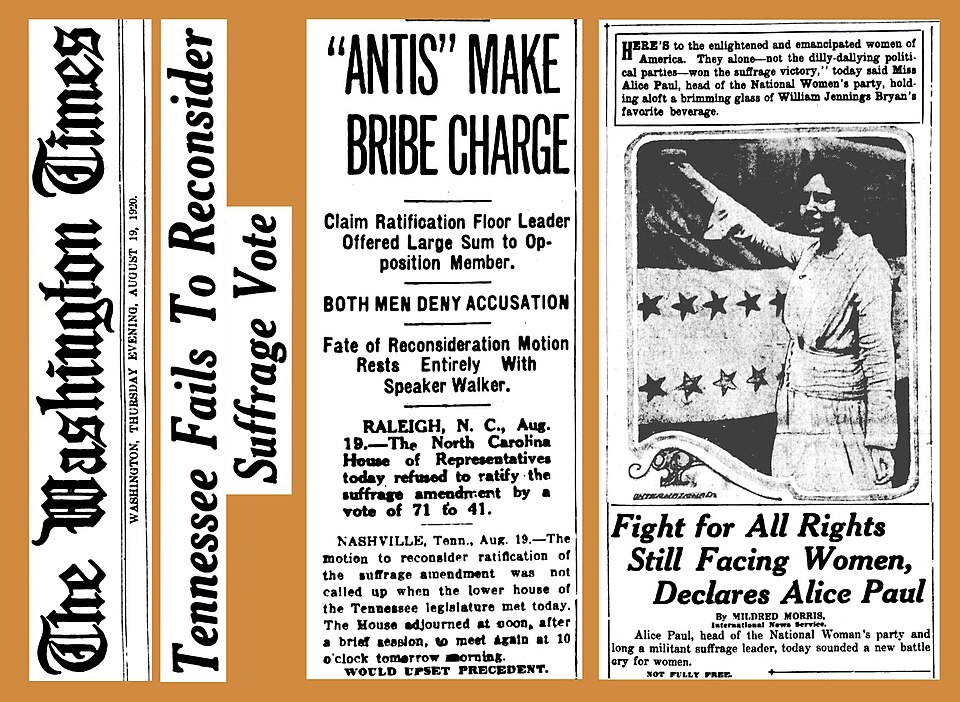
Passage by Congress was only the first step; the amendment now required ratification by three-fourths of the state legislatures (36 of the 48 states then in the Union) to become part of the Constitution. This set off a fourteen-month ratification battle across the country, culminating in Tennessee's decisive ratification vote in August 1920.
This congressional action represented the culmination of the women's suffrage movement, which had formally begun with the Seneca Falls Convention in 1848, and marked a pivotal moment in the long struggle for gender equality in American democracy.
Images