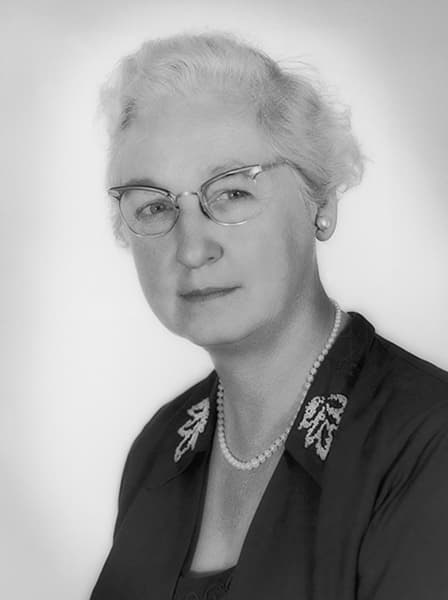
Virginia Apgar was born on June 7, 1909, in Westfield, New Jersey. She was the youngest of three children. Her father liked to invent things and work with radios. Her family was busy and full of energy. Virginia loved playing the violin. She also loved science.
Virginia finished high school in 1925. She already knew she wanted to become a doctor. Back then, very few women became doctors. She went to Mount Holyoke College and studied animals and science. She earned her college degree in 1929.
Next, Virginia went to a medical school at Columbia University. She finished in 1933, near the top of her class. She wanted to become a surgeon. But a teacher told her that women had a hard time getting surgery jobs. He said a newer field called anesthesiology might be a better path. This is the medical work of helping patients sleep and feel no pain during surgery. Virginia took his advice.
Virginia worked hard and became very good at anesthesiology. In 1938, she became the leader of the anesthesia team at Columbia. This made her the first woman to lead a medical department there. She helped make the field more respected. Later, she became the first woman to be a full professor at her medical school.
While helping mothers during childbirth, Virginia noticed something important. Doctors were not checking carefully on new babies right after they were born. She wanted a fast and simple way to check if a baby was healthy. In 1952, she created a special test. It is called the Apgar Score.
The test checks five things: heart rate, breathing, muscle movement, reflexes, and skin color. Each part gets a score of 0, 1, or 2. The highest total score is 10. Doctors and nurses check the baby one minute after birth, and again five minutes after birth. A low score means the baby needs help right away. A high score means the baby is doing well.
Doctors all over the world started using the Apgar Score. People later made a fun way to remember the letters: Appearance, Pulse, Grimace, Activity, and Respiration. This score helped save many babies' lives. It is still used today in hospitals everywhere.
Virginia did not stop there. She kept studying ways to help babies stay healthy. In 1960, she earned another degree, this time in public health. She then worked with a group called the March of Dimes. She helped the group focus on stopping birth defects and helping babies born too early. She traveled and taught many people about caring for babies and mothers.
Virginia never got married and did not have children. She used her time to focus on her work. She still loved to play the violin and enjoyed being outdoors. People who knew her said she was full of energy, funny, and easy to talk to.
Virginia Apgar died on August 7, 1974, in New York City. She was 65 years old. Today, doctors still use her famous Apgar Score. It helps take care of babies just after they are born. Virginia is remembered as a brave woman who broke barriers in medicine and helped save countless newborn lives.