Scottish, Canadian · Science · Exploration
Moira Dunbar
February 3, 1918 — November 22, 1999Made for kids · Grade 3–4
Grade 3–45 min read≈ 522 words
Three big ideas
Tap a number to see a big idea.
Her story
Moira Dunbar was born in Edinburgh, Scotland, on February 3, 1918. She grew up in a few different towns in Scotland. Some of these towns were near the sea. She went to good schools for girls. Later, she studied geography at Oxford University. She finished her degree in 1939, right before World War II began.
After college, Moira did not become a scientist right away. Instead, she became an actress! For about seven years, she worked on stage in England. She acted and helped manage plays. She even performed for soldiers during the war. This job taught her how to be brave and work hard in tough places.
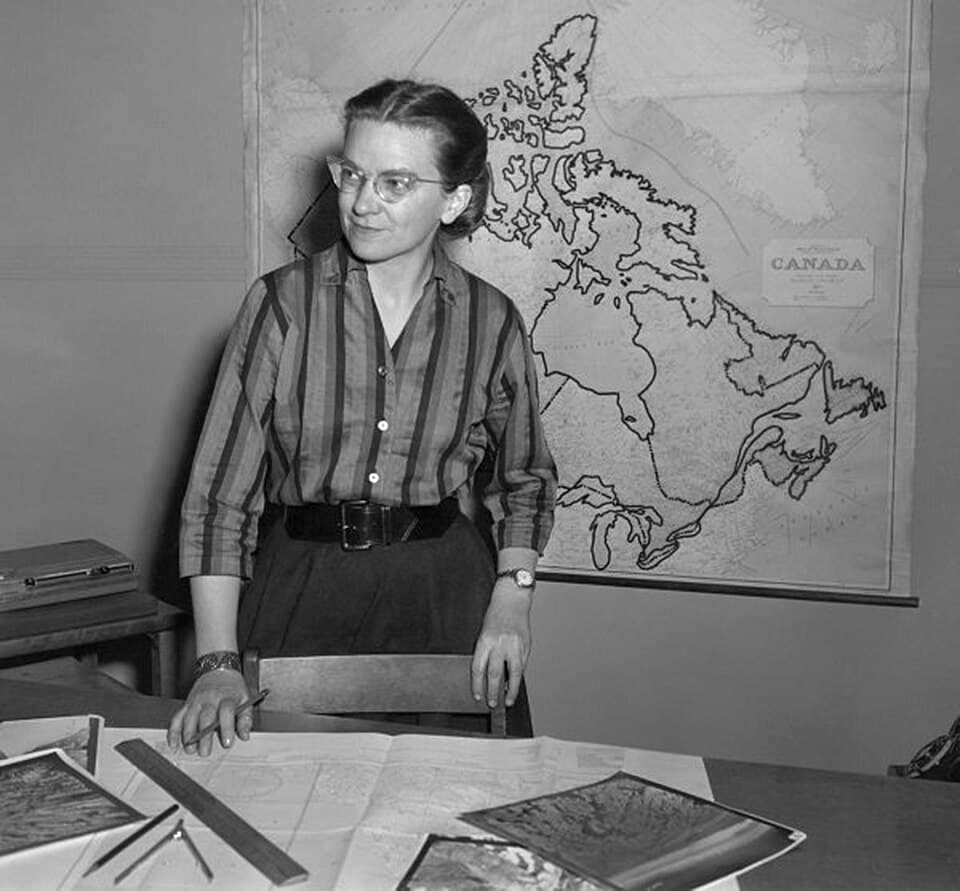
In 1947, Moira moved to Canada. She settled in Ottawa. She got a job studying Arctic sea ice. This means she studied the frozen ocean water near the North Pole. Her work helped people understand how ice moved. This was important for ships and for keeping the country safe.
In 1952, Moira started working for a group called the Defence Research Board. She became an expert on sea ice. She studied how ice formed, moved, and broke apart. She helped create special words that scientists and sailors could use to describe different kinds of ice.
At first, Moira was not allowed to travel on icebreaker ships or military planes. People thought women should not go on these trips. But Moira did not give up. She kept asking. In 1955, she finally got her chance. She became the first woman to do science research on Canadian icebreakers! She also flew many hours in planes over the Arctic. She was one of the first women to fly over the North Pole.
Moira made many important discoveries. She studied polynyas, which are open water spots inside frozen ice. She also tested new tools, like special radar, to study ice from airplanes. This radar could "see" ice even in the dark or through clouds.
In 1956, Moira helped write a book called Arctic Canada from the Air. It used photos and maps from airplanes to show the Arctic in a new way. She also wrote many science papers about ice over the years.
Moira won many awards for her hard work. In 1971, she won the Centennial Award for her ice studies. In 1972, she won the Massey Medal. She was the first woman ever to win it! In 1973, she became a Fellow of the Royal Society of Canada. In 1976, she became an Officer of the Order of Canada. This is one of Canada's highest honors.
We do not know much about Moira's family life. But we know that after she retired in 1978, she ran a small farm near Ottawa. She also loved local history. She volunteered with history groups and helped teach people about the past.
Moira Dunbar died on November 22, 1999. She was 81 years old. She lived an amazing life with three big parts: acting, Arctic science, and history. She showed that women could do hard jobs, even when others said they could not. Today, people remember her as a brave scientist who opened doors for other women.
Tricky words
Easy meanings for words you might not know yet.
Quick quiz
Tap an answer. You can change your mind before you finish.
1. What was Moira Dunbar's first career before science?
2. What did Moira Dunbar become famous for studying?
3. What big first did Moira Dunbar achieve in 1955?
4. What special medal was Moira Dunbar the first woman to win?