American · Science
Josephine Cochrane
March 8, 1839 — August 3, 1913Made for kids · Grade 3–4
Grade 3–45 min read≈ 507 words
Three big ideas
Tap a number to see a big idea.
Her story
Josephine Cochrane was born on March 8, 1839, in Ashtabula County, Ohio. Her father was an engineer. Some say her grandfather was an inventor too. Josephine grew up around machines and new ideas.
Her mother died when she was young. Josephine grew up in Valparaiso, Indiana. She was smart and strong-willed. Girls in her time did not get much schooling, so she never learned engineering in school.
In 1858, Josephine married William Cochran. He sold dry goods and was involved in politics. The couple lived in a big house in Shelbyville, Illinois. Josephine often hosted fancy dinner parties. She used old, delicate china plates that had been in her family for years.
Servants washed the dishes by hand. Many dishes got chipped or broken. This upset Josephine. It also cost her money. She started thinking there must be a better way to wash dishes.
Later, William got sick and had money troubles. When he died, Josephine did not have much money. She needed a way to earn a living. She decided to build a dishwashing machine.
Other dishwashing machines already existed, but they were not very good. They used brushes that could break dishes. Josephine said, "If nobody else is going to invent a dishwashing machine, I'll do it myself."
She built a workshop behind her house. She hired workers to help her build her idea. It was not easy. She said the men often did not listen to her at first. But she kept trying until her machine worked.
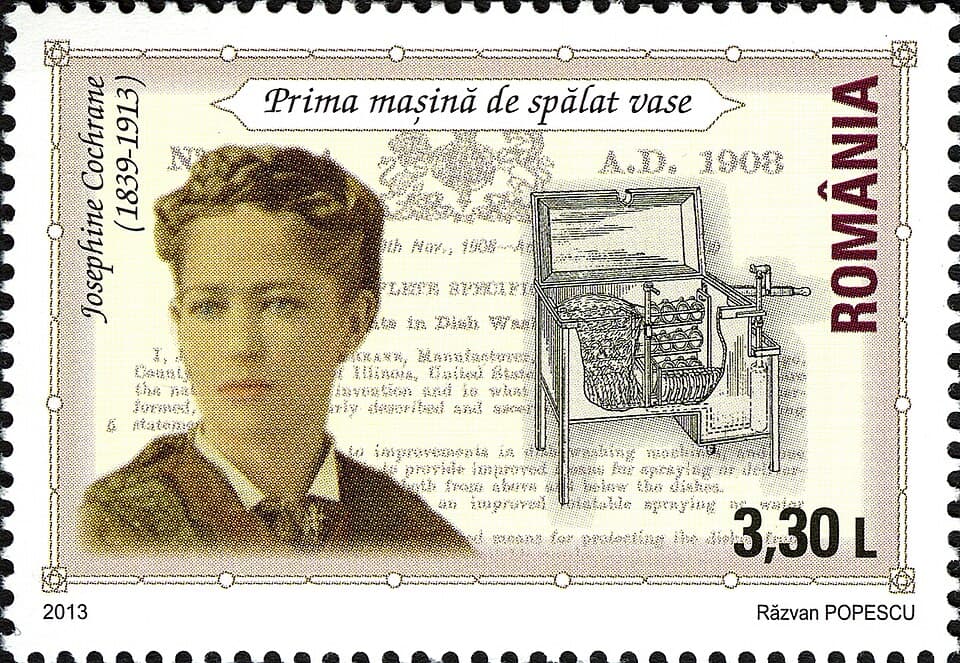
Her machine was clever. It held each dish in its own special wire rack. The racks sat inside a big copper tub. The machine sprayed hot, soapy water onto the dishes instead of scrubbing them. This kept the dishes safe from breaking.
In 1885, Josephine applied for a patent. A patent is a paper from the government that says an idea belongs to you. In 1886, she got Patent Number 355,139 for her dishwashing machine. This made her an official inventor.
After that, Josephine started a company to build and sell her machines. She sold them to hotels and restaurants instead of regular homes. She traveled to show people how well her machine worked. This was unusual for a woman at that time.
In 1893, Josephine showed her machine at the Chicago World's Fair. It won an award for being well-built and useful. This helped her sell even more machines.
Josephine kept working on her business into her seventies. She died on August 3, 1913, in Chicago. She was 74 years old. She was buried in Shelbyville, Illinois, where she had built her business.
After she died, her company kept making dishwashers. In 1916, a company called Hobart bought her business. Hobart later made home dishwashers called KitchenAid. Today, KitchenAid is part of a huge company called Whirlpool.
In 2006, Josephine was added to the National Inventors Hall of Fame. This is a special honor for great inventors. She is remembered today as a brave woman who solved a problem and changed how people wash dishes forever.
Tricky words
Easy meanings for words you might not know yet.
Quick quiz
Tap an answer. You can change your mind before you finish.
1. Why did Josephine Cochrane want to invent a dishwashing machine?
2. What made Josephine's dishwasher design different from earlier machines?
3. Who did Josephine mainly sell her dishwashing machines to at first?
4. What happened to Josephine's company after she died?