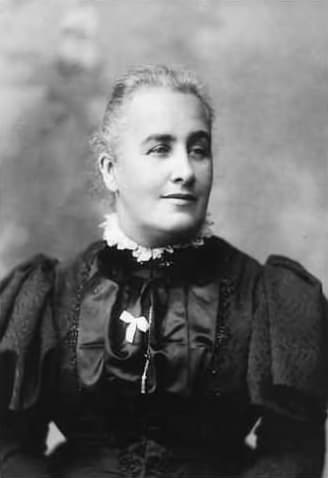
Elizabeth Webb Nicholls was born on February 21, 1850. She was born in Adelaide, South Australia. Her father was Simon Webb. He worked as an engraver, which means he carved designs into metal or wood. Her mother was Ann Webb.
Back then, girls did not always get to go to school. Elizabeth did not have many chances to learn in school. But her family cared a lot about helping others. They believed in strong Methodist values, which are ideas about being kind and doing good in the world. Elizabeth grew up wanting to help her community.
When Elizabeth got older, she worked hard for social reform. Social reform means trying to make things better and more fair for people. She joined a group called the Woman's Christian Temperance Union, or WCTU, in South Australia. This group started in the 1880s.
At first, the WCTU mostly worked on temperance. Temperance means encouraging people to drink less alcohol, or none at all. But under Elizabeth's leadership, the group grew. It began working on women's suffrage too. Suffrage means the right to vote. The WCTU also started helping with other social problems.
In 1889, Elizabeth became the president of the WCTU in South Australia. As president, she worked very hard so that women could vote. Her work paid off in a big way. In 1894, women in South Australia won the right to vote! This was a huge moment in history. It happened after a special bill was signed. This bill let women vote and also let women run for parliament. This was the first bill like it ever passed.
Elizabeth did not stop there. She joined other groups too. She was part of the Ladies' Social Purity Society. She was also part of the National Council of Women. Through these groups, she helped with many kinds of social reform, not just temperance and voting rights.
Elizabeth never won any big personal awards during her life. But that does not mean her work was small. In fact, her work changed society in huge ways. People remember her leadership in the WCTU. They also remember her part in winning the right to vote for women. These are seen as very important parts of Australian history.
In 1870, Elizabeth married a man named Alfred Nicholls. He worked as a tailor, which means he made and fixed clothes. Together, they had a family. Elizabeth took care of her family while she also did her important public work. People admired how well she balanced both jobs.
Elizabeth is remembered today as a key leader in the fight for women's rights in Australia. Her work helped lead to voting rights across the whole country, not just in South Australia. She is remembered as an important leader in the temperance movement too. Most of all, people remember how she helped show the world that women could be strong leaders.
Even when she grew older, Elizabeth kept working for good causes. She never stopped trying to help people. Elizabeth passed away on August 3, 1943. She left behind a legacy, which means the good things people remember and continue after someone is gone. Her life's work helped open doors for many women who came after her.