← All women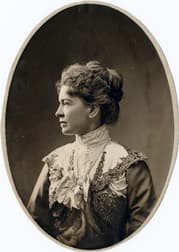
American · Science · Activism
Zonia Baber
August 24, 1862 – January 10, 1956
Early Life and Background
Mary Arizona "Zonia" Baber was born on 24 August 1862 in Kansas Township, Edgar County, Illinois, into a farming family in a largely rural area of the state.[1][9][10] The township offered only primary schooling, a limitation that would later inform her conviction that education—especially scientific and civic education—must be made broadly accessible, including to girls and rural communities.[10][12]
Sources describe Baber’s family as agricultural and modest, placing her childhood within the world of small Midwestern farms in the post–Civil War United States.[9][10] Growing up close to the land exposed her to the physical features, seasons, and environmental changes that would later become central to her teaching of geography and geology.[9] Although detailed records of her parents and siblings are sparse in standard biographical accounts, scholars emphasize that Baber’s early educational opportunities were limited and that she had to seek further training beyond her hometown.[10][11]
By the 1880s, Baber had trained as a teacher of geography and had earned a teaching qualification—often described as a "maestra en geografía"—by 1885, reflecting the growing professionalization of women teachers in the United States.[11] Her early teaching and principalship work in private schools in Chicago introduced her to urban educational challenges and the potential of geography as a tool for understanding social and environmental change.[2][7][11]
Education and Entry into Academic Life
Baber’s formal higher education was closely linked to the University of Chicago, a relatively new institution at the time. She began working there around 1895, initially in connection with geography and geology teaching.[2][14] During this period she participated in geology field classes, most notably at Mazon Creek, Illinois, where she collected fossils as part of a summer field course that admitted women—still unusual in the late nineteenth century.[14]
While teaching and conducting fieldwork, Baber pursued her own degree studies. She earned a Bachelor of Science (BS) from the University of Chicago in 1904, a significant accomplishment for a woman of her generation in the sciences.[1][11] This formal qualification complemented her established reputation as an innovative teacher and helped secure her subsequent academic appointments.
Before joining the University of Chicago faculty, Baber had already gained experience as a school administrator. She served as head of the Geography Department at the Cook County Normal School (later Chicago State University) from 1890 to 1899.[7] This role allowed her to experiment with curriculum design and teacher training, laying the groundwork for her later impact on geoscience education at the university level.
Career Beginnings and Development
By the mid‑1890s, Baber was recognized as an innovator in teaching geography and geology. She began working at the University of Chicago in 1895, contributing to both classroom instruction and field courses.[2][14] Her teaching emphasized experiential learning, with students expected to conduct field observations, collect specimens, and use laboratory equipment rather than relying solely on textbook memorization.[1][9][14]
In 1896, Baber designed and later patented a school desk specifically adapted for geography and science instruction.[4][7][9][11] Registered as U.S. Patent No. 563,638, the desk incorporated trays and compartments for samples, maps, and instruments, allowing students to keep geological specimens, geographic models, and field notes at hand.[9][14] Although the precise patent grant date is not given in the sources consulted, the year 1896 is consistently reported as the time of invention and patent.[4][7][9]
Her reputation grew further through her leadership in professional organizations. In 1898, Baber helped found the Geographic Society of Chicago, a society notable for being open to the public and for giving priority to women speakers.[2][7][11][12][14] Through lectures, field excursions, and public programs, the Society disseminated geographic knowledge beyond university walls, reflecting Baber’s belief that geography could foster global understanding and peace.[7][8]
From 1901 to 1921, Baber served as Associate Professor in the Department of Education at the University of Chicago and simultaneously as head of geography and geology within that department.[5][8][14] She was also principal of the University of Chicago Laboratory Schools during these years, overseeing experimental curricula and teacher training that integrated geoscience into general education.[5][7][11][14]
Major Works, Methods, and Contributions
Baber is best known for developing innovative methods for teaching geography that emphasized hands‑on investigation, fieldwork, and laboratory practice.[1][9][14][15] She opposed the traditional approach of memorizing place names and map facts, arguing instead that geography should lead to an understanding of human–environment interactions and foster a "fraternal attitude toward all peoples."[7][10]
Her teaching philosophy combined several elements:
- Fieldwork and observation: Students learned through direct engagement with landscapes, such as field trips to quarries, rivers, and dune systems, where they observed processes of erosion, deposition, and ecological change.[9][14]
- Laboratory work: Baber insisted on the importance of laboratory study—handling rocks, fossils, soils, and maps—so that learners could connect abstract concepts to tangible evidence.[9][14]
- Application to social issues: Geography, in her view, was a tool for understanding cultural diversity, economic systems, and political conflicts, making it central to civic and ethical education.[8][10][15]
She articulated these ideas in her writings, including her book The Scope of Geography, in which she argued that geographic study should cultivate sympathy and international understanding.[7] While detailed bibliographic information about all her publications is limited in the available sources, scholars of geoscience education highlight her role in shaping early twentieth‑century progressive pedagogies.[8][9][15]
Beyond pedagogy, Baber made significant contributions to geoethics. Recent analyses emphasize that she used geoscience education to address complex social, cultural, and environmental issues, anticipating later discussions about the ethical responsibilities of scientists.[9][15] Her work illustrates how geography and geology can support critical perspectives on imperialism, racial inequality, and environmental exploitation.[15]
Activism, Peace Work, and Social Engagement
Baber’s activism was inseparable from her scientific and educational work. She was involved in a wide range of causes including civil rights, women’s suffrage, anti‑imperialism, and peace.[2][7][8][10][15] As chair of the Race Relations Committee of the Chicago Women’s Club and a member of the executive committee of the NAACP in Chicago, she promoted integration and opposed racial discrimination.[7][10][15]
Her environmental activism is particularly well documented. Baber was an early advocate for the protection of the Indiana sand dunes, arguing that the dunes should be preserved for scientific study and public enjoyment rather than exploited for industrial development.[3][7][10][12] On 30 October 1916
Internationally, Baber was deeply engaged with the Women’s International League for Peace and Freedom (WILPF). She served in leadership roles, including chairing the Pan‑American Committee, and participated in WILPF’s global programmes.[2][7][8][15] Baber argued that racial integration should be a priority within the organization and worked to ensure that peace activism addressed colonialism and racial oppression.[8][15] Her peace work culminated in conceptual projects such as "Peace Symbols", discussed in scholarship as a 1948 initiative in which Baber proposed a series of monuments to peace around the world.[8] She also led efforts to reform language in textbooks, seeking to remove phrases that perpetuated negative cultural stereotypes.[7][8] These initiatives reflect her view that geography education should encourage empathy and challenge prejudicial narratives. Baber’s commitment to women’s political rights extended beyond the continental United States. In 1926, she represented women of Puerto Rico in efforts to secure women’s suffrage, linking her geographical expertise with advocacy for democratic participation in a colonial context.[2][7][10] This work illustrates the breadth of her activism, connecting North American educational reform to Caribbean struggles for political equality. During her lifetime, Baber received notable recognition for her work. In 1948, she was honoured with a lifetime achievement award, acknowledged in later biographical accounts as a testament to her decades of contributions to geography and geology education.[2] While the specific awarding institution is not named in all sources, the date underscores the sustained impact of her work from the late nineteenth century into the mid‑twentieth. The Geographic Society of Chicago, which Baber helped found in 1898 and served for approximately fifty years, also provided a platform for honouring her contributions.[2][7][11][14] Her long association with the Society meant that she was widely recognized within Chicago’s scientific and educational communities as a pioneer in geography teaching. Posthumously, Baber’s work has been revisited by historians of science and education. Articles such as "Zonia Baber’s pioneering role in the evolution of geoscience education" and studies of her "geoethical legacy" highlight her as a key figure in integrating pedagogy, geoscience, and social ethics.[9][15] Popular and scholarly outlets—including Smithsonian Magazine and specialized historical blogs—now celebrate her as an innovator and an early environmentalist.[3][7][12][17] Detailed records of Baber’s private life—including marriage, children, or intimate relationships—are limited in standard sources. Most biographical accounts focus on her professional roles and activism rather than personal details.[1][2][5][9] There is no widely cited evidence that she married or had children, and some reconstructions suggest that her life was largely organized around her educational and political work. What is well documented is her extensive involvement in clubs, societies, and international organizations. Baber’s membership in the Chicago Women’s Club, the NAACP in Chicago, and WILPF placed her within networks of progressive reformers and intellectuals, many of whom were women balancing public activism with personal commitments.[7][10][15] These circles provided social as well as professional support, and they helped amplify her influence beyond the classroom. Her sustained engagement with peace and human rights issues into advanced age—receiving an award in 1948 and continuing to be cited in WILPF contexts—suggests that Baber maintained a high level of public activity throughout her life.[2][8] However, without specific archival evidence, her private routines, friendships, and domestic arrangements remain largely undocumented in the sources consulted. Baber’s legacy lies at the intersection of geoscience education, geoethics, feminism, anti‑racism, and environmentalism. Historians of geoscience education identify her as a pioneering figure who demonstrated how geography and geology could be taught through direct engagement with the Earth and used to address pressing social issues.[9][15] Her insistence on fieldwork and laboratory practice anticipated later trends in experiential education and influenced how geography is taught in schools and universities. Concepts such as student field trips, specimen handling, and project‑based investigation—now common in geoscience classrooms—were central to Baber’s practice decades before they became mainstream.[1][9][14] Equally important is her geoethical legacy. Baber argued that geosciences must be linked to ethical responsibility, using geography to critique imperialism, racial oppression, and gender discrimination.[9][15] She saw understanding the world’s landscapes and peoples as essential for promoting peace and solidarity. Her work with WILPF and the NAACP, and her advocacy for textbook reform, illustrate how scientific expertise can support anti‑racist and anti‑colonial agendas.[7][8][15] Environmental historians have highlighted Baber as one of the earliest figures to connect geoscientific knowledge with organized efforts to conserve natural areas such as the Indiana sand dunes.[3][7][12] By framing the dunes as both a scientific resource and a public trust, she helped lay intellectual foundations for later environmental movements that emphasize the educational value of protected landscapes. From a gender history perspective, Baber exemplifies how women in the late nineteenth and early twentieth centuries carved out spaces within science and education to challenge exclusionary norms. As head of departments, principal of laboratory schools, and founder of a major geographic society, she occupied positions of institutional authority rarely held by women at the time.[5][7][11][14] Her promotion of women speakers and her advocacy for women’s suffrage, including in Puerto Rico, extend this legacy to the political sphere.[2][7][10] In her later years, Baber remained active in peace and educational initiatives. The 1948 lifetime achievement award and the contemporaneous discussion of her "Peace Symbols" project indicate that she continued to be recognized for her work well into her eighties.[2][8] Her ideas about installing monuments to peace around the world and reforming prejudicial language in textbooks show that she never abandoned her belief in geography as a tool for moral and civic transformation.[7][8] After retiring from her formal roles at the University of Chicago, Baber’s influence persisted through the institutions she had helped shape—the Laboratory Schools, the Department of Education’s geography and geology programs, and the Geographic Society of Chicago—and through the teachers she had trained.[5][7][11][14] Scholars and activists continued to draw on her methods and ethical perspectives, even if her name was not always prominently cited. Baber died on 10 January 1956 in East Lansing, Michigan, at the age of 93.[1][5][10] Some secondary sources list 1955 as her death year, but the weight of evidence from multiple biographical references supports the 1956 date.[1][5][10][14][16] Her death in a university town underscores her lifelong connection to academic environments, even as her impact extended far beyond them. In recent decades, renewed interest in women in science and early environmentalism has brought Baber back into historical focus. Exhibitions, scholarly articles, and digital projects now recount her story as that of a woman who transformed how geography is taught and who used that transformation to advance peace, equality, and environmental stewardship.[3][7][9][15][17]Awards, Honours, and Recognition
Personal Life
Legacy and Historical Impact
Later Life and Death
Dated achievements
3 indexed.
- Aug241862Science
Birth of Zonia Baber
Zonia Baber was born in Edgar County, Illinois, on August 24, 1862.
View details Wikipedia: Zonia Baber - Oct301916Activism
Testimony for Indiana Sand Dunes preservation
On October 30, 1916, Baber testified to preserve the Indiana Sand Dunes.
View details