← All women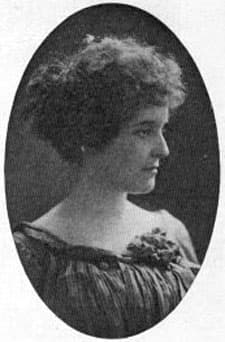
American · Literature · Activism
Zona Gale
August 26, 1874 – December 27, 1938
Early Life and Background
Zona Gale was born on August 26, 1874, in the railroad town of Portage, Wisconsin, United States.[1][2][5][11] She was the only child of Charles S. (or F.) Gale, a railroad engineer, and Eliza Beers Gale, a former schoolteacher.[5][11] Growing up as an only child in a modest but intellectually supportive household, Gale experienced the close-knit social world and rhythms of small-town Midwestern life that would later become the hallmark of her fiction.[5][11]
From an early age, Gale demonstrated a strong interest in writing. Biographical accounts note that she began composing stories, poems, and even a homemade "book" as a young girl, and by her teenage years she had attempted to submit a novel for publication.[3][12][14] Though those early efforts were rejected by editors, the experience reinforced her determination to become a writer.[3][12]
Portage’s environment—rural but connected by the railroad, conservative yet touched by Progressive-era currents—provided Gale with rich material. The town’s social hierarchies, family dynamics, and daily interactions later appeared, thinly disguised, in the fictional community of Friendship Village, through which Gale explored themes of community, conformity, and women’s agency.[3][8][11]
Education and Formative Influences
Gale attended local schools in Portage before enrolling at the University of Wisconsin–Madison, an institution that was then only beginning to open wider educational opportunities to women.[3][5][12] She studied literature and related subjects and is reported to have continued writing poetry and short prose during her undergraduate years.[3][12]
In 1895, Gale graduated from the University of Wisconsin with a degree in literature (often described as a Bachelor of Literature).[5][6][12] Access to higher education was still relatively rare for women in the late 19th century, and her degree signaled both personal ambition and family support for her intellectual development.[3][5] Education remained central to her life; she later returned to the University of Wisconsin to earn a master’s degree in 1901
During these formative years, Gale was exposed to contemporary literary movements and social ideas, including realism and nascent Progressive reforms. These influences shaped her later commitment to realistic depictions of everyday life and to writing that engaged moral and political questions. After completing her undergraduate degree, Gale entered the field of journalism—one of the few professional avenues available to aspiring women writers at the time. Around 1895, she became one of the first female newspaper reporters in Milwaukee, working for local papers and covering a range of topics.[3][5] This placed her among an early generation of women in American newsroom culture, which was still overwhelmingly male. In 1900–1901, Gale moved to New York City, where she obtained a position as a reporter with the Evening World (often referred to as the New York World in biographical summaries).[3][11][14] Her assignments reportedly focused on social events and human-interest stories, reflecting both editorial expectations of women reporters and her interest in everyday life.[3][11] While working long hours as a journalist, Gale continued to write stories and poems for magazines. She gradually began to sell fiction, and in 1904 one of her short stories appeared in Success magazine, marking a notable step in her transition from reporter to professional author.[11][14] Gale’s journalistic experience honed her observational skills and gave her insight into urban life and media culture. However, she remained deeply attached to Portage and the Midwest. By 1904, she chose to return permanently to Wisconsin, leaving New York to focus on literary work from her hometown.[10][11][14] Back in Portage, Gale turned more fully to fiction and began publishing work that drew explicitly on small-town settings. Her first published novel, Romance Island, appeared in 1906 and achieved notable financial success, though contemporary critics were skeptical of its romantic fantasy elements.[3] The commercial performance of the book helped establish her economically as an author. Gale’s literary reputation grew more decisively with the publication of her "Friendship Village" stories. In 1908 and 1909, she released collections centered on a fictional Midwestern town closely modeled on Portage.[3][5][8] These stories portrayed the everyday lives of ordinary townspeople, emphasizing community interactions, moral dilemmas, and the constraints and possibilities facing women. According to literary encyclopedias, Gale won a significant short story prize—the Delineator magazine award—around 1910, which brought her national attention and a substantial monetary reward.[11] This success reinforced her transition from journalism to full-time authorship and allowed her to continue living and writing in Portage while reaching a national readership. Her early prose aligned with the traditions of American regional realism, yet it also carried subtle critiques of gender roles and social conformity. Gale’s intimate knowledge of Portage allowed her to render Midwestern village life with nuance, combining affectionate observation with social commentary.[5][8][11] Gale’s most famous work is Miss Lulu Bett, first published as a novel in 1920
The novel’s success led Gale to adapt it for the stage. The Miss Lulu Bett play was produced on Broadway around 1920, bringing Gale wider recognition in the world of American theater.[14] The stage version sharpened the social critique by dramatizing Lulu’s humiliations and her evolving resolve to claim a life of her own. In 1921, Gale’s dramatization of Miss Lulu Bett received the Pulitzer Prize for Drama, and she became the first woman playwright to win the award.[1][2][3][5][7][10][13] This honor placed her at the forefront of American dramatic arts and confirmed that stories centered on ordinary women’s lives could command national attention. The novel and play were significant not only for their literary qualities but also for their treatment of gender and domestic power. By presenting Lulu’s experience as emblematic of many women’s limited options, Gale contributed to broader debates about women’s independence, marriage, and self-determination in the early 20th century. Beyond Miss Lulu Bett, Gale wrote extensively in multiple genres. Biographical and critical sources credit her with publishing more than twenty volumes of prose, including novels, short-story collections, essays, and sketches.[5][8][13] She also wrote numerous plays and several hundred short stories and poems for magazines and newspapers.[13] Her works often returned to themes of small-town life, the moral responsibilities of individuals, and the possibilities of social reform. Collections of stories and novels set in the Friendship Village milieu continued to appear through the 1910s and 1920s, reinforcing her identity as a regional writer who nonetheless engaged national issues.[5][8][11] Gale also produced essays and nonfiction, sometimes addressing public questions such as peace, civic engagement, and women’s roles. She participated in the growing community theater movement in Wisconsin, helping to foster local dramatic societies and encouraging nonprofessional theater as a means of cultural enrichment.[11] Her stylistic approach combined accessible prose with psychological insight. While some critics regarded her work as gently sentimental, others praised its realism and ethical seriousness. Gale’s literary output, taken as a whole, offers a sustained exploration of how ordinary people negotiate moral choices within the constraints of community expectations. Alongside her literary career, Gale became increasingly active in Progressive-era politics and reform movements. Starting around 1912, she was involved with the Progressive Party, supported figures such as Robert M. La Follette, and advocated for woman suffrage and civic reform.[5][11] Gale maintained close friendships with leading reformers, including Jane Addams, the founder of Hull House and a central figure in social welfare and peace activism.[11] She participated in organizations such as the Women’s Peace Party, reflecting her commitment to pacifism during and after World War I.[5][11] Her activism extended to speaking, writing, and lobbying for progressive causes. A major political achievement in Gale’s life was her role in shaping the Wisconsin Equal Rights Law of 1921. According to historical and commemorative sources, she helped write the law, which prohibited discrimination against women and sought to give them equal legal rights with men.[3][15] The statute addressed areas including contracts, jury service, eligibility for public office, property rights, and custody. The law, enacted on June 7, 1921, placed Wisconsin among the earliest states to articulate comprehensive legal equality for women.[15] Gale’s involvement drew on her skills as a writer and her experience in reform networks, translating feminist ideals into legislative language. Her work exemplified how women intellectuals used their influence to advance concrete legal changes, not merely cultural ones. Gale’s Pulitzer Prize for Drama in 1921 remains her most widely cited honor and is consistently highlighted in reference works as a landmark achievement for women in the arts.[1][2][3][5][7][10][13] The award cemented her national reputation and has been remembered as an important barrier-breaking distinction. She also held significant positions in higher education governance. In 1923, Gale was appointed to the Board of Regents of the University of Wisconsin, giving her a formal role in overseeing the institution where she had studied.[5] Later, in 1935, she was elected to the university’s Board of Visitors, further reflecting the esteem in which she was held by academic and civic leaders.[5] In 1933, Gale served as Wisconsin’s representative to the International Congress of Women, linking her state-level activism to global conversations about women’s rights and peace.[5] Through these appointments and recognitions, she functioned not only as an author but also as a public intellectual and civic leader. Despite her public prominence, Gale’s personal life was relatively private. She remained based in Portage for most of her adult years, finding in the town both the setting for her work and a stable home environment.[3][10][11] Her long residence there reinforced her identity as a regional writer deeply connected to a specific place. In 1928, Gale married William L. Breese, and biographical sources report that the couple adopted a daughter, Leslyn Breese, in the same year.[5] After marriage, she was sometimes referred to by the name Zona Gale Breese, including in later documents and commemorations.[2][6] Gale’s friendships with reformers such as Jane Addams, her engagement with local theater circles, and her family life in Portage contributed to a social network that supported her activism and writing. However, her personal correspondence and inner life remain less extensively documented than her public achievements. Throughout the 1930s, Gale continued to write fiction and essays while participating in social reform and peace efforts.[11] She maintained her interest in community theater and educational initiatives and remained involved with organizations concerned with international peace and women’s status. Her later works continued to explore themes of morality, community, and individual conscience, often with a quieter, reflective tone. Though newer literary movements emerged, Gale retained readers who appreciated her humane realism and ethical focus. Zona Gale died of pneumonia on December 27, 1938, in Chicago, Illinois, at the age of 64.[1][5][6][11][14] She had left Portage and was in Chicago when she fell ill. Her death ended more than three decades of sustained literary production and public engagement. Following her death, Gale was commemorated in Wisconsin and beyond. Portage became a site of memorials and historical markers, and local organizations—including civic leagues and historical societies—have maintained interest in her legacy.[6][16] University and state archives preserve her papers and related materials, supporting ongoing research into her life and work.[8][10] Zona Gale’s legacy is multi-faceted, encompassing contributions to literature, theater, and social reform. As a regional writer, she is recognized for her realistic and sympathetic portrayal of Midwestern small-town life, particularly through the Friendship Village stories and related works.[5][8][11] Her careful attention to ordinary people’s speech, habits, and moral dilemmas helped to broaden the range of American realism. In theater history, Gale holds a distinctive place as the first woman to win the Pulitzer Prize for Drama, for Miss Lulu Bett in 1921.[1][2][3][7][10] This milestone demonstrated that women’s perspectives and domestic-centered narratives could succeed in a traditionally male-dominated dramatic field. It also encouraged later generations of women playwrights to seek professional recognition at the highest levels. In the realm of activism, Gale’s work on the Wisconsin Equal Rights Law and her involvement with suffrage, peace, and Progressive politics illustrate how writers used their platforms to influence legislation and public opinion.[3][5][11][15] Her role in drafting and advocating for early equal rights legislation places her within the broader history of feminist legal reform in the United States. Scholars of women’s history and literature continue to study Gale’s writings for their engagement with gender roles, community norms, and the tensions between individual desire and social expectation. Her career shows how a woman from a small town could, through education, persistence, and strategic alliances, become a nationally recognized author and a significant actor in public life.[5][8][10][13] Today, Gale is remembered in Wisconsin through educational materials, local histories, and cultural programs that highlight her achievements as a writer and activist.[3][6][13] Her work remains accessible in print and digital collections, and her life story is often cited in discussions of early 20th-century women who helped redefine both American literature and women’s roles in society.Career Beginnings in Journalism
Transition to Fiction and the "Friendship Village" Stories
Major Work: Miss Lulu Bett
Other Literary Contributions
Political Activism and Equal Rights Work
Awards, Honors, and Institutional Roles
Personal Life
Later Life and Ongoing Work
Death
Legacy and Historical Impact
Dated achievements
4 indexed.
- Aug261874Literature
Birth in Portage, Wisconsin
Zona Gale was born in Portage, Wisconsin, to Charles S. Gale and Eliza Beers Gale.
View details Zona Gale - Women in Wisconsin - May161921Arts
First woman to win the Pulitzer Prize for Drama
Zona Gale was awarded the Pulitzer Prize for Drama for her play "Miss Lulu Bett," becoming the first woman ever to win the award.