← All women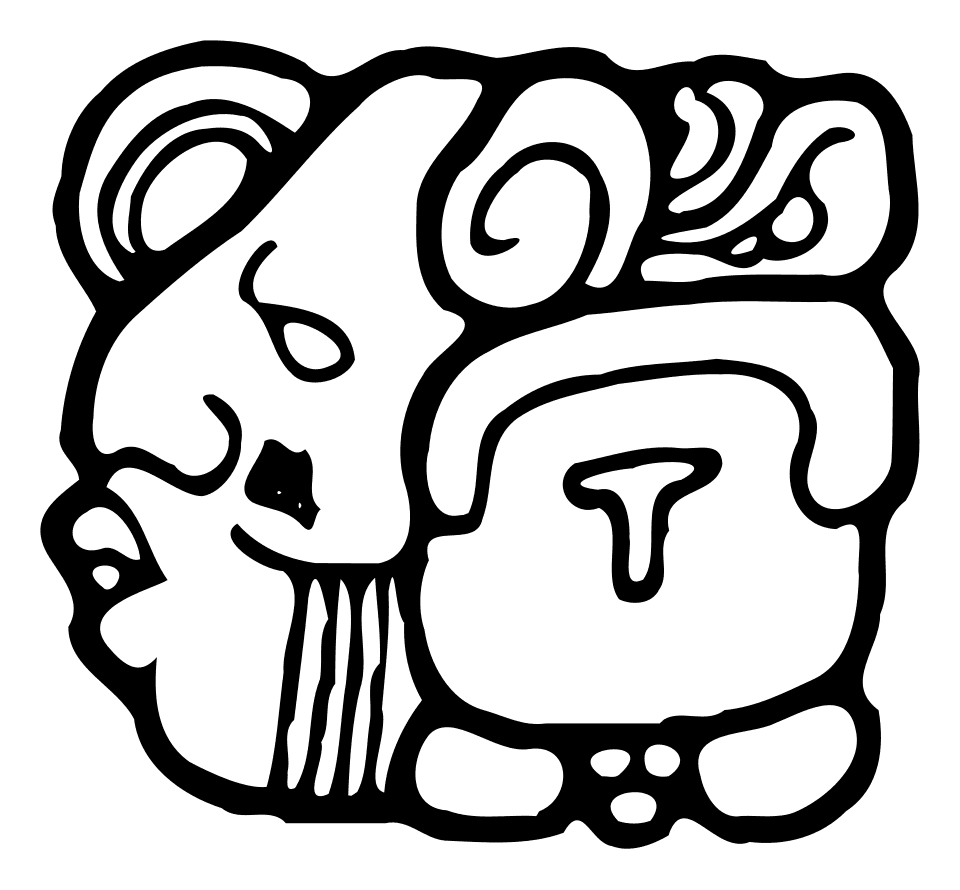
Maya · Politics
Yohl Ik’nal
Unknown – November 7, 604
Early Life and Dynastic Background
Yohl Ikʼnal, also rendered as Ix Yohl Ikʼnal, Lady Kan Ik, or Lady Kʼanal Ikʼnal, was a royal woman of the Classic Maya city-state of Palenque (ancient Lakamhaʼ) in present-day Chiapas, Mexico.[1][4][17] Her birth date is not preserved in surviving inscriptions, and modern scholarship therefore treats it as unknown.[1][3][9] Epigraphic and historical reconstructions place her life firmly in the later sixth century CE, before her accession in 583.[1][4][11]
Yohl Ikʼnal belonged to the ruling dynasty of Baʼakal, the wider kingdom whose principal city was Palenque.[4][8][17] The best-supported reading of the inscriptions indicates that she was closely related to the previous ruler Kan Bahlam I (Chan-Bahlum I).[4][8] Mesoweb’s synthesis and other scholarly overviews suggest that she was probably his daughter, though some authors raise the alternative possibility that she may have been his sister.[4][8][11] In either case, she occupied a position at the heart of the royal lineage, which made her a plausible heir in the absence of an unquestioned male successor.
Her name, recorded in Maya glyphs as IX-(Y)O:L-la IK'-NAL-la, has been translated as “Lady Heart of the Wind Place” or "Lady Heart of North Wind."[4][7][12][14] This theophoric and place-linked name evokes both personal identity and a connection to a particular sacred locale or aspect of the natural world, fitting common patterns in Maya royal onomastics. It also contributes to later interpretations of her as a powerful figure associated with elemental forces, though such readings are largely modern and literary.
The political and cultural environment into which Yohl Ikʼnal was born was one of a flourishing but increasingly competitive Maya lowlands. Palenque had emerged as a significant center, yet it was surrounded by ambitious neighbors such as Calakmul and other regional powers.[17] Royal daughters were typically important players in dynastic marriage alliances and religious rituals, and although specific details of Yohl Ikʼnal’s childhood or education are not recorded, her later role suggests she was deeply immersed in courtly practices, ceremonial duties, and the complex etiquette of Maya kingship.
Accession and Early Reign
Yohl Ikʼnal’s accession to the throne is one of the best-dated events in early Palenque history. Inscriptions convert the Maya Long Count date 9.7.10.3.8, 9 Lamat 1 Muwan to 23 December 583 CE, the day on which she became kʼuhul ajaw—"divine lord"—of Baʼakal.[4][8][1][12] This accession made her the ruling monarch of Palenque, not merely a consort or regent, and she held power in her own right.
Modern scholars regard Yohl Ikʼnal as the first definitively identified female ruler in recorded Maya history to wield full royal authority and bear the complete royal title of kʼuhul ajaw.[1][6][9][11] While earlier or contemporary women may have held significant influence or regency roles, the epigraphic record for Yohl Ikʼnal clearly presents her as the sovereign. Her rule is recorded in king lists and ruler sequences as a normal part of dynastic succession, underscoring her acceptance within the ideology of royal power.[11][17]
Her elevation likely followed the death of Kan Bahlam I, after which the throne may have lacked a consensual male successor.[4][8][11] In such circumstances, Maya dynasties sometimes turned to royal women who could guarantee continuity of bloodline and ritual legitimacy. Yohl Ikʼnal’s accession thus appears as both an exceptional moment—placing a woman on the throne—and a pragmatic dynastic solution that maintained the prestige of Palenque’s royal house.
Accounts in later historical syntheses emphasize that her early reign occurred during a relatively stable period for Palenque.[12][6] The city continued to develop architecturally and ceremonially, with its rulers integrating local traditions and wider Classic Maya cosmology into public monuments. Although specific buildings cannot be securely attributed to her patronage alone, she stands in the developmental line that led to the city’s famous temples and palaces of the seventh century.
Political Challenges and Warfare
Despite the relative calm of her accession, Yohl Ikʼnal’s reign was not free from external threats. In the closing years of the sixth century, Palenque came under military pressure from rival polities. Sources highlight a major attack carried out by Calakmul, one of the dominant superpowers of the Classic Maya world.[1][6][8]
Epigraphic reconstructions and secondary narratives agree that in 599 CE, Palenque suffered a significant defeat at the hands of Calakmul, during Yohl Ikʼnal’s tenure on the throne.[1][6][8] The exact day of the attack in April 599 is not securely established, but the event is widely noted as a turning point. It demonstrates that her reign occurred within a fiercely contested political landscape and that Palenque, while important, was vulnerable to the strategic ambitions of larger neighbors.
Accounts on Infinite Women and other popular history sites emphasize that Yohl Ikʼnal endured military setbacks but nonetheless retained power following these defeats.[6][9] Rather than being deposed or replaced by a male relative in the aftermath of the campaign, she continued to rule for several more years. This persistence suggests that her legitimacy was robust enough to withstand the political damage of military loss and that her court accepted her continued kingship.
These conflicts likely had wider consequences for Palenque’s economy, alliances, and urban development. While the epigraphic record does not provide detailed narrative descriptions comparable to later textual traditions, the dates and identifications of victors and losers allow scholars to sketch a picture of shifting power balances. Yohl Ikʼnal’s reign, situated between earlier expansion and later resurgence under rulers like Kʼinich Janaab Pakal I, forms part of a longer story of Palenque’s oscillating fortunes.[1][11][17]
Major Accomplishments and Royal Role
Because Classic Maya inscriptions privilege short dedicatory texts and date-bearing statements, they rarely offer comprehensive biographies. Nevertheless, the surviving record allows an outline of Yohl Ikʼnal’s central accomplishments. Foremost among these is her very status as a fully titled kʼuhul ajaw governing a major Maya polity for a full generation.[1][4][11]
Mesoweb’s synthesis notes that Yohl Ikʼnal ruled for a total of twenty-one years, from 583 to 604.[4][11] Long reigns were themselves markers of prestige and cosmic favor in Maya thought, suggesting stable administration, successful performance of ritual duties, and continuity in dynastic narratives. Her ability to hold the throne across two decades, including through military hardship, marks her as a durable political figure.
Scholars and popular historians repeatedly emphasize that she was one of only a very small number of Classic-era Maya women to carry a complete royal title and govern in her own right for an entire term.[11][4][9] Others, such as the Naranjo ruler Lady Six Sky, are often cited for comparison, but Yohl Ikʼnal’s reign precedes theirs, making her an early and important example of female rulership in the Maya world.
Some narrative treatments and later works, including a historical novel and associated media, present Yohl Ikʼnal as a "visionary" queen who undertook temple-building to honor her father and the gods.[13][14] These characterizations, while grounded in the general pattern of royal building activity, are partly interpretive and literary. Epigraphic evidence does suggest that she appears in later iconography, including representations associated with the sarcophagus of Pakal, where she is depicted in genealogical scenes as an ancestor nourishing fruit trees of dynastic continuity.[10][14] Such images underscore her perceived importance within Palenque’s royal memory.
Awards, Honors, and Religious Status
In the context of Classic Maya society, "awards" in the modern sense do not apply, but royal titles and ritual roles functioned as markers of honor. Yohl Ikʼnal’s primary distinction was her investiture as kʼuhul Baʼakal ajaw—"holy lord of the Baʼakal kingdom"—bearing the same divine designation as male rulers.[1][4][15]
Her title indicated that she was not merely a secular administrator but the central mediator between the polity and its gods. The Maya conception of kingship intertwined political authority with sacred responsibility: rulers performed calendrical rituals, bloodletting, and other ceremonies to sustain cosmic order. By carrying the full kʼuhul title, Yohl Ikʼnal was recognized as the sacral head of Palenque, an honor conferred on very few women in the Classic period.[4][11]
Later remembrance by Palenque’s dynasty effectively functioned as a posthumous honor. In genealogical scenes carved centuries after her death, she is included in the ancestral chain leading to Pakal, one of Palenque’s most celebrated rulers.[10][14][17] This canonical placement indicates that subsequent kings considered her a legitimate and important link in their royal pedigree, reinforcing her honored status.
Personal Life and Family
Direct evidence for Yohl Ikʼnal’s personal life is sparse, but key relationships can be inferred from dynastic records. As noted, she was almost certainly a close relative—likely daughter or sister—of Kan Bahlam I, her immediate predecessor.[4][8][11] This kinship underpinned her claim to the throne and made her an attractive candidate when a male heir was unavailable or contested.
Several sources identify Ajen Yohl Mat as her son and successor.[4][11][9] While the inscriptions themselves must be carefully interpreted, modern syntheses generally accept a maternal link between Yohl Ikʼnal and Ajen Yohl Mat, placing her as the mother of at least one future ruler. Her role therefore encompassed both reigning queen and dynastic matriarch.
There is no clear record of her spouse’s name or status; Maya royal women could marry into other noble houses or take consorts whose identities were less prominently recorded. The emphasis in surviving inscriptions is on her own title and on her relationship to previous and subsequent rulers. This focus supports the view that, in the eyes of scribes and later commemorators, her political and genealogical roles outweighed any biographical detail about private life.
Later Life, Death, and Succession
Yohl Ikʼnal continued to rule Palenque through the early years of the seventh century, navigating the aftermath of military setbacks and maintaining the ceremonial and administrative functions of kingship. The length of her reign suggests a measure of internal stability, even if external pressures persisted.[4][11][6]
Epigraphic correlation places her death on 7 November 604 CE, recorded in the Maya Long Count as 9.8.11.6.12, 2 Eb 0 Mak.[4][1][8] Some secondary sources, including German-language references and certain popular accounts, have proposed 4 November 604 as the corresponding Gregorian date, reflecting the challenges of correlating ancient calendar systems.[5][7] However, Mesoweb’s detailed treatment and the English and French Wikipedia entries adopt 7 November, and this date currently enjoys broader support among specialists.[1][2][4][8][9]
Her death marked the end of a notable era in Palenque’s history. According to modern syntheses, Ajen Yohl Mat followed her on the throne, beginning his reign shortly after 604 and ruling into the early decades of the seventh century.[4][11][9] Accounts suggest that his tenure was less successful, with continuing military and political difficulties that further strained Palenque’s position.[9][6]
Despite the subsequent challenges, Yohl Ikʼnal’s reign provided continuity between earlier rulers and the later resurgence under Pakal and his successors. Her carefully recorded accession and death dates serve as chronological anchors for reconstructing the sequence of events and reign lengths that define Palenque’s Classic period.
Legacy and Historical Impact
Yohl Ikʼnal’s legacy is multi-layered, encompassing gender history, dynastic politics, and the broader understanding of Classic Maya civilization. In gender terms, she stands out as the first clearly identified female ruler of a major Maya city-state to hold the full royal title of kʼuhul ajaw and to govern for a complete royal term.[1][4][6][9][11] Her reign demonstrates that female sovereignty, while rare, was possible within the ideological framework of Maya kingship.
Her example has become central to discussions of women’s power in ancient Mesoamerica. Comparative studies often place her alongside later female figures like Lady Six Sky of Naranjo or the "Red Queen" of Palenque, exploring how royal women navigated war, succession, and ritual obligations.[7][15][16] In these narratives, Yohl Ikʼnal serves as an early precedent for the recognition of women as legitimate bearers of sacred and political authority.
In dynastic terms, she is an indispensable link in Palenque’s ruler sequence. King lists and scholarly reconstructions position her eighth in the line of Palenque’s known rulers, governing from 583 to 604.[8][11][17] Her reign’s duration, its timing in relation to Calakmul’s expansion, and her relationship to Kan Bahlam I and Ajen Yohl Mat collectively help historians chart the ebb and flow of Palenque’s fortunes.
Modern cultural memory has also embraced Yohl Ikʼnal. She is the subject of historical essays, women’s-history profiles, and educational materials that highlight her pioneering status as a queen regnant.[6][9][12] A historical novel, The Visionary Mayan Queen: Yohl Ikʼnal of Palenque, and related media have further popularized her story.[13][14] These works, while blending scholarship with imaginative reconstruction, contribute to public awareness of her significance.
Within archaeology and epigraphy, her recorded dates and titles contribute to calibrating the correlation between the Long Count and the Gregorian calendar, and to understanding how Maya scribes represented female rulers. Her clear designation as kʼuhul ajaw supports interpretations that the title was not intrinsically male but could be applied to women in specific dynastic circumstances.[1][4][11]
Yohl Ikʼnal’s life thus resonates beyond the confines of Palenque. She is a crucial figure in the global history of women’s political leadership, demonstrating that, centuries before many parts of the world saw queens regnant, the Classic Maya had already documented a woman ruling as divine lord of a major city-state.
Historiographical Notes
The study of Yohl Ikʼnal relies heavily on epigraphic analysis, archaeological context, and later historical synthesis. As a result, some aspects of her biography—such as exact kinship ties, personal character, and motivations—remain debated or speculative. Scholars emphasize the need to distinguish clearly between what is directly supported by inscriptions and what constitutes modern interpretation.[1][4][11]
Discrepancies over the precise Gregorian dates of her accession and death illustrate the methodological challenges of correlating Maya and Western calendars. Some sources, based on earlier correlation constants, have given 21 December 583 or 4 November 604, while more recent and widely accepted correlations favor 23 December 583 and 7 November 604.[4][7][15] Editorial and scholarly treatments, including Mesoweb and major-language Wikipedia entries, increasingly converge on these latter dates.[1][2][4][8][9][12]
Popular accounts sometimes introduce narrative embellishments—such as detailed personal dialogues or specific temple-building decisions—that cannot be confirmed from primary evidence. Researchers and careful readers must therefore treat these stories as imaginative reconstructions rather than strictly factual reports. Nonetheless, the core historical framework of her reign, political challenges, and pioneering status as a female kʼuhul ajaw is well supported by the epigraphic record and specialist syntheses.
As ongoing archaeological work and refined epigraphic readings continue to shed light on Palenque, further details about Yohl Ikʼnal’s context may emerge. For now, she stands as a vital and well-documented example of female kingship in the ancient Americas, her life marked by the securely attested dates of her accession on 23 December 583 and her death on 7 November 604.
Dated achievements
2 indexed.
- Dec23583Politics
Accession to the throne of Palenque
Yohl Ik’nal acceded to the throne of Palenque on December 23, 583.
View details Mesoweb - Palenque: Señora Yohl Ik’nal - Nov07604Politics
Death of Yohl Ik’nal
Yohl Ik’nal died on November 7, 604, marking the end of her reign.
View details