← All women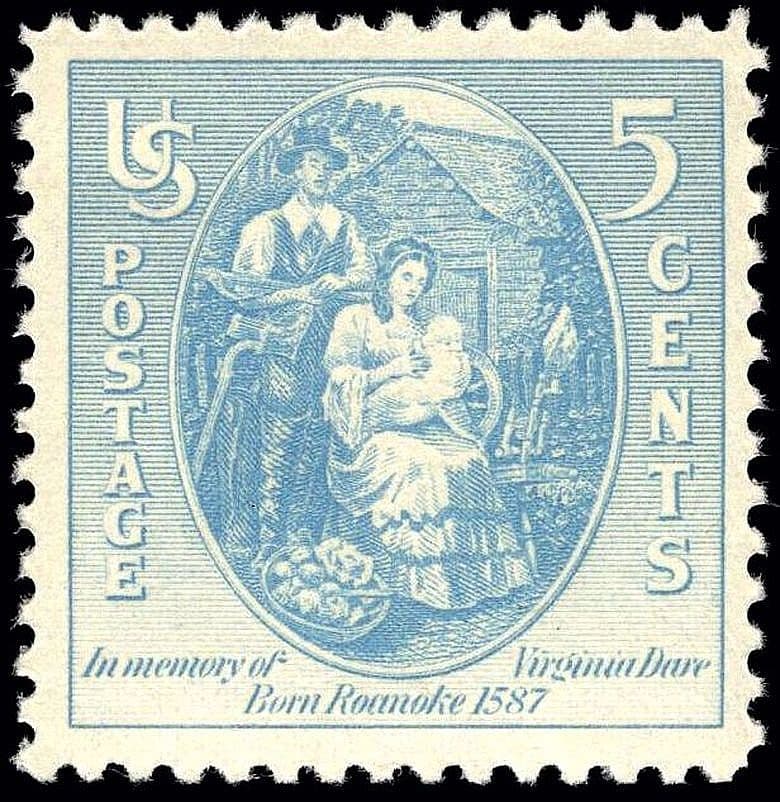
English · Exploration
Virginia Dare
August 18, 1587 – present
Early Life and Family Background
Virginia Dare (born 18 August 1587) is remembered as the first child of English parents born in the Americas and as a central figure in the enduring mystery of the Roanoke "Lost Colony."[1][4][7][13][14] Although almost nothing is known about her life beyond her birth and baptism, she has become one of the most symbolically charged women in early American history.
Virginia was born on Roanoke Island, in the short‑lived Roanoke Colony then referred to broadly as "Virginia" and located in what is now North Carolina.[1][4][7][13] Her parents were Ananias Dare, described in later sources as a bricklayer, and Eleanor (Elenor, Ellinor, or Elyonor) White Dare, the daughter of John White, governor of the colony.[1][4][7][14] As John White’s granddaughter, Virginia was connected to the leadership of England’s first serious attempt at settlement in the region.
The colonists who founded Roanoke in 1587 numbered about 115–117 men, women, and children, arriving under White’s command to establish a permanent base on the Outer Banks.[1][2][13][19] The voyage itself was long and dangerous; Eleanor Dare traveled while pregnant, reflecting the risks that women undertook within colonial enterprises. The presence of families, rather than solely soldiers or traders, signaled English hopes for a lasting community rather than a temporary outpost.[4][14]
Virginia’s given name, "Virginia," carried symbolic meaning. According to later historical syntheses, she was named both for the wider "Virginia" territory claimed by the English and in recognition that she was the first Christian or English child born there.[4][7][9] The naming emphasized the connection between her individual existence and England’s imperial and religious ambitions in North America.
Birth, Baptism, and the Roanoke Colony Context
Virginia Dare’s birth on 18 August 1587 is recorded in the context of the newly established Roanoke settlement.[1][4][7][13][16][19] She was born only days after the colonists’ arrival on the island, and contemporary documentation—now known largely through later historians—identifies her as the first English child to be born in an American English colony.[1][4][7][13][14]
The birth itself carried immediate symbolic weight. In an era of high infant mortality and precarious transatlantic travel, the successful delivery of a child in the New World was interpreted as evidence that English family life and generational continuity could take root across the ocean. Modern historians have noted that her birth "gave hope to fellow and future settlers that new life was possible in the Americas," a sentiment echoed in interpretive materials at Roanoke Island Festival Park.[16]
On 24 August 1587, Virginia was baptized into the Church of England, becoming, according to later accounts, the first child and second person in America to be christened under Anglican rites.[4][13][8] The baptism extended English religious practice to American‑born children and underscored colonists’ determination to reproduce familiar spiritual structures despite isolation and uncertainty.
The Roanoke Colony itself has a complex history. Earlier attempts at settlement on Roanoke Island in the 1580s were primarily military outposts; the 1587 venture was intended as a civilian, family‑based community.[1][13] Governor John White returned to England soon after the colony’s establishment to secure supplies and additional support. Due to war with Spain and other complications, he was delayed for several years. When he finally returned in 1590, he found the settlement deserted, with the word "CROATOAN" carved into a post and no sign of the colonists.[1][2][7][13]
Virginia, who would have been a toddler by that time, was among the missing. No contemporary record describes her fate, and no documented grave, legal record, or later testimony identifies her as an adult.[1][2][13][14] As a result, historians treat her date and circumstances of death as completely unknown; all reconstructions about what might have happened to her rest on indirect evidence about the colony’s disappearance and later Indigenous oral traditions.[1][2][13]
Major Narratives, Myths, and Speculation
Because Virginia Dare vanishes from the documentary record after her baptism, much of what is said about her life derives from myth, folklore, and speculative stories woven around the "Lost Colony".[1][3][5][10][11][18] Over more than four centuries, writers have imagined her growing up among Indigenous communities, marrying into local tribes, dying in heroic or tragic circumstances, or returning to English society. None of these narratives are supported by primary evidence.
Some tales, popular in the 19th and early 20th centuries, depict Virginia as a "white doe" transformed by magic, or as a woman caught between English and Indigenous worlds.[10][18] These stories often reflect colonial romanticism and racialized anxieties, using Virginia’s figure to explore themes of assimilation, loss, and identity. Scholars emphasize that such accounts reveal more about the periods in which they were written than about the historical child herself.[1][5][10]
Modern analyses caution against treating these speculative narratives as factual. For example, contemporary historians and commentators have pointed out that presenting Virginia as the unequivocal "first" baby born in the Americas ignores the presence of Indigenous peoples and earlier, non‑English European contacts.[8][9] As the Medium essay "Virginia Dare is a Lie" notes, she was the first English baby born in the Americas "of which we know"—a critical nuance that recognizes both documentary limitations and Eurocentric framing.[8]
Nevertheless, these myths have been a major vehicle for Virginia’s influence. They have inspired novels, poems, and artworks, and they have shaped public perceptions of Roanoke as a haunting mystery in American origins.[1][10][11][18] Her absence—rather than any recorded actions—has become central to her symbolic power.
Career, Activities, and Daily Life
Unlike many women in historical almanacs, Virginia Dare did not have a "career" in the conventional sense, and no documentation exists for her activities beyond infancy.[1][2][13][14] Any attempt to reconstruct her daily life must proceed indirectly, based on what is known about children in similar colonial contexts.
In late 16th‑century English colonies, infants such as Virginia would have been cared for primarily by their mothers and other women, who managed domestic tasks including food preparation, clothing, and basic medical care under challenging frontier conditions. The environment on Roanoke Island exposed families to unfamiliar climates, potential conflict with Indigenous communities, shortages of supplies, and disease.[1][2][4]
Given that Virginia was only nine days old when Governor John White departed the colony in 1587, and roughly two or three years old when the settlement was found abandoned in 1590, any actions attributable to her would have been those of a very young child. Historians therefore focus on her symbolic role rather than on personal achievements or decisions.[1][2][13]
Awards, Honors, and Commemoration
Although Virginia Dare herself did not live to receive formal awards, she has been extensively honored posthumously through place names, commemorative events, and national cultural artifacts.
One major form of recognition is geographical naming. Dare County in North Carolina, which includes Roanoke Island and parts of the Outer Banks, bears her surname.[4][9][18] Within the county, infrastructures such as the Virginia Dare Memorial Bridge, schools, roads, and parks are named after her, embedding her identity in the local landscape.[4][18] These honors signal her importance in regional identity and tourism and align her story with broader themes of coastal resilience and historical memory.
Virginia also features prominently in state and local commemorations. North Carolina and Outer Banks communities have long observed her birthday, with festivals and ceremonies on or around 18 August that celebrate her as an icon of the region and a symbol of the first English child born in America.[4][16] The Roanoke Island Festival Park regularly hosts educational programming linked to her birth anniversary, emphasizing the significance of her arrival for settlers’ morale.[16]
At the national level, Virginia Dare has been honored through federal cultural instruments. In 1937, the U.S. government issued both a commemorative half‑dollar coin and a postage stamp marking the 350th anniversary of her birth and honoring her as the first English child born in the New World.[13][15] The Smithsonian’s National Postal Museum highlights this stamp in its "Women on Stamps" exhibition, situating Virginia among pioneering women memorialized in U.S. philately.[15]
Earlier, in 1926, The New York Times reported on North Carolina’s commemoration of the anniversary of her birth, reflecting her established status in national historical consciousness.[6] Such coverage helped move Virginia from regional legend into broader American awareness, foreshadowing later federal recognitions.
Personal Life and Relationships
Because Virginia Dare disappears from the historical record in infancy, almost nothing verifiable can be said about her personal relationships beyond her immediate family. Her parents, Ananias and Eleanor Dare, are documented members of the Roanoke colony, and her grandfather, John White, served as governor.[1][4][7][14]
Eleanor Dare’s role has attracted particular interest from historians. Traveling across the Atlantic while pregnant and giving birth in a nascent colony, she exemplifies the courage and vulnerability of women in early English ventures.[14] Some commentators have argued that Eleanor herself deserves recognition as a symbol of colonial female resilience, noting that her decision to undertake the voyage while expecting a child underscores the stakes of settlement for families.[14]
There is no evidence that Virginia married, had children, or formed documented relationships beyond the small Roanoke community, since her fate is unknown. Later stories that depict her as marrying into Indigenous societies or returning to English settlements are considered folklore rather than historical fact.[1][2][8][10]
Legacy and Historical Impact
Despite the paucity of biographical information, Virginia Dare’s legacy is extensive. She occupies a unique place at the intersection of women’s history, colonial history, folklore, and contemporary political discourse.
In traditional narratives, Virginia symbolizes the promise and fragility of early English colonization. Historian James Horn, for example, has observed that her "symbolic power lay in her very absence; she came to represent both the potential of England’s New World empire and the haunting failure of its earliest venture."[3] As the first English child born in the Americas and later a victim of a vanished colony, she embodies both origin and loss.
Virginia’s story has inspired countless works of art and literature, ranging from romantic 19th‑century poems to modern novels and a made‑for‑television science‑fiction movie.[1][10][18] These creative depictions often project onto her themes of innocence, bravery, assimilation, and transformation, reflecting evolving cultural concerns about colonization and identity.
Her name has also been used commercially and symbolically. Virginia Dare Wine
At the same time, recent scholarship has traced how Virginia Dare has been appropriated by white nationalist and white supremacist movements. Commentators have noted that some far‑right groups use her image and name as a symbol of "white" origins in America and as a rallying point for racist, anti‑immigrant ideologies.[5] This appropriation has sparked critical discussions about the political uses of historical figures, particularly women and children, and about the responsibilities of historians and educators in contextualizing such images. Contemporary historians and public‑history practitioners respond by emphasizing the complexity of Virginia’s story: they stress the Indigenous presence in the region long before English arrival, the diverse peoples involved in North American contact, and the speculative nature of most narratives about her life.[4][8][11] Museums and educational platforms, including the National Park Service and state historical agencies, have sought to present Virginia Dare as part of a broader, more inclusive account of the Roanoke experience.[2][4][11] Virginia Dare’s later life and death remain entirely unknown. After Governor John White departed Roanoke in 1587, no further firsthand records mention her.[1][2][13][14] When White returned in 1590 and found the colony deserted, he discovered no bodies, graves, or written accounts explaining what had happened to the settlers, including his granddaughter.[1][2][13] Archaeological investigations and historical research have produced several hypotheses about the fate of the Roanoke colonists—ranging from integration into nearby Indigenous communities to relocation and subsequent death elsewhere—but none can be conclusively tied to Virginia as an individual.[1][2][11] Without direct evidence, historians refrain from assigning any specific date or cause of death to her. Because of this uncertainty, biographical references typically list her as "1587–?" or "1587–unknown," explicitly acknowledging that she disappears from the documentary record sometime after infancy.[1][10][14] This indeterminacy has itself become part of her historical significance. Virginia’s unresolved fate contributes to the enduring fascination with the "Lost Colony" and highlights the limits of archival knowledge, especially regarding women and children in early colonial settings. Virginia Dare’s prominence in historical writing and commemoration stems less from personal actions than from her position at the nexus of multiple narratives. For women’s history, she illustrates how women and girls can become central to national origin stories even when their lives are sparsely documented. Her story foregrounds several key themes: In colonial history more broadly, Virginia Dare serves as a reminder that failed or incomplete enterprises can be as influential in shaping national narratives as successful ones. Roanoke did not become a permanent English colony, yet its disappearance and the figure of Virginia have left an outsized mark on American memory. Today, Virginia Dare remains widely recognized, particularly in North Carolina and among those interested in early American history. Dare County, the Virginia Dare Memorial Bridge, and annual birthday festivals on Roanoke Island all testify to her continued symbolic role in regional identity.[4][16][18] Educational resources—from school lessons and online courses to museum exhibits and historical documentaries—regularly introduce students to her story as a gateway into the complexities of colonization, cross‑cultural encounters, and the challenges of historical evidence.[2][9][12][19] For many learners, Virginia Dare is among the first named women encountered in the study of early English America. At the same time, critical scholarship seeks to ensure that engagement with her story does not reinforce simplistic or exclusionary narratives. Historians insist on situating Virginia within the broader context of Indigenous histories, Atlantic world dynamics, and the contested nature of "firsts" and origins.[4][8][11] In this way, the study of Virginia Dare continues to evolve, reflecting not only curiosity about a vanished child but also changing perspectives on whose stories are told and how. Ultimately, Virginia Dare’s biography is remarkably short in terms of verifiable facts, yet extraordinarily long in terms of cultural impact. Born in 1587 on Roanoke Island, baptized days later, and then lost to the record, she has become a powerful lens through which to view colonization, memory, and the uses of women’s and children’s lives in the making of history.Later Life and Death
Virginia Dare in Women’s and Colonial History
Continuing Relevance
Dated achievements
6 indexed.
- Aug181587Exploration
Birth as first English child born in the New World
Virginia Dare was born as the first English child in the New World on Roanoke Island.
View details Virginia Dare - Wikipedia - Aug241587Exploration
Baptism as first child christened into Church of England in America
Virginia Dare was baptized into the Church of England, a first for America.