← All women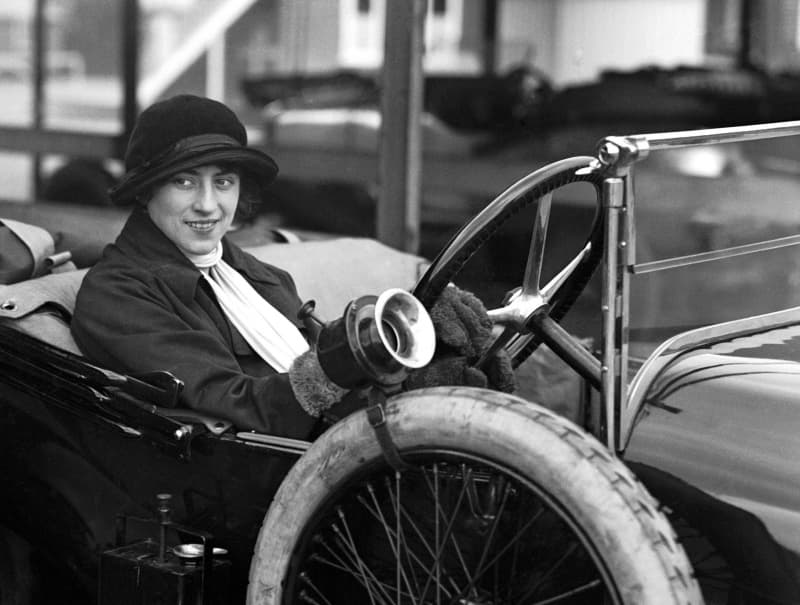
British · Sports · Aviation
Violette Cordey
January 10, 1900 – December 30, 1983
"
Early Life
Violette Cordery (sometimes spelled Cordey) was a British racing motorist who became one of the most celebrated female endurance drivers of the 1920s and early 1930s. She was born in England around the turn of the 20th century into an era when motoring was a young and rapidly developing technology, and few women were afforded the opportunity to compete in mechanical sports. Details of her early education and family life are sparse in the historical record, as was common for women of the period whose public recognition came primarily through their later achievements rather than being documented from childhood.
Entry into Motorsport
Cordery emerged onto the competitive motoring scene in the 1920s, a period sometimes called the 'golden age' of endurance and record-breaking driving. She became closely associated with the British car manufacturer Invicta, for which she piloted various models in long-distance trials designed to prove the durability, speed, and reliability of the marque's vehicles. Endurance driving in this era was gruelling: drivers would take turns (or, in solo record attempts, drive continuously) around purpose-built banked circuits such as Brooklands in England and Montlhéry in France, often for periods of 24 hours or longer, in mechanically unforgiving cars with minimal driver comfort or safety features.
Record-Breaking Achievements
Throughout the late 1920s, Violette Cordery set a series of impressive distance and endurance records. She was noted for driving thousands of miles in continuous or near-continuous stints, often accompanied by her sister Evelyn Cordery, who frequently served as her relief driver and teammate. Together the Cordery sisters undertook ambitious long-distance drives, including circuits of considerable length through Europe and beyond, that were closely followed by the motoring press of the day.
Her most famous single achievement came on 19 June 1929, when she drove a 4½-litre Invicta for a full 24 hours at the Montlhéry Autodrome in France, covering approximately 2,195 miles (roughly 3,530 kilometres) and setting an outright world record for distance covered in 24 hours — a record that was not qualified by gender, meaning she outperformed contemporaneous records set by male drivers. This was an extraordinary demonstration of stamina, concentration, and mechanical sympathy, given the physical toll of continuous high-speed driving on unforgiving racing surfaces.
In addition to this headline record, Cordery was involved in numerous other long-distance trials, including drives intended to demonstrate the reliability of Invicta cars over tens of thousands of miles, contributing significantly to the commercial reputation of the marque during a competitive era for British car manufacturers.
Recognition and Legacy
Violette Cordery's achievements were widely reported in the British and international press of the period, and she became something of a celebrity figure in motoring circles. Her success helped challenge prevailing assumptions about women's physical and technical capabilities in a sport dominated by men, and she is remembered today as a pioneering figure in the history of women in motorsport.
Although later generations of racing history have sometimes overlooked her contributions in favor of more famous male contemporaries, motoring historians and enthusiasts of vintage and veteran cars have worked to preserve and highlight her legacy, particularly her association with the Invicta marque, whose surviving vehicles are prized by collectors partly because of the records set by Cordery and her sister.
Personal Life
Violette Cordery's personal life outside of motorsport is not extensively documented in available historical sources. Her close working partnership with her sister Evelyn Cordery was a notable feature of her career, with the sisters frequently collaborating on record attempts and long-distance drives, reflecting a family dedication to motoring achievement.
Later Life and Death
Details of Cordery's life after her most active competitive years, including the exact circumstances of her later life, are not fully documented in accessible historical records. She is understood to have lived into the early 1980s, her precise date of death not being widely recorded in mainstream historical sources.
Historical Significance
Violette Cordery's career stands as an important chapter in the history of women's participation in motorsport and engineering-adjacent competitive activities. At a time when the automobile itself was still a relatively novel technology and motorsport was overwhelmingly male-dominated, her record-setting drives demonstrated conclusively that women could match or exceed male performance in demanding endurance contests. Her legacy continues to be referenced in histories of British motoring, the Invicta marque, and the broader story of women's advancement in twentieth-century sport and technology.
"Dated achievements
3 indexed.
- Jan101900Sports
Birth of Violette Cordery
Violette Cordery was born, destined to become a pioneering sportswoman.
View details Wikipedia: Violette Cordery - Jun301927Sports
Endurance Record at Monza
Violette Cordery sets endurance record driving at Monza, covering 10,000 miles.
View details