← All women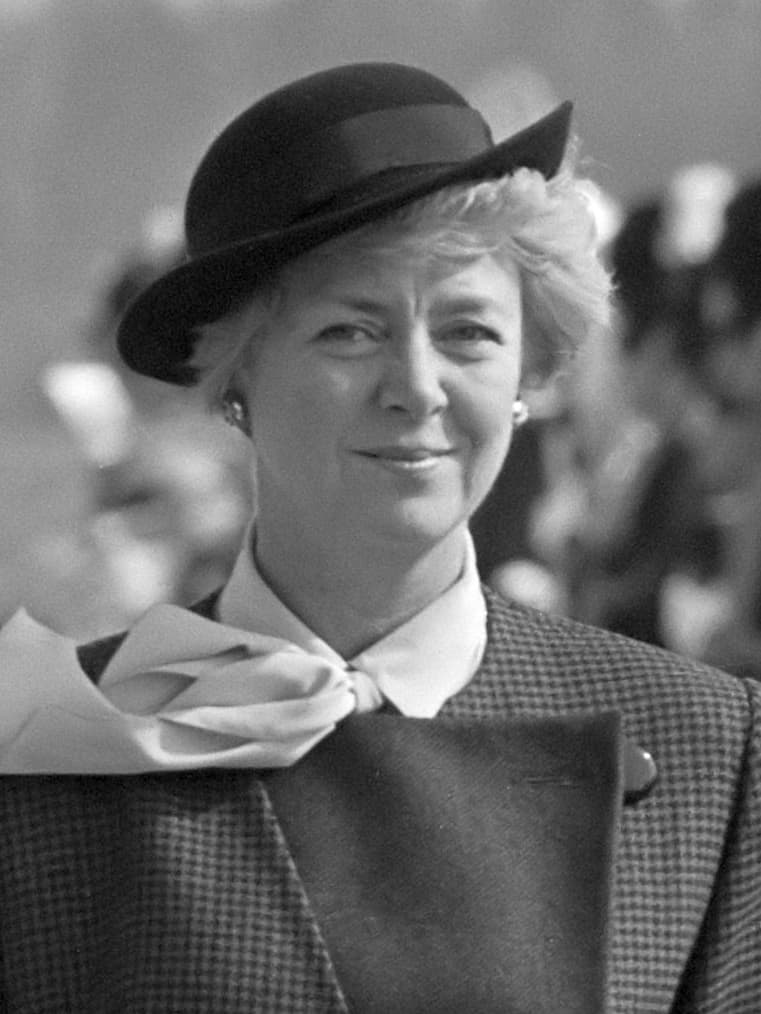
Icelandic · Politics
Vigdís Finnbogadóttir
April 15, 1930 – present
Early Life and Background
Vigdís Finnbogadóttir was born on 15 April 1930 in Reykjavík, Iceland, then part of the Kingdom of Iceland under a personal union with Denmark.[2][10][18] She grew up in a family that combined technical expertise with social commitment. Her father, Finnbogi Rútur Thorvaldsson, was a civil engineer and professor at the University of Iceland, while her mother, Sigríður Eiríksdóttir, was a nurse who became a pioneering leader in the Icelandic Nurses Association and was active in the nurses’ trade union for decades.[10][13][18] This environment exposed Vigdís early to debates about professional standards, social welfare, and women’s rights.
Reykjavík in the 1930s and 1940s was a rapidly developing town, reflecting Iceland’s shift from a poor, mainly rural society toward urbanization and the foundations of a modern welfare state. Vigdís attended Reykjavík College (Menntaskólinn í Reykjavík), one of the country’s leading secondary schools, and graduated in 1949.[9][10] Her education coincided with wider changes in Icelandic society, including increasing access for women to secondary and higher education.
After completing upper secondary school, she pursued studies abroad, reflecting both her intellectual curiosity and the broader trend of Icelandic students seeking advanced training in continental Europe. She studied French language and literature and drama at the University of Grenoble and the Sorbonne in Paris, and theatre history at the University of Copenhagen.[1][7][9][10] She later studied at the University of Uppsala in Sweden.[9] These experiences deepened her interest in literature, theatre, and cultural exchange, and gave her fluency in several languages, including French and English.
Returning to Iceland, she earned a BA in French with a teaching certification from the University of Iceland in 1968, adding formal academic credentials to her already extensive cultural and linguistic training.[10] Her educational path—combining Icelandic, Nordic, and French institutions—was unusual for an Icelandic woman of her generation and positioned her to play a distinctive role in the country’s cultural life.
Career Beginnings and Cultural Work
Before entering politics, Vigdís Finnbogadóttir built a substantial career as a teacher, broadcaster, and theatre professional. She taught French at the Reykjavík College and in continuing education settings, and she lectured on drama and theatre history. Some sources indicate that she taught drama, theatre history, and French at institutions in Denmark and Iceland, reflecting her cross‑border academic profile.[1][9][10]
Her public visibility increased through work in broadcasting. She presented French language programmes on Icelandic television, helping popularize language learning and demonstrating a teaching style that was both accessible and engaging.[10][13] These programmes strengthened her image as an educator and cultural mediator, reinforcing her reputation in households across Iceland.
Vigdís played a major role in the Icelandic theatre world. She worked for the Reykjavík Theatre Company and later became director of the Reykjavík Theatre Company, overseeing productions and advancing professional standards.[10][18] She also served on the board of the Icelandic Broadcasting Service and participated in various cultural councils and committees. Her theatre work emphasized both Icelandic and international texts, and she saw theatre as a vital means of fostering language, identity, and public dialogue.
Her cultural and educational activities occurred alongside growing feminist activism in Iceland. Her mother’s long engagement in union and professional organizations offered a model of women’s leadership in public life, and Vigdís herself became outspoken in support of women’s equality. She participated in public debates on culture, language, and social issues, gaining experience in public speaking and consensus‑building that would later prove critical in her presidential campaigns.
Personal Life and Adoption Milestone
In 1953, Vigdís married; the marriage ended in divorce around 1962
A pivotal moment in her personal life came in 1972, when Vigdís became the first single woman in Iceland to adopt a childÁstríður Magnúsdóttir, defying legal and social expectations that preferred two‑parent households and often discouraged single women from adopting. Although the exact day and month of the adoption are not readily documented, the year 1972 is widely noted in biographies and academic analyses.[10][13][15] The adoption was both a private and public milestone. It demonstrated that a woman could form a family outside traditional marital frameworks and challenged prevailing views about motherhood and respectability. Later, when she ran for president, her status as a single mother was part of public discussion; opponents questioned whether a divorced woman with an adopted child could adequately represent the nation. Vigdís herself emphasized that her experiences made her more attuned to the realities faced by many women and families. By the late 1970s, Vigdís Finnbogadóttir was well known as a cultural figure, teacher, and theatre director. The political context in Iceland was also changing. Women’s activism had gained momentum, particularly following the famous Women’s Day Off in 1975, when about 90 percent of Icelandic women went on strike for a day to protest wage inequality and undervaluation of women’s work.[10][16] This event heightened public awareness of gender issues and created space for women’s leadership in politics. In 1980, the presidency of Iceland became open as incumbent President Kristján Eldjárn chose not to run again. Encouraged by activists and colleagues, Vigdís decided to stand as a candidate. Her campaign emphasized culture, language preservation, environmental concerns, and a non‑partisan approach to the office, aligning with the constitutional role of the president as a figure above party politics.[2][10][16] The presidential election of 29 June 1980 was a four‑way race among Vigdís and three male candidates. Despite limited financial resources and initial skepticism from some segments of society, she ran an energetic campaign that resonated particularly with women and younger voters. She spoke openly about her status as a single mother and argued that her life experience was not a weakness but a strength. When the votes were counted, she had won with a plurality, becoming the first woman in the world to be democratically elected president/head of state in a national election.[1][2][7][10] Her victory was hailed domestically and internationally as a major breakthrough for women’s political representation. It came in the same era when female leaders such as Indira Gandhi and Golda Meir had served as prime ministers, and Isabel Perón had become president of Argentina by succession rather than direct, competitive election. Vigdís’s election in Iceland was uniquely significant because it was the result of a direct popular vote in a democratic setting. Vigdís was inaugurated on 1 August 1980 as the fourth President of Iceland, becoming the first woman to hold the office and the first democratically elected woman head of state globally.[2][10][12][18] The presidency in Iceland is largely ceremonial, with limited direct executive power, but carries strong symbolic and unifying responsibilities. Vigdís approached the role as a platform for cultural and social advocacy rather than partisan politics. During her first term, she prioritized Icelandic language and cultural heritage. She supported initiatives to strengthen the teaching of Icelandic, encourage literary production, and promote the arts. She believed that a small nation’s independence and identity were closely tied to its language and culture, and she used the presidency to champion these themes domestically and abroad.[10][16] She also advocated for women’s rights and gender equality, though often in a subtle manner consistent with the non‑partisan nature of the office. By embodying a woman in the highest constitutional position, she sent a powerful message about women’s capabilities and aspirations. Her presence helped normalize the idea that top leadership positions were open to women, and she inspired many women to pursue political careers or community leadership. Internationally, Vigdís traveled widely, enhancing Iceland’s diplomatic profile and emphasizing environmental and cultural issues. She cultivated relationships with other heads of state and international organizations, laying the groundwork for later roles in global advocacy. On 29 June 1984, Vigdís was re‑elected president without opposition, beginning her second term.[2][10][13] The absence of challengers indicated broad satisfaction with her performance and a perception that her leadership had strengthened the image of the presidency. Her unopposed re‑election also reflected the growing acceptance of women in high office. In the mid‑1980s, Iceland’s geopolitical significance was underscored by its location between North America and Europe. In 1986, Reykjavík hosted the historic Reykjavík Summit between U.S. President Ronald Reagan and Soviet leader Mikhail Gorbachev, an event that played a major role in easing Cold War tensions.[9][10] As president, Vigdís hosted the summit, welcoming the leaders and symbolically framing Iceland as a venue for peace and dialogue. While she did not conduct the negotiations, her role as host underscored Iceland’s and her own place in international diplomacy. On 26 June 1988, she was re‑elected for a third term, this time winning 92.7% of the vote in the presidential election.[2][10][13] This overwhelming mandate demonstrated her popularity across political and social groups and showed that her gender was no longer a central issue in electoral evaluations. Her continued incumbency allowed her to deepen her cultural diplomacy, including representing Iceland at literary and arts festivals and promoting environmental consciousness. During her second and third terms, Vigdís increasingly engaged with environmental matters. She spoke about the importance of protecting Iceland’s fragile ecosystems and landscapes, aligning with globally emerging environmental concerns. She also continued to support efforts to increase women’s participation in politics and public life, often through speeches, encouragement to younger women, and visibility at events focused on gender equality.[10][16] On 29 June 1992, Vigdís was re‑elected unopposed for a fourth presidential term.[2][10][13] By this time she had served twelve years in office, and her uncontested re‑election affirmed that she was widely regarded as a unifying figure. She continued to represent Iceland abroad and advocate for culture, language, environmental protection, and human rights. Her fourth term saw the end of the Cold War era and the emergence of new global issues, including European integration and climate change. Vigdís emphasized the importance of small states having a voice in international forums and argued that cultural and linguistic diversity should be protected. Her presidency helped shape Iceland’s identity as an engaged, outward‑looking nation that nevertheless preserved its unique heritage.[10] On 1 August 1996, Vigdís chose not to stand for re‑election and stepped down at the end of her fourth term.[2][10][12] Her presidency thus lasted exactly 16 years, from 1 August 1980 to 1 August 1996. This made her the longest‑serving democratically elected female head of state in history.[2][10][13] She was succeeded by Ólafur Ragnar Grímsson. Her voluntary departure from office, following a long and respected tenure, demonstrated that women leaders could exit high office on their own terms. It also allowed her to redirect her energies toward international advocacy and cultural work without the constraints of constitutional duties. After leaving the presidency, Vigdís Finnbogadóttir remained active nationally and internationally. She became a UNESCO Goodwill Ambassador, focusing on languages and linguistic diversity, though sources do not all agree on the exact year of appointment.[3][6][10] In this role, she advocated for the preservation of minority and indigenous languages and highlighted the link between language, identity, and human rights. She was also honored as a World Theatre Ambassador by the International Theatre Institute (ITI), recognizing her longstanding contributions to theatre and cultural life.[18] As World Theatre Ambassador, she drew on her experience as a theatre director and cultural advocate to support international cooperation among theatre practitioners and promote the arts as a means of cross‑cultural understanding. The exact date of this designation is not clearly documented in accessible sources. Vigdís became a member of the Club of Madrid, an organization composed of former heads of state and government dedicated to promoting democracy and good governance.[7][10] Through the Club of Madrid and other networks, she supported initiatives related to democratic transitions, gender equality in leadership, and civic participation. Her influence extended across various international bodies and conferences. She spoke frequently about the importance of women’s political representation, environmental protection, and cultural heritage. She received numerous awards and honorary degrees acknowledging her pioneering role as the world’s first democratically elected woman president and her contributions to human rights, language, and culture, though many of these honors are documented by year rather than specific date.[10][16] Vigdís Finnbogadóttir’s legacy is multifaceted. She is best known for being the first woman in the world to be democratically elected president/head of state, a breakthrough that has been repeatedly highlighted in scholarly works, international organizations, and media retrospectives.[1][2][7][10][16] Her election in 1980 provided a powerful example that a woman could win a national, direct election for the highest office in a democratic system. Her 16‑year tenure as president, the longest of any elected female head of state, proved that women leaders could not only reach high office but also serve long, stable terms with broad popular support.[2][10][13] She was re‑elected three times, twice without opposition and once with an overwhelming majority, indicating that voters evaluated her on her performance rather than her gender. Domestically, Vigdís contributed to Iceland’s reputation as a leader in gender equality. Her presidency followed and reinforced the activism symbolized by the Women’s Day Off of 1975 and helped make Iceland a reference point for discussions of women’s empowerment. Many Icelandic women who later entered politics have cited her as an inspiration. Internationally, she became a role model for women aspiring to executive office and a symbol frequently referenced by advocates of gender parity. Her emphasis on culture, language, and environment broadened the agenda associated with heads of state and demonstrated how a presidency could be used to promote non‑material dimensions of national life. Her work as UNESCO Goodwill Ambassador, World Theatre Ambassador, and member of the Club of Madrid extended her legacy beyond national boundaries, linking her to global movements for cultural rights, democratic governance, and women’s leadership.[7][10][18] Scholars and institutions often highlight her dual identity as both a cultural figure and a political leader, illustrating how cultural capital can be converted into political authority. Vigdís’s status as a single mother who adopted a daughter and later became president has also been an important part of her story. It challenged conventional expectations about the private lives of heads of state and underscored the idea that diverse family forms can coexist with high public responsibility.[10][13] On 1 August 2020, the 40th anniversary of her inauguration as president was widely commemorated in Iceland and abroad.[7][16][18] Media outlets and institutions revisited her achievements, interviewed her about her experiences, and reflected on the changes in women’s political participation since 1980. These commemorations confirmed that her election and presidency continue to be seen as pivotal events in the history of women’s leadership. Public memory of Vigdís is kept alive through biographies, documentary films, academic articles, and institutional profiles, including those of UNESCO, the Club of Madrid, and Icelandic state institutions. Her life is frequently included in overviews of women’s political history and is used as a case study in discussions of gender and democracy. As of the mid‑2020s, Vigdís Finnbogadóttir is still living. She remains a respected figure in Iceland and internationally, occasionally participating in public discussions and receiving recognition for her pioneering path. Her story offers a rich example of how cultural expertise, feminist awareness, and political opportunity can intersect to produce lasting change in the symbolic and practical dimensions of democratic governance. Vigdís Finnbogadóttir’s historical significance lies in several intersecting achievements. She broke a major barrier by becoming the first democratically elected woman president in 1980, and she maintained that office for 16 years with repeated electoral endorsements, establishing a record for the longest‑serving elected female head of state.[1][2][10][13] Her presidency emphasized cultural and linguistic preservation, environmental consciousness, and women’s rights, demonstrating that a head of state can shape national identity through symbolic leadership. As a single mother and former theatre director, she expanded the perceived range of backgrounds from which leaders could emerge, encouraging more inclusive conceptions of political representation. Through later roles with UNESCO, the International Theatre Institute, and the Club of Madrid, she extended her influence to global conversations about democracy, human rights, and cultural diversity. Her legacy continues to inspire women leaders and to inform scholarly and public narratives about the evolution of women’s political power in the late twentieth and early twenty‑first centuries.Entry into Politics and 1980 Presidential Election
Presidency: First Term (1980–1984)
Presidency: Second and Third Terms (1984–1992)
Presidency: Fourth Term and Completion of Tenure (1992–1996)
Later Life, International Roles, and Honors
Legacy and Historical Impact
Commemorations and Continuing Influence
Summary of Historical Significance
Dated achievements
8 indexed.
- Apr151930Politics
Born in Reykjavík, Iceland
Vigdís Finnbogadóttir was born in Reykjavík, Iceland.
View details Vigdís Finnbogadóttir - Wikipedia - Jun291980Politics
World's First Democratically Elected Woman Head of State
Elected on June 29, 1980, as the world's first democratically elected female president.