← All women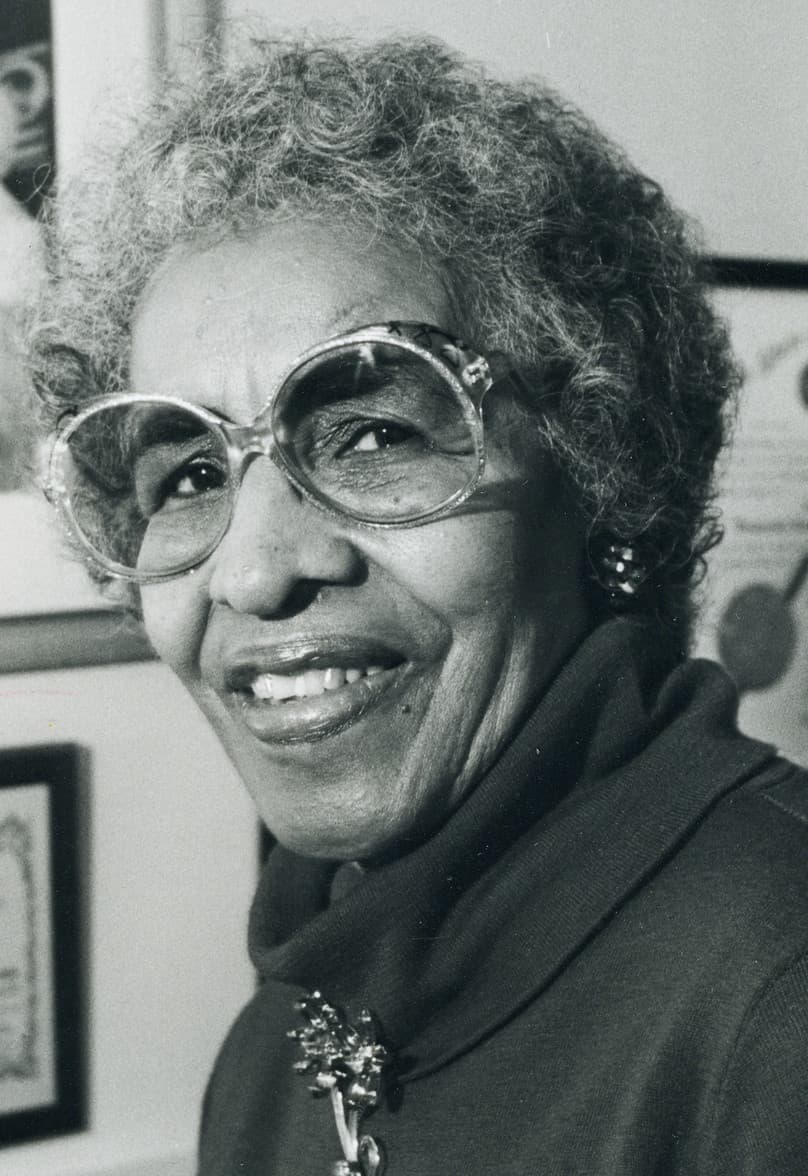
American · Politics · Activism · Law
Verda Welcome
March 18, 1907 – April 22, 1990
Early Life and Background
Verda Freeman Welcome was born on March 18, 1907, in Lake Lure, North Carolina, into a large family of sharecroppers. Growing up in the rural, segregated South during the height of Jim Crow, she experienced firsthand the economic exploitation and racial discrimination that defined life for Black Americans in the region. Details of her early childhood reflect the hardships common to sharecropping families: limited access to quality education, constrained economic mobility, and the constant threat of racial violence and intimidation that characterized the era.
Seeking greater opportunity, Welcome eventually made her way north as part of the broader Great Migration, the mass movement of African Americans from the rural South to urban centers in the North and Midwest during the early-to-mid 20th century. She settled in Baltimore, Maryland, a city with a significant Black population but one that remained deeply segregated in housing, education, and employment. Determined to improve her circumstances through education, Welcome pursued schooling with remarkable persistence, eventually earning degrees that would allow her to become a teacher and, later, a formidable political figure.
Welcome attended Morgan State College (now Morgan State University), a historically Black institution in Baltimore, where she earned her bachelor's degree. She continued her education at New York University, where she earned a master's degree in education. Her academic achievements were extraordinary given the barriers facing Black women of her generation, who had to contend with both racial and gender discrimination in access to higher education.
Career Beginnings and Community Activism
Welcome began her professional life as an educator, teaching in Baltimore's segregated public school system. Her experiences as a teacher exposed her directly to the inequities of segregated education—underfunded schools, inadequate facilities, and limited resources for Black students compared to their white counterparts. This experience deepened her commitment to civil rights and social justice.
In addition to her teaching career, Welcome became active in community organizing in Baltimore, working with organizations dedicated to improving conditions for African Americans in the city. She was particularly active in efforts to combat housing discrimination, a major issue in Baltimore, where restrictive covenants and discriminatory lending practices confined Black residents to specific, often under-resourced neighborhoods. Her activism brought her into contact with the local NAACP and other civil rights organizations, and she quickly gained a reputation as an effective and passionate advocate.
Welcome's political involvement grew organically from her community organizing work. She recognized that meaningful, lasting change for Baltimore's Black community would require direct representation in the halls of government, not merely advocacy from outside. This realization propelled her toward a career in elected office at a time when Black women in American politics were exceedingly rare.
Entry into Politics: The Maryland House of Delegates
In 1958, Verda Welcome ran for and won a seat in the Maryland House of Delegates, becoming one of the first African American women elected to that body. This was a significant breakthrough in a state where Black political representation remained limited despite a substantial African American population, particularly in Baltimore. Her election reflected the growing political mobilization of Black voters in Baltimore during the late 1950s, a period that saw increasing organization around civil rights issues in Maryland.
As a delegate, Welcome quickly established herself as an effective legislator, focusing on issues of civil rights, housing discrimination, and equal employment opportunity. She worked to build coalitions with other progressive legislators to advance civil rights legislation, despite facing resistance from segregationist elements within the Maryland legislature. Her tenure in the House of Delegates served as a crucial proving ground for the more prominent role she would soon play in the Maryland Senate.
Historic Election to the Maryland State Senate
Verda Welcome's most historic achievement came in 1962, when she was elected to the Maryland State Senate, representing Baltimore's 4th district. This victory made her the first African American woman elected to any state senate in the United States—a landmark achievement not just for Maryland but for the entire nation. She was reelected in 1966 and continued to serve for two decades, until 1982.
Welcome's election came during one of the most turbulent and transformative periods in American civil rights history, coinciding with the broader national civil rights movement, the passage of the Civil Rights Act of 1964, and the Voting Rights Act of 1965. Her presence in the Maryland Senate provided a crucial voice for civil rights within the state legislature at a time when many Southern and border states, including Maryland, still maintained significant vestiges of legal and de facto segregation.
As a senator, Welcome was a driving force behind Maryland's public accommodations law, which prohibited racial discrimination in restaurants, hotels, and other public businesses—a critical step in dismantling Jim Crow-style segregation within the state. She also worked extensively on fair housing legislation, seeking to end discriminatory practices in the sale and rental of housing that had long confined Black Baltimoreans to specific neighborhoods, often those with inferior infrastructure and municipal services.
Welcome's legislative influence grew substantially over her tenure. She eventually rose to the position of Deputy President of the Maryland Senate, making her one of the most powerful African American legislators in the United States at that time. Her leadership position allowed her to shape legislative agendas and mentor a new generation of Black political leaders in Maryland, several of whom would go on to hold significant offices themselves.
Legislative Accomplishments and Advocacy
Throughout her career in the Maryland General Assembly, Welcome championed a broad range of causes beyond civil rights, including consumer protection, education funding, and healthcare access. She was known for her pragmatic yet principled approach to legislating, often working across party lines and building unlikely coalitions to achieve her policy goals.
Welcome also faced significant personal and political challenges during her career, including threats and intimidation related to her civil rights work. In 1964, she survived an assassination attempt believed to be connected to her political activities and civil rights advocacy—an incident that underscored the very real dangers faced by Black civil rights leaders and politicians during this era, even those operating within formal government institutions rather than solely through grassroots protest.
Despite these dangers, Welcome remained undeterred in her advocacy. She continued to push for legislation addressing racial and economic inequality throughout her tenure, cementing her reputation as one of Maryland's most effective and courageous legislators.
Personal Life
Verda Freeman Welcome was married to Dr. Harry Winston Welcome, a Baltimore physician who was himself active in civic and political affairs in the city. The couple's shared commitment to civil rights and community service made them a formidable partnership within Baltimore's Black political and social establishment. Their home and networks became important gathering points for civil rights organizing and political strategy within Baltimore's African American community.
Welcome balanced her demanding political career with her personal and family life, navigating the challenges faced by many women of her generation who sought to combine public service with domestic responsibilities—challenges that were often compounded for Black women by the added burdens of racial discrimination and limited institutional support.
Awards, Honors, and Recognition
Over the course of her career and in the years following her death, Verda Welcome received numerous honors recognizing her pioneering role in American politics and civil rights. Institutions and public schools were named in her honor, including the Verda Freeman Welcome Elementary School in Baltimore. She was inducted into the Maryland Women's Hall of Fame, an honor reserved for women who have made significant and lasting contributions to the state.
In a particularly notable posthumous honor, in January 2020 the Maryland State House unveiled a portrait of Verda Welcome, making her the first African American to be honored with a portrait in the Maryland State House—a powerful symbolic recognition of her role in the state's political history and a marker of how far the state had come in recognizing the contributions of Black leaders to its governance.
Morgan State University, her alma mater, has also honored her legacy through exhibits and programming recognizing her contributions to civil rights and Maryland politics, cementing her place in the institutional memory of the university and the broader Baltimore community.
Later Life, Death, and Legacy
Verda Welcome retired from the Maryland State Senate in 1982 after two decades of service, having built one of the most consequential legislative careers of any African American woman in the 20th century United States. She remained active in Baltimore civic life following her retirement from elected office, continuing to be regarded as an elder statesperson within the city's Black political establishment.
She died on April 22, 1990, in Baltimore, Maryland, at the age of 83. Her death was widely covered in local media, including extensive obituaries in the Baltimore Sun and Baltimore Evening Sun, which recounted her decades of service and her historic status as a trailblazer for Black women in American politics.
Welcome's legacy endures as a foundational figure in the history of Black women's political representation in the United States. Her 1962 election as the first African American woman to serve in a U.S. state senate opened doors for subsequent generations of Black women to pursue elected office at the state and national level. Her tireless advocacy for civil rights, fair housing, and equal opportunity helped reshape Maryland law during a pivotal period in American history, and her example continues to inspire civil rights leaders, politicians, and educators throughout Maryland and the nation.
Dated achievements
3 indexed.
- Mar181907Politics
Birth of Verda Freeman Welcome
Verda Freeman was born in Lake Lure, North Carolina, on March 18, 1907, the daughter of a sharecropper family who later moved to Baltimore.
View details Maryland State Archives - Verda Welcome - Nov081966Politics
Elected as first Black woman to a U.S. state senate
Verda Welcome was elected to the Maryland State Senate in November 1966, becoming the first African American woman elected to any state senate in the United States.