← All women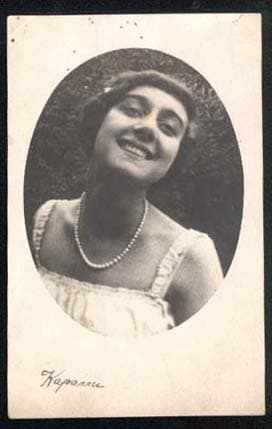
Russian · Arts
Vera Karalli
July 27, 1889 – November 16, 1972
Early Life and Background
Vera Alexeyevna Karalli was born on July 27, 1889, in Moscow, Russia. From a young age, she showed an affinity for the performing arts, which led her to pursue formal training in ballet. Her education at the Imperial Theatre School provided a foundation that would not only hone her physical techniques but also cultivate an artistic sensibility essential for her dual career in ballet and film.
Career Beginnings and Development
Karalli graduated from the Imperial Theatre School in 1906 and swiftly joined the Bolshoi Theatre, one of the most prestigious ballet companies in the world. Her career in ballet spanned over two decades, during which she performed pivotal roles in classical ballets. Her expressive style and dramatic interpretation captured the imagination of audiences, contributing to her growing reputation.
Simultaneously, Karalli explored the nascent field of cinema, a medium that was beginning to captivate Russian audiences. She cautiously stepped into the silent film industry around the 1914s, recognizing the potential of this new art form to reach broader audiences.
Major Works and Accomplishments
Karalli's film career is noted for her roles in over 16 silent films. Among her most celebrated works was the 1917 film "A Life for a Life,” directed by Yakov Protazanov, where her performance was critically acclaimed. Her ability to convey profound emotion on screen without spoken dialogue mirrored her ballet performances' emotive power.
Her contributions to ballet were equally significant. As a prima ballerina, she performed lead roles in staples of the ballet repertoire, leaving a lasting impact on Russian ballet history. Her dual success in film and dance choreography marked her as a versatile artist during a period of significant cultural change.
Awards, Honors, and Recognition
While specific awards during her lifetime for ballet or film were rare and often undocumented, her reputation as both a leading ballerina and a pioneering film actress speaks to the recognition she garnered. Her influence is often cited in historical accounts of Russian performing arts during the early 20th century.
Personal Life
Karalli's personal life remained largely private, with much focus placed on her artistic endeavors. Her relationships within the arts community, particularly with fellow performers and directors, were crucial to her success and professional growth.
Legacy and Historical Impact
Vera Karalli’s legacy is significant within the annals of Russian arts history. As one of the pioneering figures bridging ballet with silent film, she showcased the versatility and adaptive nature of performing arts beyond traditional stage confines. Her work contributed to the legitimization of film as a serious art form in Russia, alongside contemporary advances in ballet.
Later Life and Death
After a long and fruitful career, Vera Karalli retired from public performance. She lived out her later years in Moscow, remaining active within arts circles until her death on November 16, 1972. Her life's work continues to inspire research on the early days of cinema and the golden age of Russian ballet.
Dated achievements
2 indexed.
- Jul271889Arts
Birth of Vera Karalli
Vera Karalli was born on July 27, 1889, in Moscow, Russia.
View details Wikipedia - Vera Karalli - Nov161972