← All women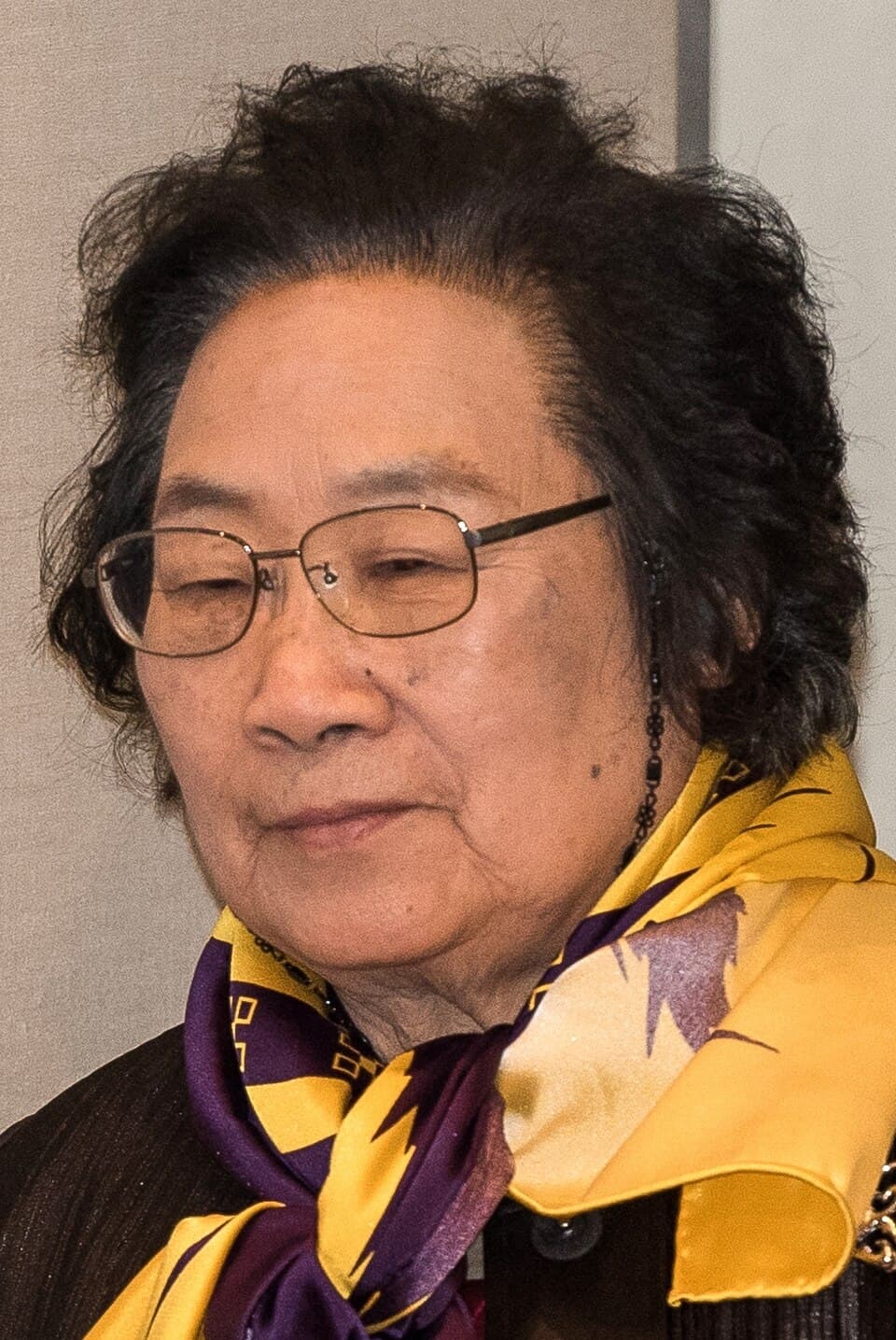
Chinese · Medicine · Science
Tú Yōuyōu
December 30, 1930 – present
Early Life and Background
Tu Youyou (Chinese: 屠呦呦; pinyin: Tú Yōuyōu) was born on 30 December 1930 in Ningbo, Zhejiang province, China, a coastal city south of Shanghai known historically for trade and education.[4][2][16] Her given name "Youyou" is reported to come from a line in the classical Book of Songs, reflecting her family’s engagement with traditional Chinese culture.[6] She grew up during a period of significant upheaval, including the Second Sino–Japanese War and the Chinese Civil War, experiences that shaped the context in which she later pursued science.
Biographical accounts note that Tu suffered from tuberculosis as a teenager, an experience that deepened her interest in medical science and public health.[1][9] At a time when educational opportunities for girls in science were limited, she attended high school and then gained admission to one of China’s leading institutions. In 1951 she enrolled at the Peking University School of Medicine, specializing in pharmaceutical sciences, and completed her studies in 1955.[1][4][9] Her curriculum combined modern pharmacology and chemistry with some exposure to traditional Chinese medicine, laying the groundwork for her later interdisciplinary research.
Career Beginnings and Development
After graduating in 1955, Tu was assigned to work at the newly founded Institute of Materia Medica, part of the Academy of Traditional Chinese Medicine in Beijing (later the China Academy of Traditional Chinese Medicine).[1][4][16] As a researcher there, she focused on the chemistry and pharmacology of traditional herbal substances, building expertise in extracting and characterizing active compounds from complex plant mixtures.[1][8]
Her early work included studies on the toxicity and clinical applications of traditional remedies and investigations into treatments for parasitic diseases such as schistosomiasis.[7][15] The institutional environment was distinctive: rather than a university department, she worked in a government research institute tasked with evaluating and modernizing traditional Chinese materia medica for clinical use. This positioned her at the intersection of state health policy, pharmacology, and classical medical knowledge.
In 1965, Tu formally joined the China Academy of Traditional Chinese Medicine, where she would later become Chief Scientist.[16] Her career evolved under conditions of relative isolation from Western scientific communities, limited laboratory resources, and frequent political campaigns, including the Cultural Revolution. Despite these challenges, she developed strong skills in experimental design, extraction techniques, and animal testing, skills that proved crucial once she was drawn into China’s antimalarial campaign.
Project 523 and the Malaria Challenge
In 1967, Tu was appointed head of a covert Chinese government military research program commonly known as Project 523, named for its start date of 23 May 1967.[4][6] The project responded to a pressing public health crisis: the spread of chloroquine-resistant malaria, which posed major risks for soldiers in Southeast Asia and for civilian populations in southern China and beyond.[3][4][6]
Her assignment was to discover new antimalarial drugs by systematically investigating traditional Chinese medical texts and empirical herbal practices. Working with a multidisciplinary team, Tu surveyed hundreds of ancient sources, focusing on descriptions of "intermittent fevers"—a classic symptom of malaria.[5][8][12] Among the remedies, she became interested in sweet wormwood, Artemisia annua, known in Chinese as qinghao, which had been recommended as a treatment for fevers in texts dating back to around the fourth century CE.[5][8]
Tu’s team collected wormwood from various regions and experimented with extraction methods to preserve potentially heat-sensitive active components. Early attempts using standard high-temperature decoctions were inconsistent in their antimalarial effects. Returning to the classical texts, she noted instructions to "soak the herb in cold water and squeeze the juice," suggesting that lower temperatures might be important.[5][8]
Based on this insight, Tu developed a low-temperature ether extraction process that produced a potent antimalarial fraction.[5] Subsequent refinement led to the isolation of a colorless crystalline compound, which the team named qinghaosu (青蒿素), later known internationally as artemisinin.[4][5] In animal models, the compound showed strong activity against malaria parasites.
Discovery of Artemisinin and Dihydroartemisinin
During the 1970s, Tu and her colleagues systematically isolated and characterized artemisinin and its derivatives, notably dihydroartemisinin, from Artemisia annua.[4][5][16] Artemisinin proved highly effective against Plasmodium species, including strains resistant to existing drugs, by rapidly reducing parasite levels in the blood.[4][5]
Tu played a central role not only in the extraction and purification process but also in early human testing. Accounts from NobelPrize.org report that when animal experiments indicated safety and efficacy, she volunteered to be the first human subject to take the newly prepared artemisinin extract, followed by tests in other healthy volunteers and then malaria patients.[5] This decision reflected both a commitment to ethical standards—testing safety before patient use—and the urgency of the malaria crisis.
Her team’s results showed that artemisinin produced rapid fever reduction and parasite clearance with relatively low toxicity. They later developed dihydroartemisinin, a more potent and stable derivative, which became a cornerstone of modern artemisinin-based therapies.[4][16] While much of this work remained classified within Project 523 and was initially published in Chinese, it laid the foundation for the global adoption of artemisinin-based combination therapy (ACT).
International Dissemination of Findings
By the late 1970s, Tu recognized the importance of sharing China’s antimalarial breakthrough with the international scientific community. In 1979, she and her colleagues presented their findings on artemisinin in English, describing the compound as a major contribution of traditional Chinese medicine to the world.[6] These publications and conference presentations began to integrate artemisinin into global discussions on malaria treatment.
Over subsequent decades, clinical trials and pharmacological studies outside China confirmed artemisinin’s efficacy and safety. Its rapid action, especially when combined with other antimalarial drugs, addressed the growing threat of multidrug-resistant malaria. Organizations such as the World Health Organization (WHO) played a crucial role in promoting its use.
From 1986 onward, WHO recommended artemisinin-based regimens, later formalized as artemisinin-based combination therapy (ACT), as key components of first-line treatment for malaria.[6][13] As these guidelines spread, artemisinin-based drugs became central to national malaria control programs in many African and Asian countries, dramatically reducing mortality.
Awards, Honors, and Recognition
Tu’s contributions were initially recognized within China through various state science and technology awards, but for many years she remained largely unknown internationally.[4] The turning point came in the early twenty-first century as historians of science, global health organizations, and prize committees revisited the origins of artemisinin.
In 2011, Tu received the Albert Lasker Award for Clinical Medical Research (the Lasker~DeBakey Clinical Medical Research Award) for the discovery of artemisinin and its application to malaria therapy.[4] The Lasker Foundation and subsequent commentary noted that her work had saved millions of lives and described artemisinin as one of the most important pharmaceutical advances of the late twentieth century.[1][4][11] She was widely reported to be the first Chinese person ever to receive a Lasker Award, a significant milestone for Chinese biomedical research.[1][4][13]
On 23 September 2011, the Lasker Foundation announced Tu’s selection for the award, and she formally received it at a ceremony in New York that same day.[4] The honor elevated her profile within global medicine and paved the way for further recognition.
Tu’s highest honor came in 2015. On 5 October 2015, the Nobel Assembly at the Karolinska Institute announced that she would share the Nobel Prize in Physiology or Medicine with William C. Campbell and Satoshi Ōmura.[16] The prize citation recognized "her discoveries concerning a novel therapy against malaria," specifically her role in developing artemisinin-based treatment.[16]
Following the Nobel announcement, Chinese Premier Li Keqiang issued a formal congratulatory statement noting that Tu was the first Chinese woman national to win a Nobel Prize in science, underscoring the gender and national significance of the award.[16] Media worldwide reported her as the first Chinese woman to win a Nobel Prize.[18][7]
On 10 December 2015, Tu received the Nobel Prize at the official award ceremony in Stockholm.[4][16] By that time, the Nobel Foundation and academic commentators described her as the first Chinese Nobel laureate in Physiology or Medicine and the first female citizen of the People’s Republic of China to receive a Nobel Prize in any category.[4][19] NobelPrize.org further emphasized that she was the first mainland Chinese scientist to receive a Nobel Prize in a scientific category and that she achieved this without a doctorate, medical degree, or training abroad.[5]
In addition to the Lasker and Nobel Prizes, Tu has been honored by universities and scientific organizations worldwide. She has been profiled by institutions such as Peking University and international media outlets as a leading figure in phytochemistry and global health.[10][12]
Personal Life
While Tu is a highly public scientific figure, accounts of her personal life are relatively concise. Nobel Prize biographical notes state that she is married and has two daughters.[16] Details about her husband’s identity and her children’s careers are generally not highlighted, reflecting both cultural norms around privacy and the focus of biographical writing on her scientific achievements.
Tu has often been portrayed as modest and reluctant to seek personal fame, emphasizing collective effort within Project 523 and the broader research community. She has acknowledged the contributions of her colleagues and technicians and has described her work as part of the state’s commitment to public health rather than an individual quest for recognition.[5][6]
Legacy and Historical Impact
Tu Youyou’s most enduring legacy is her role in the discovery and development of artemisinin and dihydroartemisinin, which revolutionized malaria treatment. Artemisinin-based combination therapies are credited with reducing malaria mortality by significant margins in countries that adopted them, particularly in sub-Saharan Africa and Southeast Asia.[4][16]
Her work has several key historical dimensions:
- Global Health Impact: By enabling effective treatment of chloroquine-resistant malaria, artemisinin has saved millions of lives and improved health outcomes for vulnerable populations.[4][16]
- Integration of Traditional and Modern Medicine: Tu’s methodology—systematic textual research, careful extraction, and rigorous testing—demonstrated how traditional medical knowledge can be transformed into evidence-based modern drugs.[5][8]
- Recognition of Women Scientists: As the first Chinese woman national to win a Nobel Prize in science and the first female PRC Nobel laureate, Tu has become a symbol of women’s potential in STEM fields.[16][5][19]
- Alternative Scientific Pathways: Her success without a PhD, overseas training, or membership in national academies challenges conventional assumptions about the necessary conditions for world-class research.[5][7]
Historians and commentators have also emphasized the political and institutional context of her work: artemisinin emerged from a state-directed project in socialist China, during a period of political turmoil, yet ultimately reshaped global health policy.[6][19] This trajectory complicates simple narratives about scientific progress, showing how transformative research can arise from diverse systems.
Later Life and Ongoing Influence
In the decades since the discovery of artemisinin, Tu has continued to work at the China Academy of Traditional Chinese Medicine, where she holds the position of Chief Scientist.[16] She has been involved in further pharmacological studies and in mentoring younger researchers who explore the therapeutic potential of traditional remedies.
Tu’s story has been increasingly incorporated into educational materials, museum exhibits, and media profiles. Institutions such as Peking University highlight her as an "innovator of traditional Chinese medicine," and international programs feature her in series on women who changed science.[5][10][12] Documentaries and interviews describe her scientific approach, her persistence through years of failed experiments, and her commitment to patient welfare.
As of the current record, Tu Youyou is still living.[4][16][12] Her work remains directly relevant as malaria continues to pose a serious global health challenge and as concerns arise about emerging resistance to artemisinin. Ongoing research seeks to preserve and extend the effectiveness of artemisinin-based therapies, building on the foundations she helped establish.
In summary, Tu Youyou occupies a unique place in the history of medicine and women’s history. She stands at the crossroads of traditional Chinese knowledge, modern pharmaceutical science, socialist-era research institutions, and global health policy. Her life and work demonstrate how careful attention to historical texts, combined with rigorous experimentation, can yield breakthroughs that transform the lives of millions.
Dated achievements
9 indexed.
- Dec301930Science
Birth of Tu Youyou
Tu Youyou was born in Ningbo, Zhejiang, China, later becoming known for discovering artemisinin.
View details Wikipedia - Sep232011Medicine
Announced as 2011 Lasker~DeBakey Awardee
Announcement of 2011 Lasker~DeBakey Award to Tu Youyou for her discovery of artemisinin.
View details